Korea's celebration noodle dish, sweet potato glass noodles stir-fried in sesame oil with vegetables and beef, appears at every birthday, wedding and holiday table.
About Japchae
Korea's most celebratory noodle dish: sweet potato glass noodles stir-fried in sesame oil with julienned vegetables (spinach, carrot, mushroom, onion) and beef, seasoned with soy and a touch of sugar; the glass noodles have a uniquely slippery, chewy texture; served at every Korean feast, birthday and new year celebration.
Glass Noodles
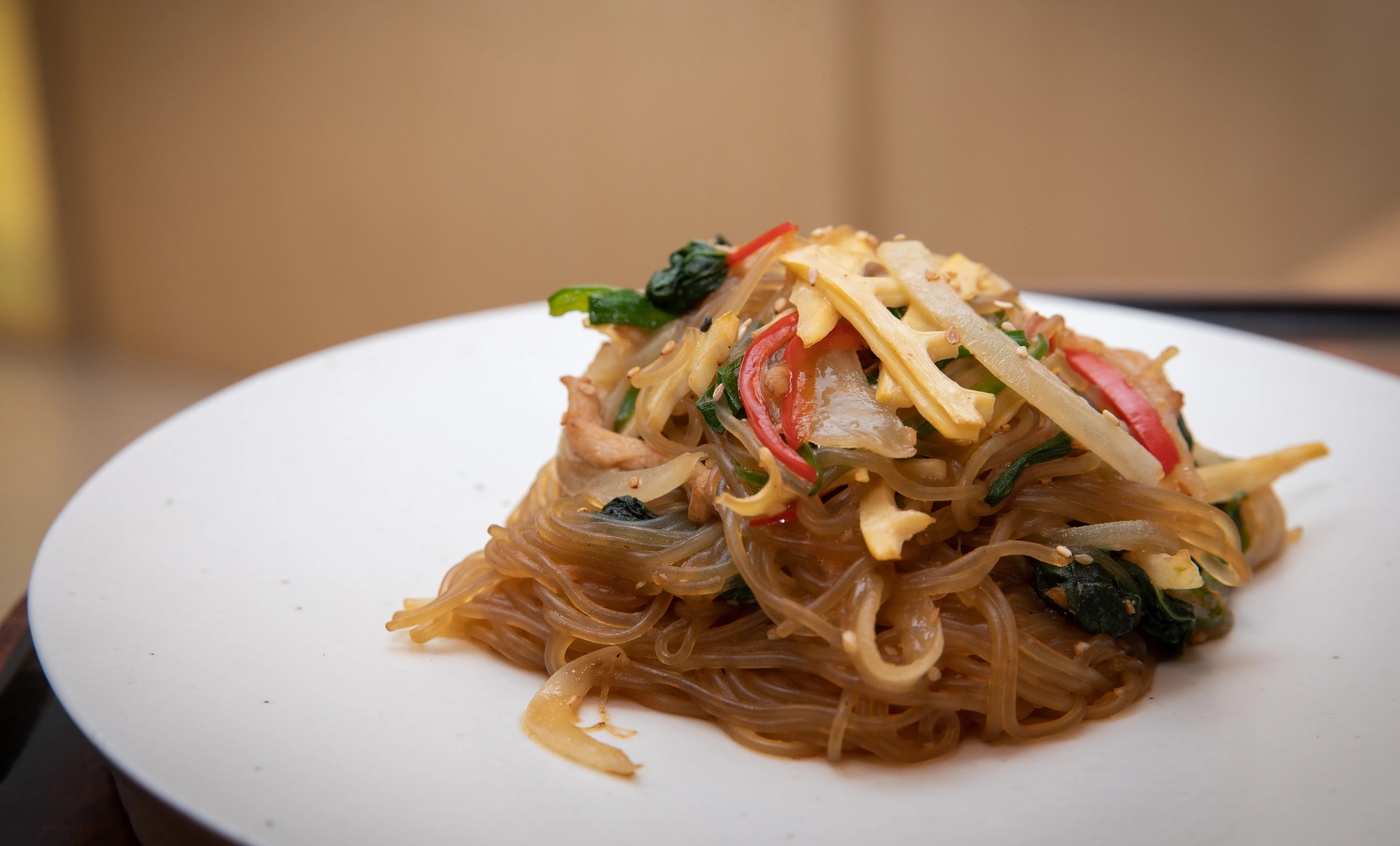
Japchae is Korea's celebratory noodle dish, made from sweet-potato starch glass noodles stir-fried in sesame oil with julienned vegetables and beef and seasoned with soy and a little sugar. The noodles are its signature, translucent when cooked, slippery and elastic with a satisfying chew. They carry the sesame and soy through every strand.
“Japchae is Korea's celebratory noodle dish, made from sweet-potato starch glass noodles stir-fried in sesame oil with julienned vegetables and beef and seasoned with soy and a little sugar.”
The Method
Traditionally the components are cooked separately, each vegetable, the beef and the noodles, then tossed together at the end so nothing overcooks and each keeps its texture and colour. It is more labour than a simple stir-fry, which is part of why it is festive food. The care shows in the balance of the finished dish.
Sesame and Soy
The seasoning is gentle and aromatic rather than spicy: soy sauce, a touch of sugar and a generous amount of toasted sesame oil and seeds. The sesame is not subtle; a good japchae smells clearly of it. The result is sweet-savoury and fragrant, eaten warm or at room temperature.
A Festive Dish
Japchae appears at nearly every Korean celebration, birthdays, weddings, the Chuseok harvest festival and the lunar new year, made in large quantities for sharing. It signals occasion as clearly by its presence as by its taste. That it has a festive register distinct from everyday cooking says much about Korean food culture.
What to Expect
The japchae arrives glistening, the glass noodles translucent, the vegetables visible throughout. It is eaten warm or at room temperature. The sesame oil is present in every forkful, fragrant and slightly nutty.
Why Try It
Japchae indicates that Korean cooking has a festive register as distinct as its everyday cooking, a dish that signals occasion as clearly as its flavour.
Insider Tips
- Glass noodles (dangmyeon) must not be overcooked. They should retain their elastic chew.
- Order at any Korean restaurant that offers a banchan-style menu. It frequently appears as a shared dish.
- The sesame oil quantity is not subtle, the dish should smell clearly of sesame.