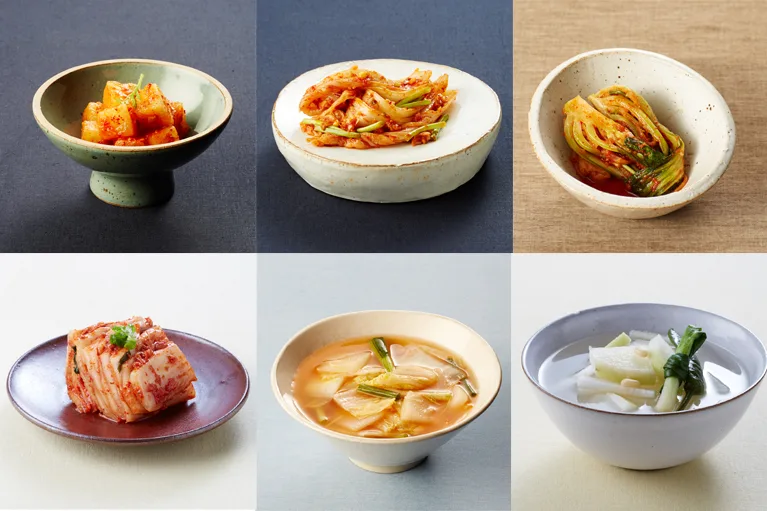
"Korea's UNESCO-listed fermented cabbage (gochugaru, garlic, fermented shrimp) is eaten at every meal. The annual kimjang (communal making) is a cultural event as much as a food preparation."
About Kimchi
Korea's most defining food and UNESCO Intangible Cultural Heritage: napa cabbage fermented with gochugaru, garlic, ginger, salted fermented shrimp and spring onion in an ancient process called kimjang; over 200 regional varieties exist; the lacto-fermentation produces a probiotic, funky, pungent, crisp result that Koreans eat at every meal; the kimchi refrigerator is standard in every Korean home.
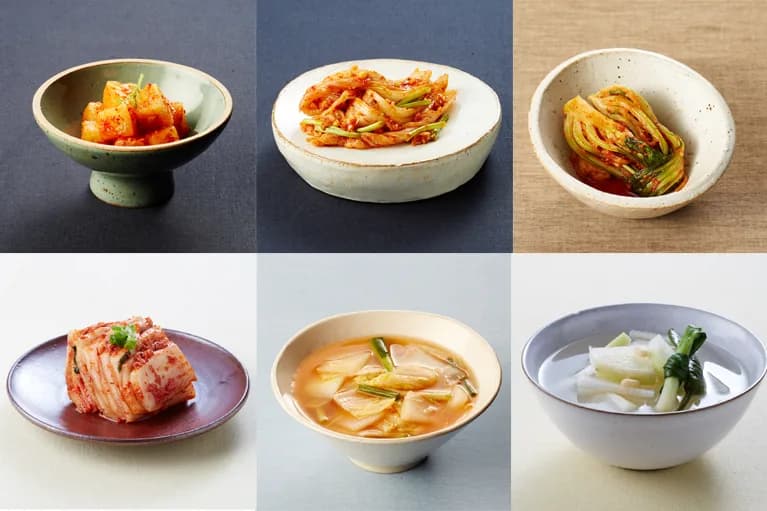
Kimchi, a staple of South Korea's cuisine
The Fermentation
Kimchi is Korea's defining ferment: napa cabbage salted to draw out water, then packed with a paste of chilli powder, garlic, ginger, salted seafood and spring onion and left to ferment. Lactic-acid bacteria lower the pH, preserving the cabbage and building a complex, funky, tangy flavour over days to months. The result is at once sour, spicy, pungent and crunchy.
The Varieties
Kimchi is not one thing but a whole family that changes with the season and the ferment. Freshly made geotjeori is bright and crunchy; lightly fermented kimchi is balanced; long-aged kimchi turns deeply sour and soft, prized for cooking. Beyond cabbage, radish, cucumber and other vegetables are given the same treatment.
Kimjang
Each late autumn, families and communities gather for kimjang, the communal making of enough kimchi to last the winter, an event recognised as cultural heritage. Hundreds of cabbages may be prepared in a single day, the work shared and the results divided. It is a social and cultural occasion as much as a culinary one.
A Way of Eating
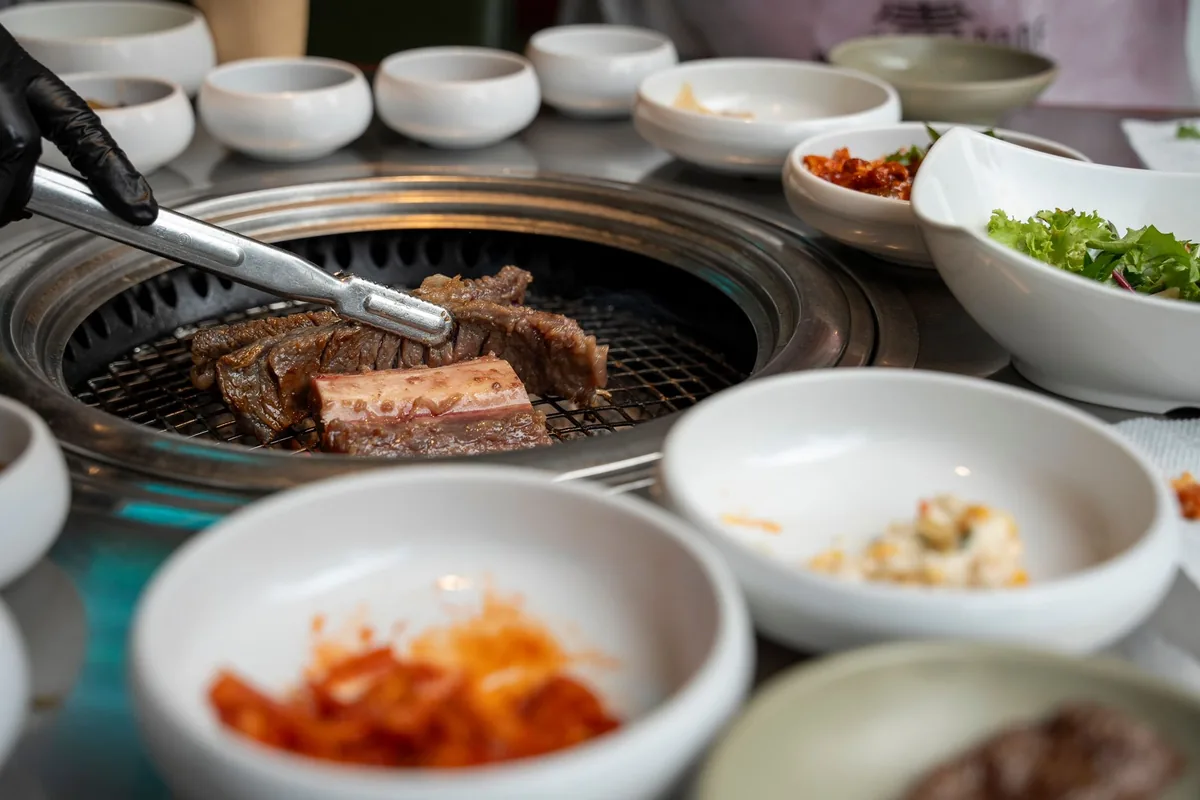
Kimchi appears at virtually every Korean meal as a banchan, and aged kimchi becomes the base of beloved dishes such as kimchi stew. Many homes keep a dedicated refrigerator tuned to hold it at the right temperature. More than a side dish, it is the clearest expression of a food culture built on preservation and developed flavour.
What to Expect
Kimchi arrives as a banchan before the meal begins. It is the permanent fixture at every Korean table, fresh, as in geotjeori, mildly fermented, such as yangbaechu, or aged, like mukimchi. Each stage has distinct characteristics.
Why Try It
Kimchi is the most complete expression of Korean food philosophy, preservation, probiotic culture and deeply developed flavour from the simplest ingredients.
✦ Photo Gallery
Insider Tips
Aged kimchi (over 6 months) has a more complex sour depth than fresh kimchi.
Kimchi-jjigae (kimchi stew) made with older kimchi is one of Korea's great dishes.
Every Korean household has a dedicated kimchi refrigerator that operates at a specific temperature. This is not an affectation.