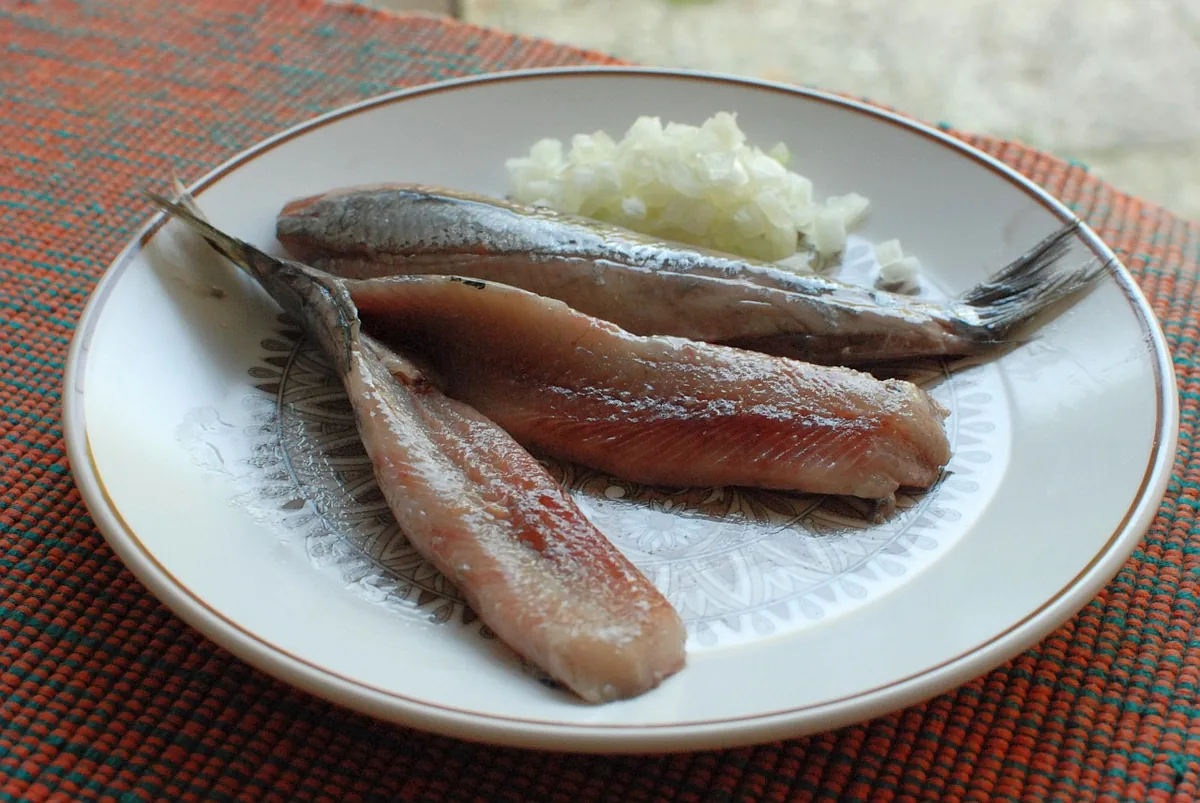
The Netherlands' most distinctive food experience involves holding a raw cured herring by the tail, tilting the head back and lowering it into the mouth, or eating it on bread with onion.
About Haring
The Netherlands' most singular food experience: a lightly cured ('maatjes') young herring, peeled and filleted, held by the tail and lowered into the mouth whole; alternatively eaten on white bread with raw onion and pickles from one of Amsterdam's haringhandel stalls; the maatjes herring season opens in June with the first catch; Dutch people queue.
Raw Herring
Haring is the Netherlands' most distinctive food: young herring, lightly salt-cured rather than cooked, cleaned and filleted to be eaten almost raw. It is held by the tail and lowered into the mouth, or served on white bread with raw onion and pickles. The flesh is silky, mild and clean rather than strongly fishy.
“Haring is the Netherlands' most distinctive food: young herring, lightly salt-cured rather than cooked, cleaned and filleted to be eaten almost raw.”
The Curing
The herring is gibbed and lightly cured in salt, a gentle preservation that firms the flesh and mellows its flavour without cooking it. The young maatjes herring, caught before it has spawned, is especially prized for its fat and sweetness. The result is delicate, a world away from heavily pickled herring.
Hollandse Nieuwe
The season opens in late spring with the first catch, the Hollandse Nieuwe, celebrated each year at the harbour and awaited with real anticipation. The Dutch queue for the first herring of the year as a kind of cultural obligation. It is regarded as the best fish of the year, at its fattest and sweetest.
How It Is Eaten
At a herring stall it is handed over on a small board, and the classic method, head tipped back, fish lowered in by the tail, is simpler than it looks, since the tail is just the handle. For the squeamish, the bread-and-onion version is just as traditional. Either way, it shows the directness of Dutch food: a fish, barely prepared, eaten at its best.
What to Expect
At an Amsterdam haringhandel stall, the herring is handed over on a small board. The herring is held by the tail, the head is removed. The head is tilted back and the herring is lowered in. The texture is silky and clean. The flavour is mild, slightly briny, not fishy.
Why Try It
Haring reveals Dutch food culture's directness: a fish, barely prepared, eaten in the most efficient way possible. It is excellent.
Insider Tips
- The Hollandse Nieuwe (first catch, May-June) is the best herring of the year, seek it out specifically.
- Stubbe's Haring at the Singel flower market in Amsterdam is the most reliable city stall.
- The eating method is no cause for hesitation, since the tail is just the handle, not part of the fish itself.