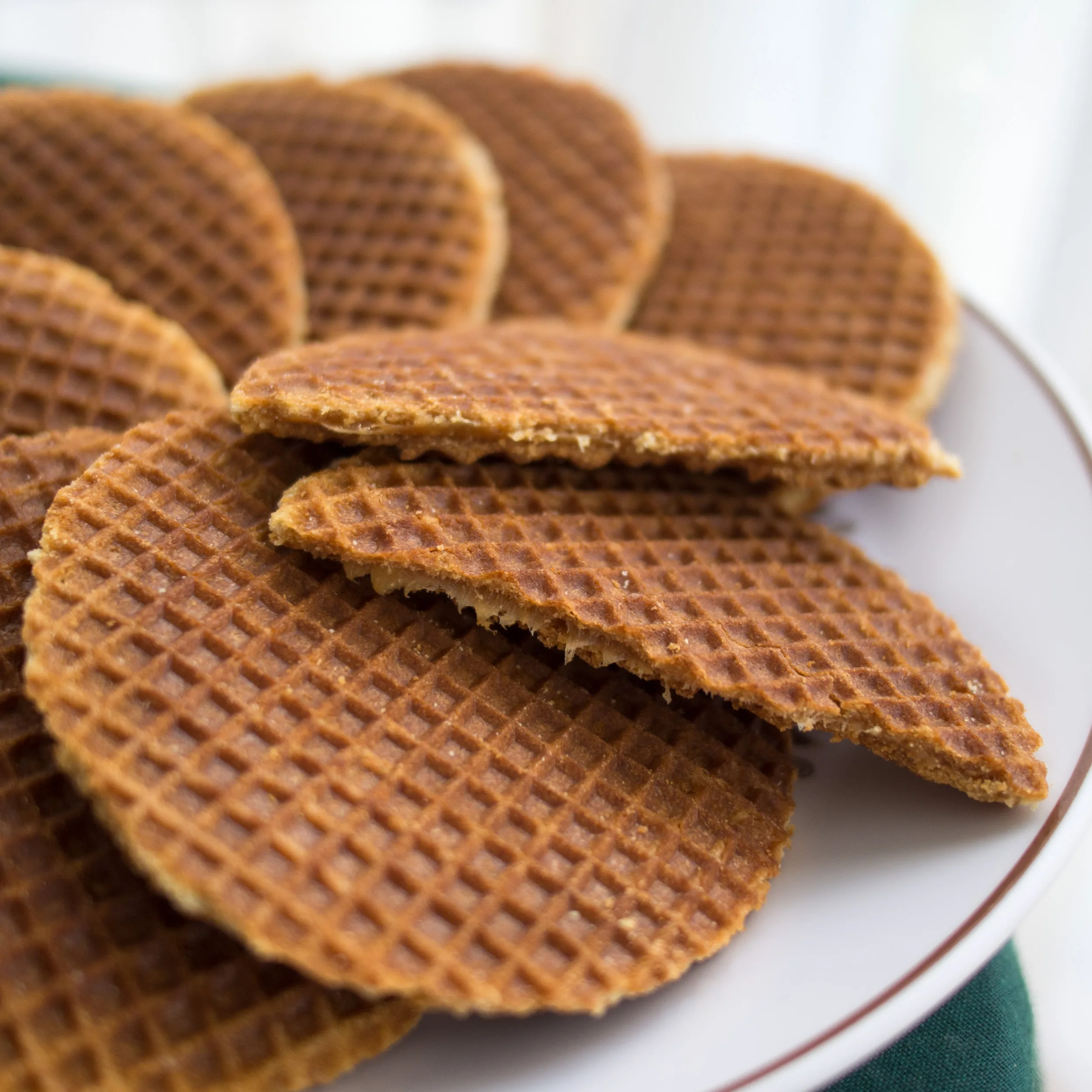
"The Netherlands' most famous biscuit: two thin wafers with caramel inside. Place it on a hot coffee cup for one minute. The steam softens the caramel. Eat it immediately."
About Stroopwafel
The Netherlands' most famous biscuit and its most exported sweet, two thin round wafers of butter-baked dough sandwiched around a layer of caramel syrup; invented in Gouda in 1810 by baker Gerard Kamphuisen; placed on top of a hot cup of coffee or tea for a minute so the steam softens the caramel to a sticky, flowing centre; the airport stroopwafel is an international comfort object.
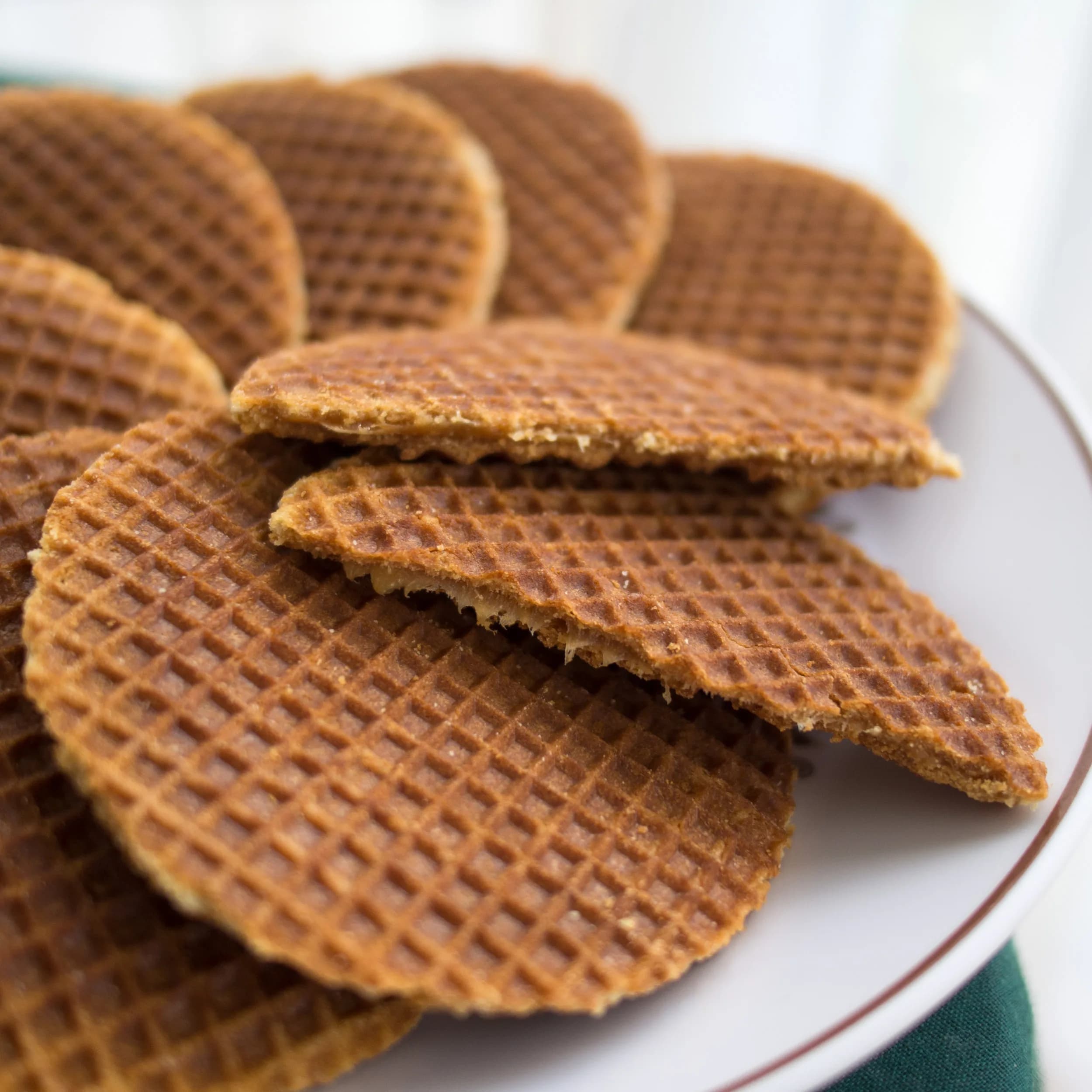
Stroopwafel, a staple of Netherlands's cuisine
The Biscuit
The stroopwafel is the Netherlands' most famous biscuit: two thin, round wafers of butter-baked dough sandwiched around a layer of caramel syrup. Said to have originated in Gouda in the early nineteenth century, it has become the country's most exported sweet. Crisp wafer and chewy caramel are its two essential textures.
Made Fresh
At its best, a stroopwafel is made on the spot, the thin dough pressed in a hot waffle iron and split while warm to be filled with caramel. Fresh from the iron, the wafer is tender and the caramel soft and flowing. It is a different thing entirely from the firm, packaged version.
The Steam Method
The classic trick is to rest the stroopwafel on top of a hot cup of coffee or tea for a minute or so, letting the steam soften the caramel to a sticky, molten centre and gently warm the wafer. This is the way to eat a packaged one, and it transforms it. Too short and the caramel stays firm; too long and it slides off.
Fresh Versus Packaged
The cold stroopwafel eaten from an airport packet gives only a hint of what the biscuit can be. Sought out fresh from a Gouda market stall, or warmed over a coffee, it reveals its proper character. It is the most internationally visible product of Dutch food culture, and the warm version is the one worth knowing.
What to Expect
The stroopwafel, still slightly warm from the iron at a Gouda market stall, has soft caramel. Folding it slightly, the edge is the point of entry for a first bite. The caramel flows. Airport stroopwafels do not prepare the diner for this experience.
Why Try It
Stroopwafel is Dutch food culture's most internationally visible product, and the steam method is the version worth knowing.
✦ Photo Gallery
Insider Tips
Place it on the coffee cup for exactly 60-90 seconds. Less and the caramel stays firm; more and it gets too soft.
Albert Heijn (Dutch supermarket) stocks the best supermarket versions. Daelmans is the benchmark brand.
Visit the stroopwafel shop at Gouda's Markt for the freshly made version.