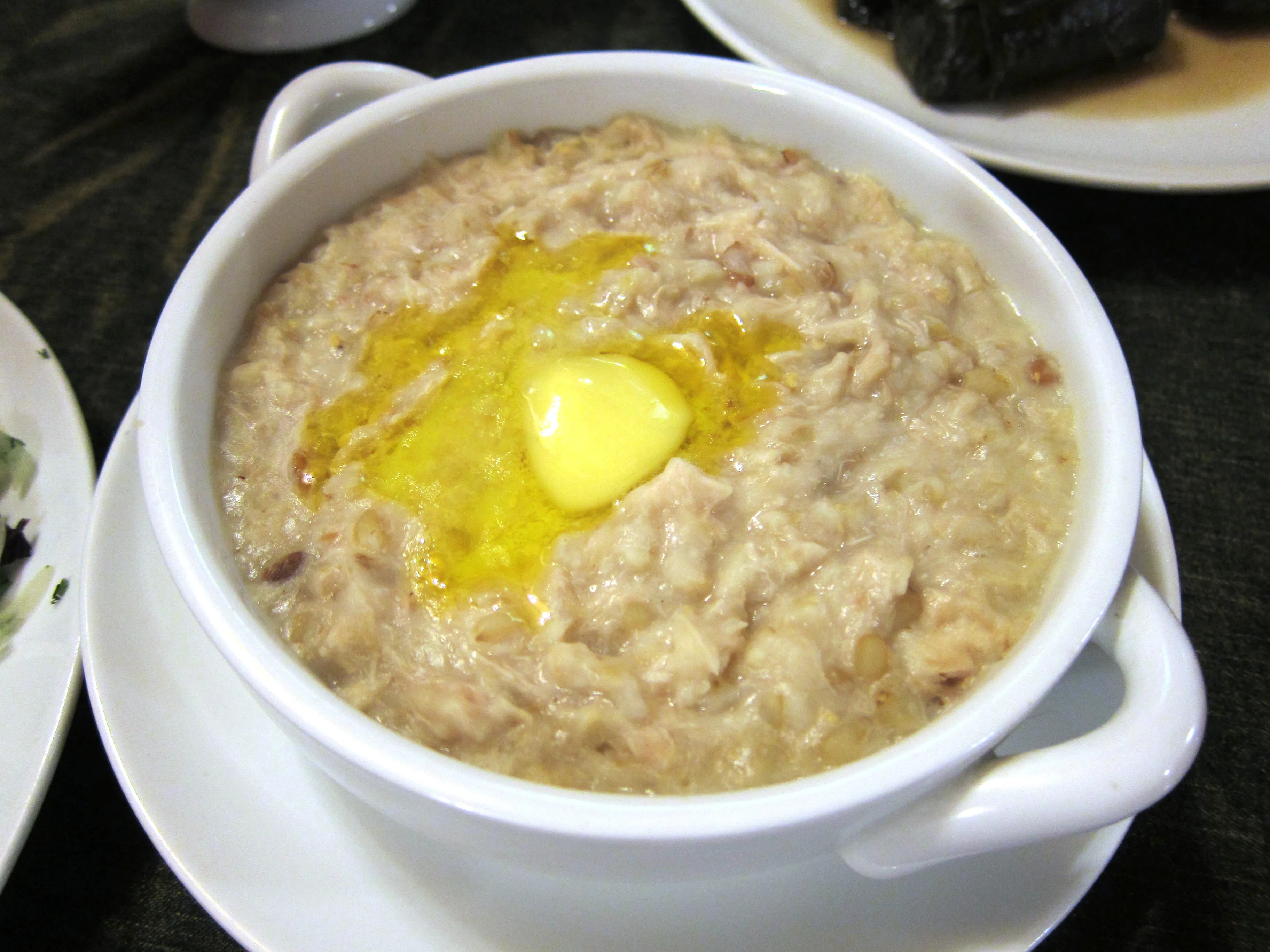
"One of the Arab world's oldest dishes: wheat and meat slow-cooked for 12 hours until they merge into a single silky porridge. Ramadan's dawn dish."
About Harees
One of the oldest dishes in the Arab world: whole wheat and meat slow-cooked in a sealed clay pot or copper cauldron for up to 12 hours until both merge into a smooth, porridge-like consistency; seasoned with ghee, cinnamon and sometimes fried onion; Jeddah's coastal version uses fish; served at dawn during Ramadan and at every Jeddah family iftar.
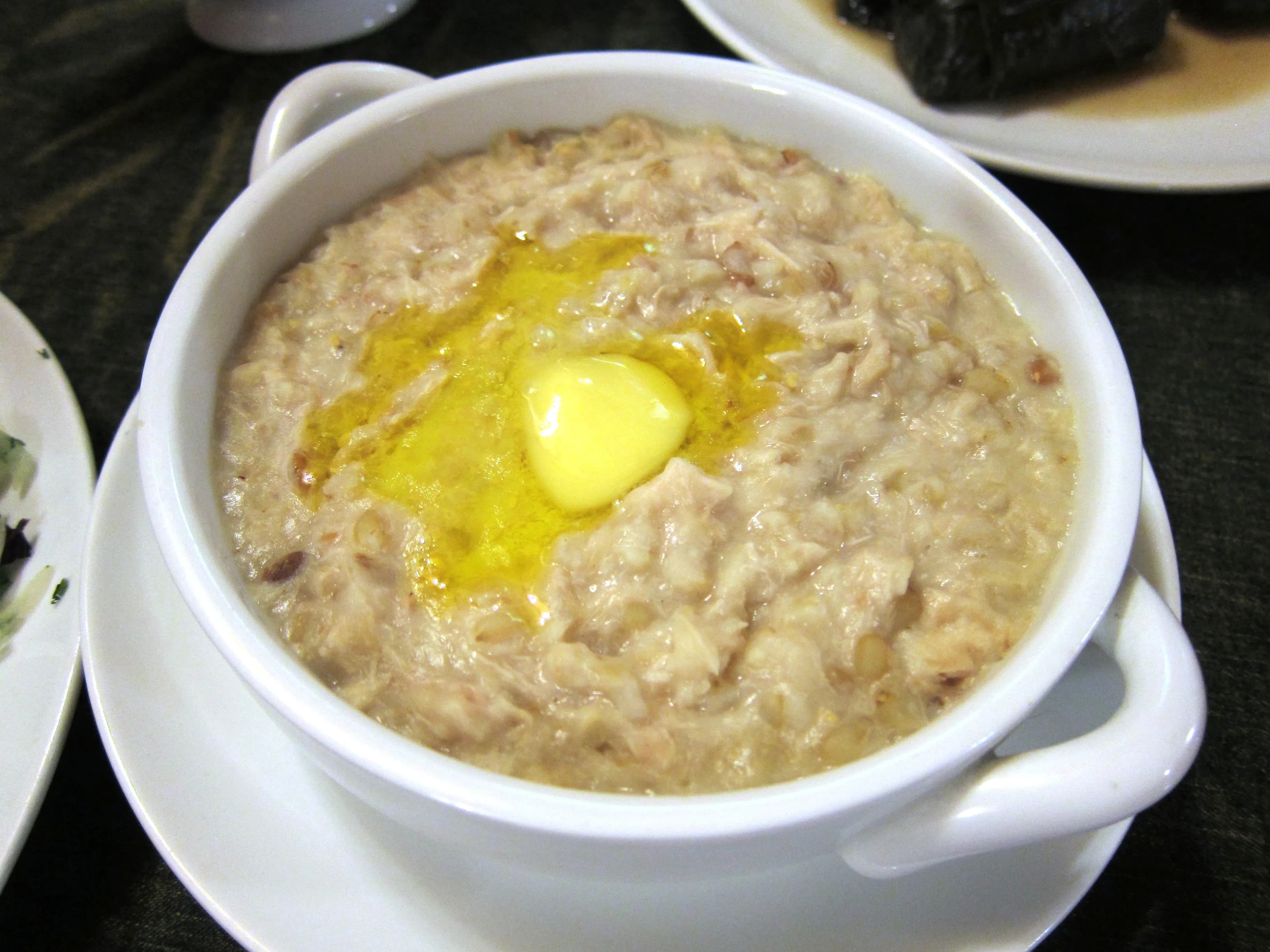
Harees, a staple of Saudi Arabia's cuisine
An Ancient Dish
Harees is one of the oldest dishes of the Arab world: whole wheat and meat slow-cooked together for many hours in a sealed pot until they merge into a smooth, porridge-like mass. Seasoned simply with ghee and a dusting of cinnamon, it is rich and comforting. In Saudi Arabia it is a fixture of the Ramadan table.
The Merge
The defining feature is the long, slow cook, often around twelve hours, during which the wheat and meat lose their separate identities and become a single silky texture. If grains of wheat or pieces of meat are still distinct, it has not cooked long enough. That seamless merging is the whole point of the dish.
Simple and Patient
Harees is built from very few ingredients, essentially wheat, meat and salt, and depends entirely on time and gentle heat rather than complex seasoning. A pool of ghee stirred in or poured over at the end carries the warmth of cinnamon across the top. It is among the purest examples of old Gulf cooking, where patience does the work.
A Ramadan Food
In Saudi Arabia harees is closely associated with Ramadan, eaten to break the fast or before the dawn fast begins, valued for being filling and easy to digest. Coastal Jeddah even makes a version with fish. Smooth, warming and unadorned, it is a dish of tradition and of the holy month.
What to Expect
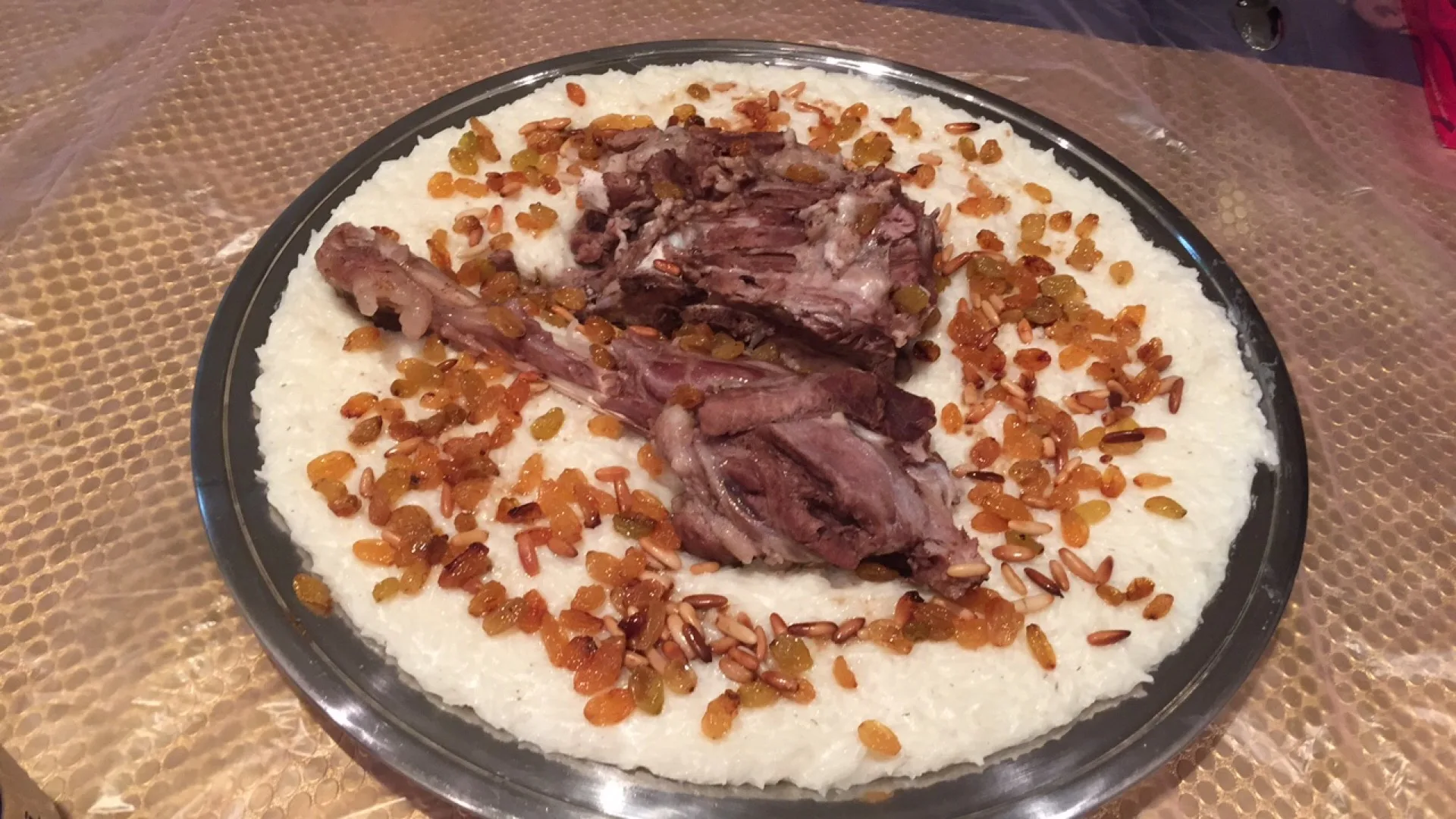
The harees arrives in a deep bowl, the surface swirled with ghee, the texture smooth and uniform. The wheat and meat are indistinguishable. The cinnamon is present on the nose.
Why Try It
Harees demonstrates the oldest form of Gulf cooking: two ingredients, sealed heat, extreme patience.
✦ Photo Gallery
Insider Tips
The texture must be completely smooth, any grain texture means it needed more time.
The ghee on top is not optional. It's the finishing fat that carries the cinnamon.
Eat it during Ramadan for the authentic cultural context.