"Saudi Arabia's most ancient grain dish: cracked wheat slow-cooked with lamb until it collapses into a warming porridge. Najd's most traditional food, eaten since before Islam."
About Jareesh
Saudi Arabia's most ancient grain dish: hulled and cracked wheat slow-cooked with lamb, chicken or camel meat and seasoned with onion, cumin and turmeric until it collapses into a thick, warming porridge; topped with browned onion and ghee; a dish from the Najdi heartland eaten at cold desert mornings; a staple of Saudi tribal heritage.

Jareesh, a staple of Saudi Arabia's cuisine
An Ancient Grain
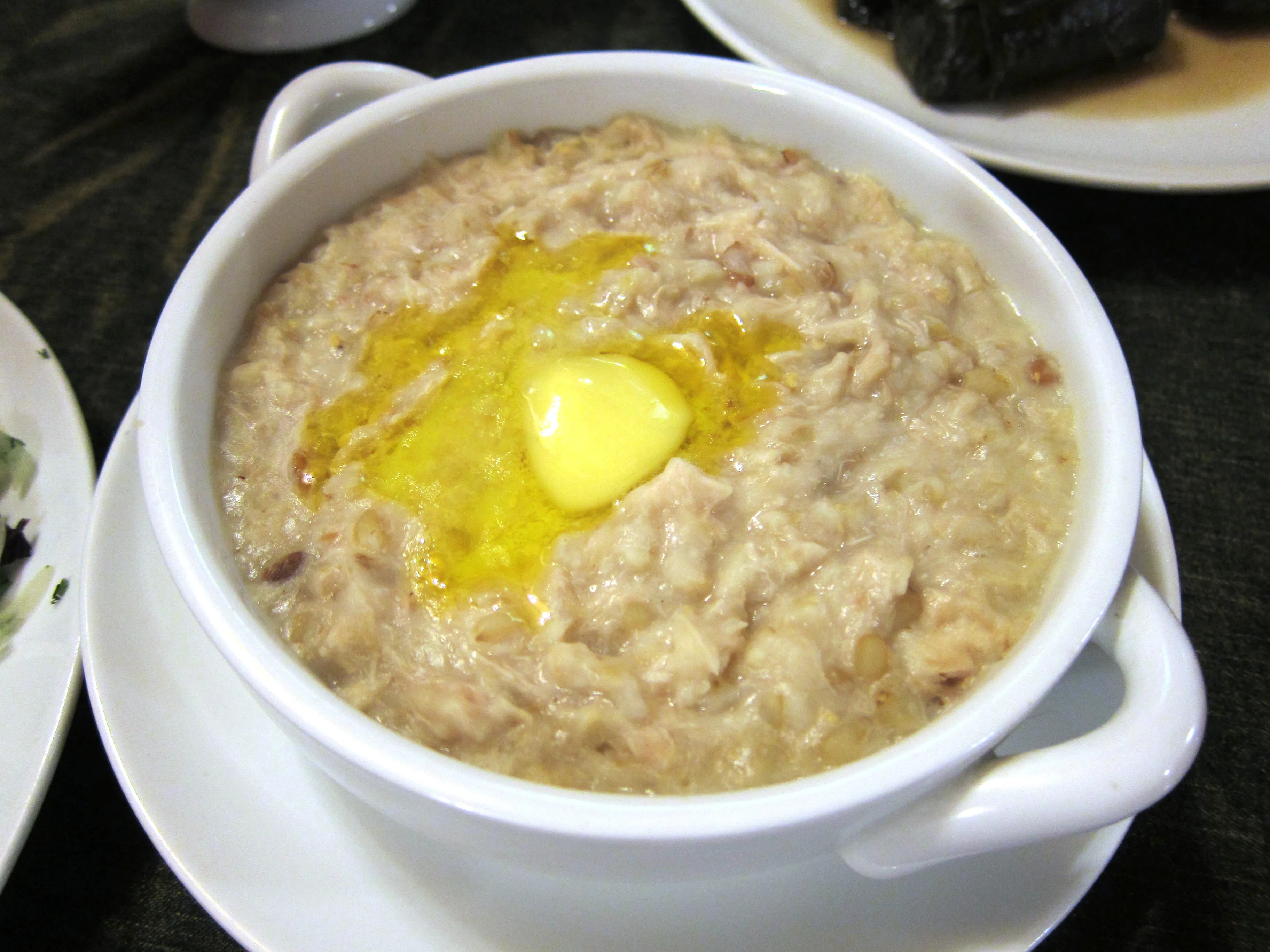
Jareesh is one of Saudi Arabia's most ancient grain dishes, made from cracked, hulled wheat slow-cooked with lamb or chicken until it collapses into a thick, warming porridge. Onion, cumin and turmeric flavour it, and it is finished with browned onion and ghee. It is hearty, homely food from the Najdi heartland.
The Method
The cracked wheat is simmered long and slow with the meat and aromatics until the grains break down and the dish turns thick and creamy. A topping of dark, caramelised onion adds a sweet, savoury counterpoint, and ghee enriches it. If the grains stay distinct, it needs more time on the heat.
A Najdi Heritage
Jareesh belongs to the cooking of Najd, the central Saudi region, and is regarded as one of the oldest dishes of that tradition, alongside kabsa and the grain dish margoog. It is served at gatherings and family meals as a comforting staple. Its simplicity ties it to the Bedouin and farming past of the interior.
Warming Comfort
With its soft, collapsed wheat, gentle spice and caramelised onion, jareesh is warming and completely filling, suited to cold desert mornings and evenings. It connects the modern Saudi table to a long history of grain-and-meat cooking. Sought out at a Najdi restaurant, it is among the country's most traditional foods.
What to Expect
The jareesh arrives thick and fragrant, the browned onion on top giving a slight caramel sweetness. The cumin and turmeric are present. It is warm and completely filling.
Why Try It
Jareesh connects Saudi Arabia's Bedouin past to its present table, a dish made from grain and meat, unchanged in concept for centuries.
✦ Photo Gallery
Insider Tips
The wheat must fully collapse, if grains are still distinct, it needs another hour.
The browned onion topping (served separately) should be dark and slightly caramelised.
Order it at a Najdi restaurant in Riyadh for the most traditional version.