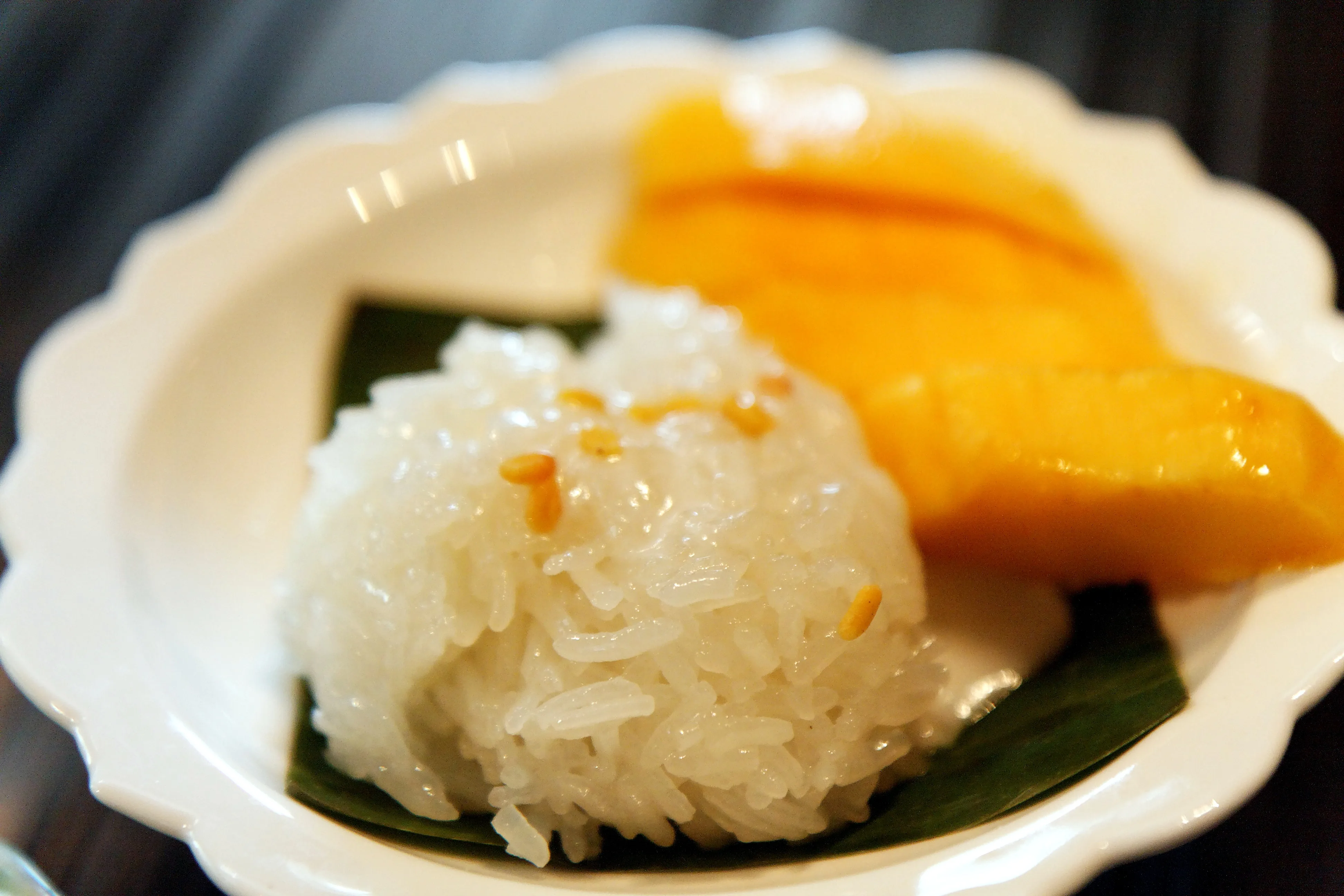
"Thailand's most universally loved dessert is only available April-June when Nam Dok Mai mangoes are ripe. The warm rice and cold mango contrast is what the dish is."
About Mango Sticky Rice
Thailand's most universally beloved dessert: warm glutinous rice cooked in sweet salted coconut cream, served beside ripe yellow-gold Nam Dok Mai mango slices with a separate drizzle of thick coconut sauce and a scattering of toasted mung beans; only available during mango season (April to June); the combination of sweet, salty, warm rice and cold, fragrant mango is a perfect contrast.
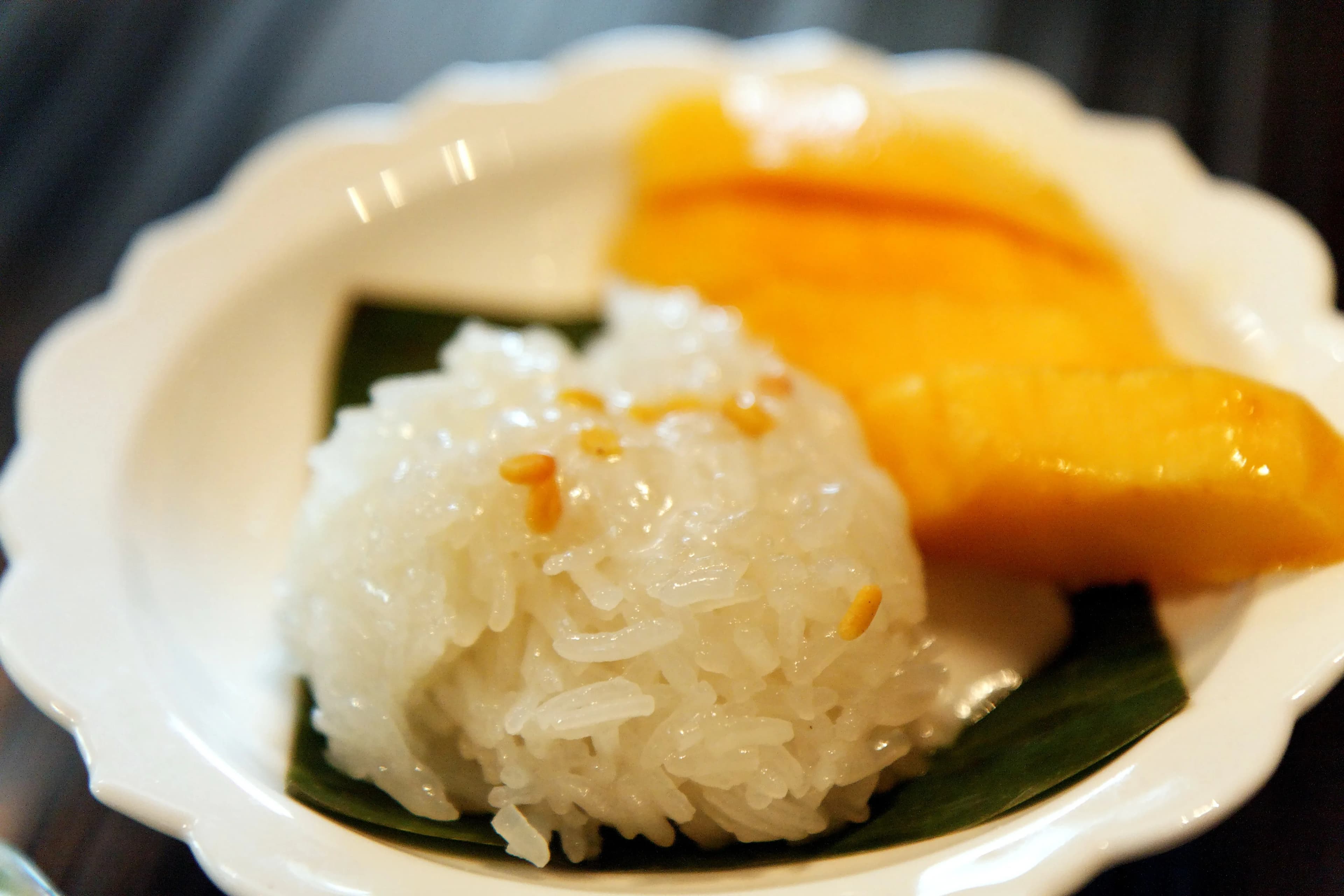
Mango Sticky Rice, a staple of Thailand's cuisine
Thailand's Dessert
Mango sticky rice is Thailand's most universally loved dessert: warm glutinous rice steeped in sweet, salted coconut cream and served beside ripe mango, with a drizzle of thick coconut sauce and a scatter of toasted mung beans. The contrast of warm rice and cold mango is the essence of the dish. It is at once sweet, salty and fragrant.
The Mango
The classic variety is Nam Dok Mai, small, golden-yellow, intensely sweet and free of fibre. Other mangoes give a different and lesser result, which is why the dish is so tied to the right fruit. The mango is served cold against the warm rice, a deliberate temperature play.
The Rice
The rice is glutinous sticky rice, steamed and then folded together with coconut cream cooked with sugar and a pinch of salt until it is rich and glossy. The salt is essential, balancing the sweetness and bringing out the coconut. Warm and sticky, it is the savoury-sweet base for the cold fruit.
A Seasonal Treat
Mango sticky rice exists, in its true form, only during mango season, roughly April to June, when Nam Dok Mai mangoes ripen. The short window and the specific fruit make it something to seek out at the right time of year. Eaten with a piece of warm rice and cold mango taken together, it is Thailand's most beloved sweet.
What to Expect
The mango sticky rice arrives on a wide plate, the rice warm and sticky from the coconut cream, the mango slices cold from the refrigerator. One piece of each is taken together, and the temperature contrast defines the experience.
Why Try It
Mango sticky rice is Thai cooking's most seasonal dessert, the specific mango variety and the short availability window make it precious.
✦ Photo Gallery
Insider Tips
Only eat it during mango season (April-June), the off-season version with inferior mangoes is not the same dish.
Mae Varee in Bangkok's Thong Lo area is the most famous dedicated address.
The coconut sauce poured over at service is thick, stir it in before eating.