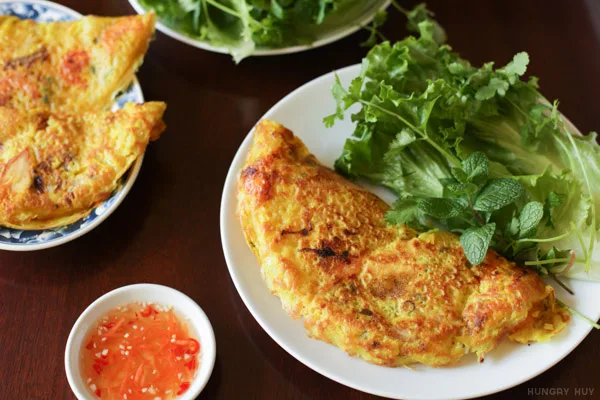
"Vietnam's sizzling crêpe (xèo is the sound it makes hitting the pan) is torn into pieces, wrapped in mustard leaf with herbs and dipped in fish sauce. The wrap is required."
About Bánh Xèo
Vietnam's sizzling crepe: a thin, turmeric-yellow rice flour batter poured into a searingly hot pan to crackle and sear (xèo is onomatopoeia for the sound), filled with pork belly, prawns, bean sprouts and spring onion; folded in half and eaten by tearing off pieces, wrapping them in mustard leaf with fresh herbs and dipping in nước chấm; the southern version is enormous; the central version is smaller and more intensely crisp.

Bánh Xèo, a staple of Vietnam's cuisine
The Sizzling Crepe
Banh xeo is Vietnam's great savoury crepe, a thin, turmeric-yellow rice-flour batter poured into a searing pan where it crackles and sizzles, the sound that gives the dish its name. It is filled with pork belly, prawns, bean sprouts and spring onion and folded in half. Crisp, golden and a little fatty, it is built to be eaten by hand.
The Filling
Inside the lacy crepe go slices of pork belly, whole prawns, bean sprouts and onion, the batter crisping around them as it cooks. The turmeric gives both the colour and a faint earthy note, and coconut milk in the batter adds richness in southern versions. The contrast of crisp shell and savoury filling is the heart of it.
The Wrap
A banh xeo is incomplete without its herb wrap. Pieces are torn off and bundled in mustard leaf or lettuce with a handful of fresh herbs, mint, basil and more, then dipped in nuoc cham, the sweet-sour-salty fish-sauce dip. The fresh, slightly bitter leaves cool and cut the fatty crepe. The crepe, herbs and dip work as one system.
A Regional Dish
Banh xeo changes across the country: the southern version is large and generous, while the central Vietnamese ones are smaller and especially crisp. Wherever it is made, it is best eaten the moment it is folded, while the crispness lasts. It shows how Vietnamese eating works, a crisp element, fresh herbs and a dipping sauce combined at the table into something complete.
What to Expect
At a Ho Chi Minh City bánh xèo restaurant the crêpe arrives folded in the pan, still sizzling. Hands tear a piece, wrap it in a mustard leaf alongside basil and mint, then dip it in nước chấm.
Why Try It
Bánh xèo demonstrates how Vietnamese eating works: the combination of crispy crêpe, fresh herb wrap and fish sauce dip is a complete system, not three separate elements.
✦ Photo Gallery
Insider Tips
The mustard leaf (lá lốt) wrap is structural. It cools the crispy crêpe and adds herbal bitterness.
Bánh Xèo 46A on Đinh Công Tráng in Ho Chi Minh City is the most celebrated address.
Eat immediately after the crêpe is folded, the crispness lasts under five minutes.