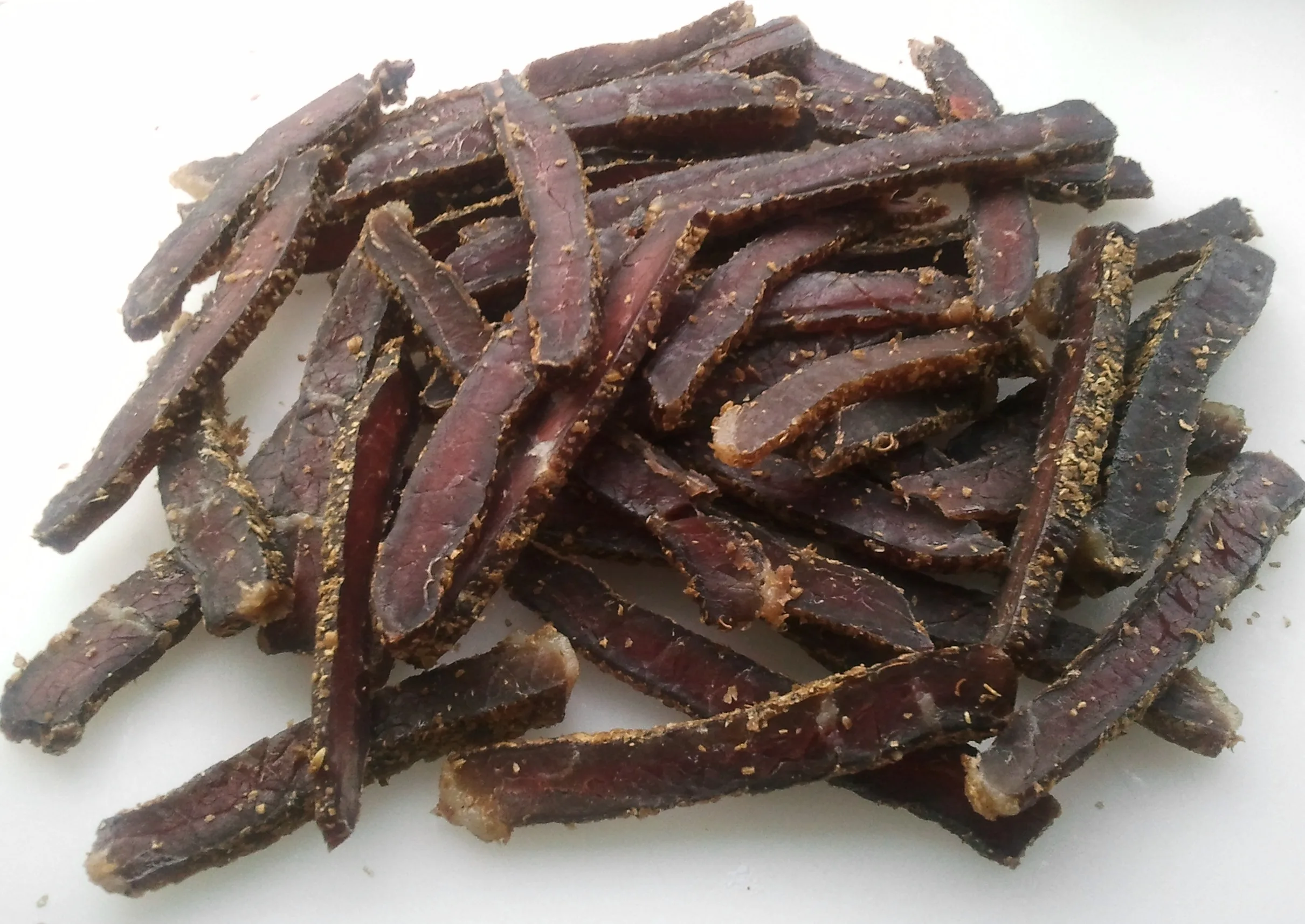
"South Africa's defining snack: thick beef, ostrich or game strips vinegar-marinated, coriander-rubbed and air-dried for a week. Carried in every South African pocket."
About Biltong
South Africa's defining snack and one of the world's great cured meats: thick strips of beef, ostrich or game (kudu, springbok) marinated in vinegar, then rubbed with coriander, black pepper and salt and air-dried for 5 to 7 days in a ventilated drying box; the texture ranges from moist (nat) to dry and crumbly (droog); carried in the pockets of every South African; sold in every petrol station, sports stadium and airport.
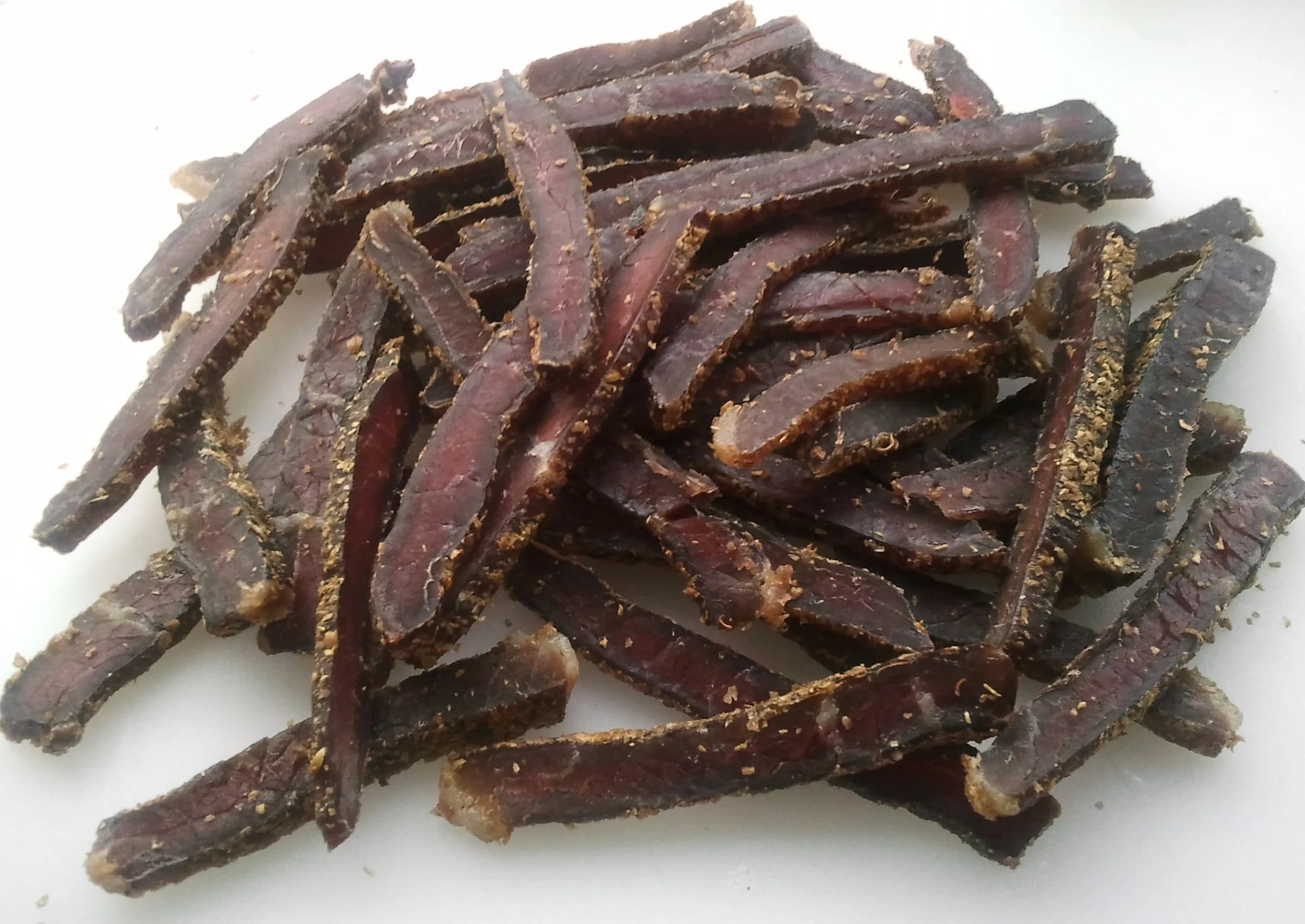
Biltong, a staple of South Africa's cuisine
South Africa's Cured Meat
Biltong is South Africa's defining cured-meat snack: thick strips of beef, ostrich or game, marinated in vinegar, rubbed with spices and air-dried for several days. The texture ranges from moist and tender to dry and crumbly, depending on the drying. It is carried in pockets and sold everywhere, from petrol stations to sports grounds.
The Coriander
The spice that most marks biltong as South African is ground coriander seed, used alongside black pepper and salt. It runs through biltong, the boerewors sausage and other cured meats, a defining flavour of the country's cooking. Toasted and crushed, it gives the dried meat its warm, slightly citrusy aroma.
The Drying
Biltong is made by marinating the meat in vinegar, which both flavours and helps preserve it, then coating it in spice and hanging it to air-dry. Unlike smoked jerky, it is cured by air alone, the South African climate doing the work. The result can be left moist, called nat, or dried hard and crumbly, called droog.
A Trek Tradition
Biltong has roots in the era of the Great Trek, when settlers needed to preserve abundant game without refrigeration, and the air-drying method suited the dry interior. It remains a national habit, eaten as an everyday snack across the country. Game versions such as kudu and springbok carry a more complex flavour than beef, and a dedicated biltong shop is the place to find the best.
What to Expect
The biltong arrives in a paper bag, the strips dark and fragrant with coriander. The moist version (nat) is tender and slightly yielding. The dry version (droog) crumbles under slight pressure.
Why Try It
Biltong reveals South Africa's preservation culture, a technique forged during the Great Trek when refrigeration was unavailable and game abundant.
✦ Photo Gallery
Insider Tips
Nat (moist) is more tender; droog (dry) is more intense. Try both on first encounter.
Game biltong (kudu, springbok) has a more complex flavour than beef, seek it out.
Buy from a dedicated biltong shop, not a supermarket.