“Iquique became one of South America's richest cities almost overnight on nitrate money, and the merchants who profited built their storefronts in imported Pacific Northwest timber. The buildings are still standing.”
About Baquedano Street
Chilean since the War of the Pacific (1879), Iquique experienced its architectural peak during the nitrate boom of 1880–1930. The Georgian-style timber buildings on Baquedano Street were funded by saltpeter fortunes and preserved by the economic collapse that followed the industry's end.
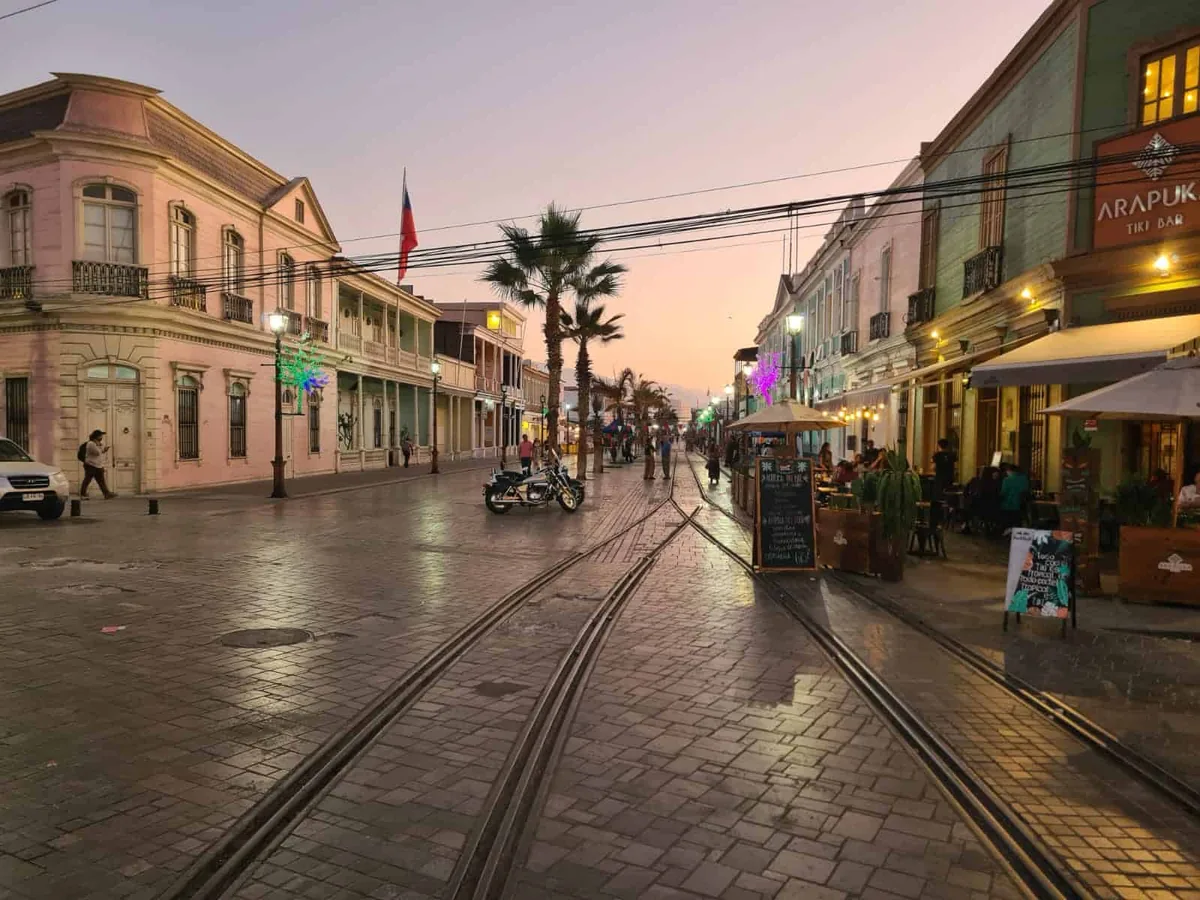
Baquedano Street
Baquedano Street in Iquique is a pedestrian boulevard lined with Georgian-style wooden buildings from the nitrate era, the most intact example of the architectural style that defined northern Chile's mining boomtown aesthetic. The buildings, painted in warm earth tones and supported on columns that shade the walkway, were built between the 1880s and 1920s by merchants, entrepreneurs, and port officials who made fortunes from the saltpeter trade.
it to Chile, 1879
Iquique was a Peruvian port city until the War of the Pacific delivered it to Chile in 1879. The nitrate boom that followed transformed it almost overnight into one of South America's wealthiest cities, and the merchant class that accumulated capital from the trade built in a style influenced by the Georgian and Victorian architecture they had seen in British ports and catalogues. Wood was scarce in the Atacama, so most was imported from the Pacific Northwest of North America, a detail that explains both the style and the construction quality. When the nitrate economy collapsed in the 1930s, the grand buildings were preserved largely through neglect; there was no money to replace them and no development pressure to demolish.
The street is a working commercial boulevard as much as a heritage zone, restaurants, bars, and shops occupy the ground floors of buildings that are a century old. Walking its length takes twenty minutes; stopping to eat or drink adds the pleasant complication of actually using what you've come to look at. The Regional Historical Museum occupies one of the best-preserved buildings.
Baquedano Street runs through central Iquique , easily walkable from the city's main plaza and waterfront.
The Experience
A pedestrian street of century-old timber commercial buildings that are still in active use, restaurants, bars, and a regional museum occupy the same columns and façades that housed the nitrate era's merchant class.
Why It Matters
Baquedano Street is the most concentrated example of the Georgian-style architecture that characterized northern Chile's boom towns and documents the brief, intense period when Iquique competed with Valparaíso as a Pacific commercial center.
Why Visit
Heritage streets that are also genuinely alive, with working businesses rather than souvenir shops filling the period buildings, are rarer than the typical restored pedestrian zone. Baquedano achieves this naturally.
✦ Insider Tips
- 1
The Regional Historical Museum on the street is worth an hour, it covers the nitrate era in detail.
- 2
Evening is the best time to walk the street: the light is better for the building facades and the restaurants are operating.
- 3
The Casino Español, a Moorish Revival building on the adjacent Plaza Prat, is worth adding to the walk.