“Chile's first Nobel laureate grew up in one of South America's driest valleys and wrote poetry that still defines how the country understands itself. Her museum is in the town where she was born.”
About Gabriela Mistral Museum
Gabriela Mistral (1889–1957) was born Lucila Godoy Alcayaga in Vicuña, worked as a rural schoolteacher, achieved international literary recognition by the 1920s, and won the 1945 Nobel Prize in Literature, the first Latin American to do so. The museum in Vicuña opened after her death and has expanded its collection since.
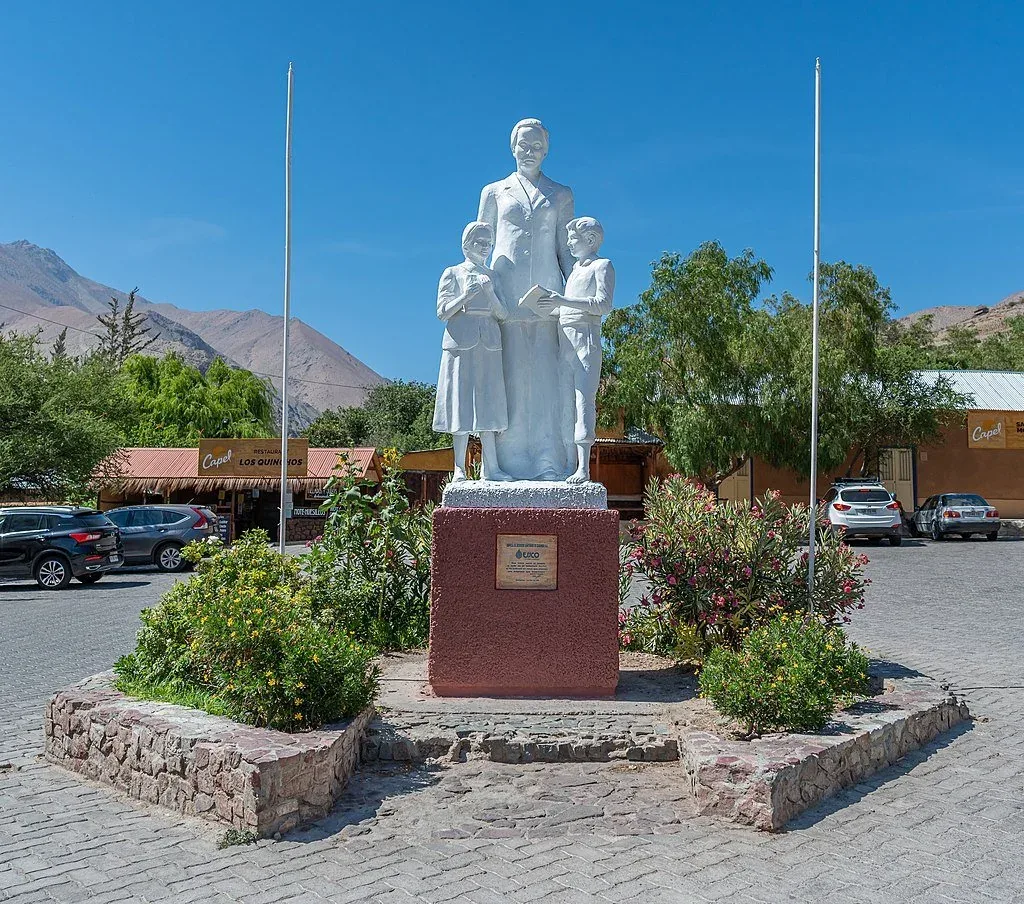
The Gabriela Mistral Museum in Vicuña, in the Elqui Valley, commemorates Chile's first Nobel laureate in literature, a poet whose work has shaped Latin American letters since the 1920s and whose image appears on the Chilean 5,000-peso note. The museum holds personal objects, manuscripts, photographs, and first editions from a life that moved from this desert valley to the consular circuits of Europe, the Americas, and Asia.
The museum holds personal objects, manuscripts, photographs, and first editions from a life that moved from this desert valley to the consular circuits of Europe, the Americas, and Asia.
What it represents
Lucila Godoy Alcayaga, who published as Gabriela Mistral, was born in Vicuña in 1889 and grew up in the nearby hamlet of Montegrande. She began her writing career as a rural schoolteacher, achieved national recognition with her elegies for a lost love, and by the 1920s was writing and lecturing internationally. Her poetry, dense with Elqui Valley landscape, Catholic symbolism, and maternal grief, gave Chilean literature its first international voice. The Nobel Prize came in 1945, making her the first Latin American to receive it. She died in New York in 1957 and is buried in Montegrande, which she had specified as her wish.
The museum occupies a building near the Vicuña plaza and covers Mistral's life chronologically, childhood in the valley, teaching career, consular appointments, Nobel recognition. The original manuscripts and correspondence are the collection's strength; the personal photographs show a figure who moved through the twentieth century's intellectual world while remaining visually connected to where she began.
Vicuña is 62 kilometers from La Serena on Route D-485. Buses run regularly from La Serena's terminal.
The Experience
Chronological display of manuscripts, personal photographs, correspondence, and first editions from a life that moved from the Elqui Valley to the global literary circuit, a biography told through objects.
Why It Matters
Mistral's Nobel Prize was not merely a personal achievement but a recognition that Latin American literature had developed a distinct voice. The museum grounds that significance in a specific place and biography.
Why Visit
Literary pilgrimage sites are often disappointing because the connection between place and work is thin. Mistral's connection to the Elqui Valley is woven into the poems themselves, the museum makes that visible.
✦ Insider Tips
- 1
Read at least a handful of Mistral's poems before visiting, the museum makes more sense with the work in mind.
- 2
Combine with a visit to Montegrande, 30 kilometers further up the valley, where she is buried.
- 3
The Elqui Valley drive from La Serena is worthwhile in itself; allow a full day rather than rushing.