“A 139-meter basalt cliff above the Pacific marks where a 45-minute battle in 1880 transferred Arica from Peru to Chile, a transfer that has never fully settled.”
About Morro de Arica
Chilean forces stormed the Morro de Arica on June 7, 1880, during the War of the Pacific, defeating the Peruvian garrison in under an hour. The battle gave Chile control over northern territories including the Atacama nitrate fields that financed the country's industrial development.
What Morro de Arica actually is
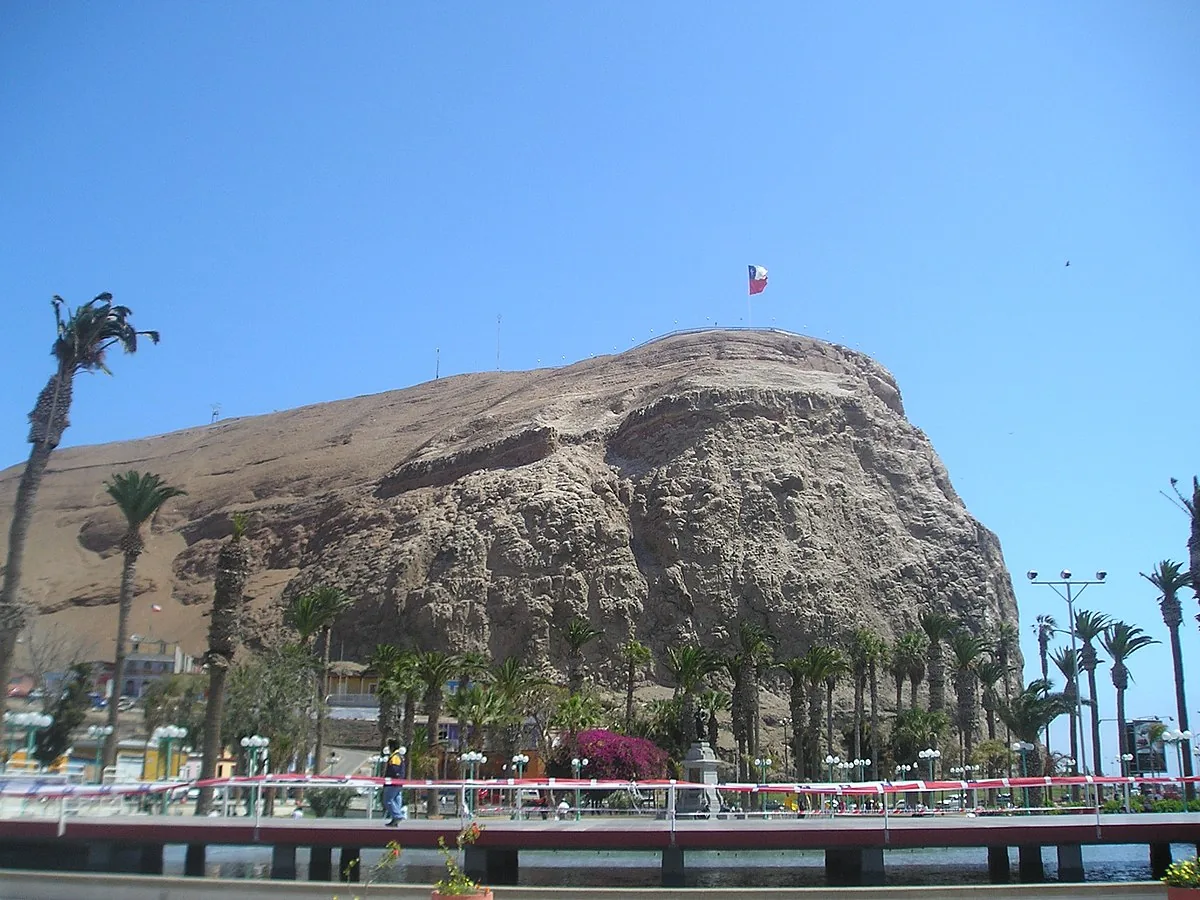
The Morro de Arica is a 139-meter basalt promontory that rises abruptly from the Pacific coastline at the northern edge of Chile, visible from most of the city below. A museum, a Chilean flag, and the cannons of the 1880 battle sit at its summit, making it simultaneously a war memorial, a viewpoint, and a geographic landmark that defines Arica's skyline.
The Morro de Arica is a 139-meter basalt promontory that rises abruptly from the Pacific coastline at the northern edge of Chile, visible from most of the city below.
On June 7, 1880, Chilean forces stormed the Morro in a battle that lasted less than an hour. The Peruvian defenders had held the position for months, and the assault, infantry climbing the near-vertical face under fire, succeeded through a combination of surprise, speed, and the cover of pre-dawn darkness. The battle was part of the War of the Pacific, the conflict that transferred Arica from Peru to Chile and gave Chile control over the mineral-rich Atacama region. The Peruvian commander, Colonel Francisco Bolognesi, died on the promontory rather than surrender, a fact Peruvians remember as national martyrdom.
The road to the summit is driveable, or a steep path climbs the face for those who want the exercise. At the top, the Museo de Armas displays weapons and artifacts from the 1880 battle, and the original cannons point seaward as they did when the position was defended. The 360-degree view takes in the Pacific, the desert, the city, and on clear days the distant Andean cordillera.
The Morro is at the southern end of Arica's city center, accessible on foot from the market area or by taxi to the summit road. The museum is free and open daily.
The Morro is at the southern end of Arica's city center, accessible on foot from the market area or by taxi to the summit road.
The Experience
Summit views across the Pacific, desert, and Andes from 139 meters, alongside original battle cannons and a museum of War of the Pacific artifacts, the historical weight and the physical view reinforce each other.
Why It Matters
The Morro is the most visible symbol of a war whose territorial consequences still shape Chile-Peru-Bolivia relations. Arica's position as a Chilean city begins here.
Why Visit
Few urban viewpoints in South America combine panoramic geography with a specific historical event of this magnitude. The Morro delivers both without requiring more than a short detour from the city center.
✦ Insider Tips
- 1
Drive to the top or climb the footpath, both reward the effort with fundamentally different experiences.
- 2
The museum inside is small but worth the twenty minutes it takes to read.
- 3
Visit before 9am for clear Andean views; afternoon haze frequently obscures the cordillera.