“Punta Arenas built its fortunes on sheep and shipping, and the families who profited left their legacy in marble and cypress at one of South America's most remarkable cemeteries.”
About Sara Braun Cemetery
Established in the late 1800s as the city grew, the cemetery received the elaborate mausoleums of Patagonian merchant dynasties, Braun, Menéndez, Blanchard, who modeled their funerary architecture on European styles and built them with South American wool money.
What Sara Braun Cemetery is
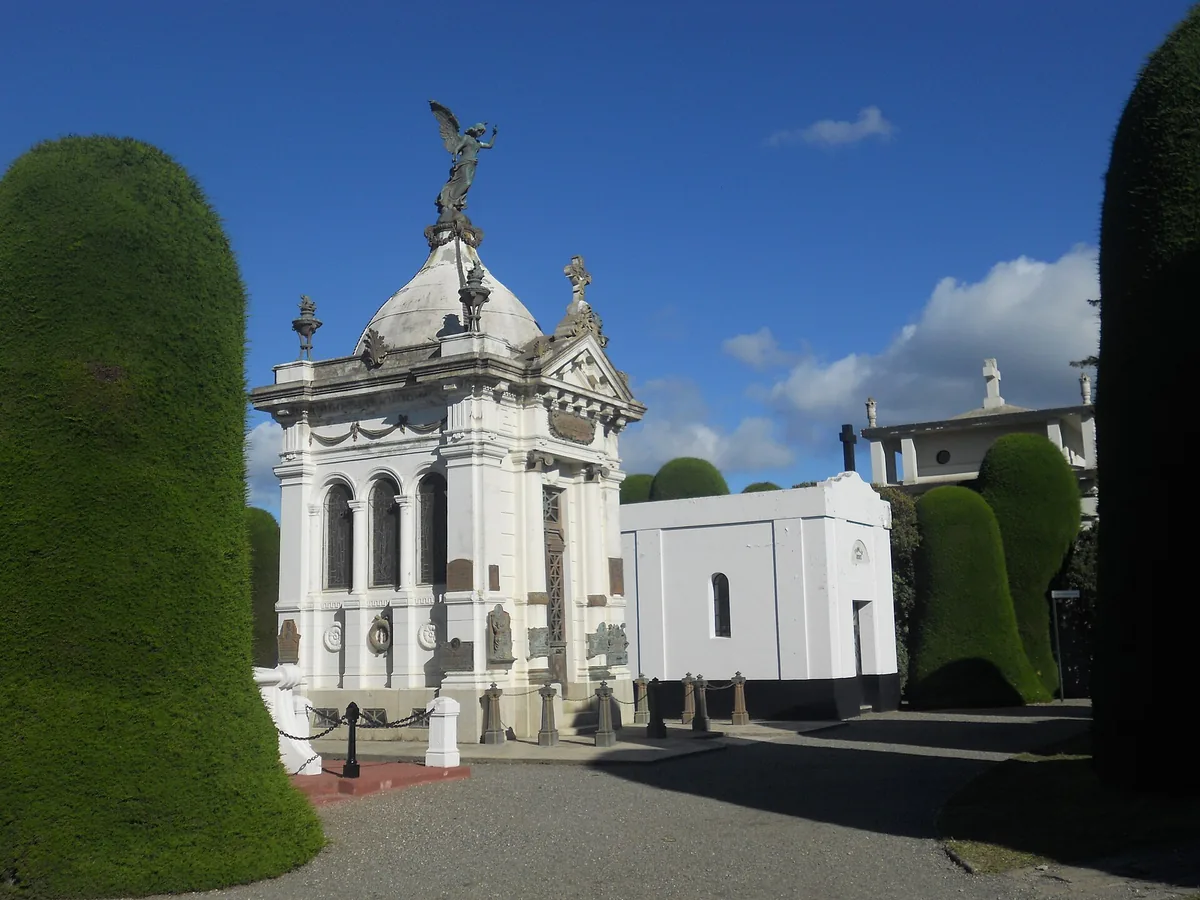
The Municipal Cemetery of Punta Arenas, widely known as the Sara Braun Cemetery after one of its most prominent residents, contains some of the most elaborate funerary architecture in South America. Built by immigrant families who made fortunes from sheep farming, wool export, and shipping during the late nineteenth and early twentieth centuries, the cemetery reads as a stone record of Punta Arenas at its wealthiest.
The Municipal Cemetery of Punta Arenas, widely known as the Sara Braun Cemetery after one of its most prominent residents, contains some of the most elaborate funerary architecture in South America.
Punta Arenas grew rapidly after the Strait of Magellan became a critical shipping route, and the families who profited, Braun, Menéndez, Nogueira, Blanchard, built mausoleums that reflected both their wealth and their European origins. Sara Braun herself was one of the most powerful figures in Patagonian commerce, and her family's cypress-surrounded tomb is among the most visited. The cemetery absorbed immigrants from Croatia, Spain, Britain, and beyond, and the mixture of languages on the headstones tells a compressed version of the city's demographic history.
Visiting Sara Braun Cemetery
Walking the cemetery's grid of paths takes thirty to sixty minutes depending on how carefully you read the inscriptions. The variety of architectural styles is remarkable, neoclassical marble columns beside Art Nouveau ironwork beside simple wooden crosses, and the mature cypress trees give the whole space an unexpected tranquility. The mausoleum interiors visible through iron doors contain portraits, flags, and personal objects that families still tend.
The cemetery is on Avenida Bulnes in central Punta Arenas, walkable from most accommodations. Entry is free and the site is open during daylight hours. A printed map available at the entrance identifies notable tombs.
The cemetery is on Avenida Bulnes in central Punta Arenas, walkable from most accommodations.
The Experience
Thirty to sixty minutes among mausoleums in multiple architectural styles, cypress trees, and headstone inscriptions in six languages, the cemetery functions as a walkable social history of immigrant Punta Arenas.
Why It Matters
The cemetery documents the brief but intense period when Punta Arenas was one of South America's most important ports and the starting point for the Pacific before the Panama Canal.
Why Visit
Few cemeteries in Chile offer this density of architectural quality and historical layering. The contrast between the ornate tombs and the windswept Patagonian sky is genuinely affecting.
✦ Insider Tips
- 1
Pick up the free map at the entrance, without it the notable tombs are easy to miss.
- 2
The Sara Braun mausoleum is near the main entrance; the Croatian section is toward the back.
- 3
Photography is permitted; treat the space with appropriate quiet.