βEighty-nine years of imperial labor transformed this mountain valley into a topographic map of the entire Chinese empire, guarded by a miniature replica of Lhasa's holiest palace.β
About Mountain Resort and its Outlying Temples
The resort developed between 1703 and 1792 as an alternative seat of government during the height of the Manchu-led Qing Dynasty. The Kangxi and Qianlong emperors spent up to half of each year here, conducting crucial state affairs, hosting foreign emissaries, and managing frontier diplomacy. The Outlying Temples were specifically built to reflect the distinct architectural styles of the empireβs various ethnic minorities, serving as a powerful visual tool for political integration. Following the decline of the dynasty in the late 19th century, the resort fell into disrepair until a comprehensive state preservation program in the mid-20th century restored its architectural integrity.

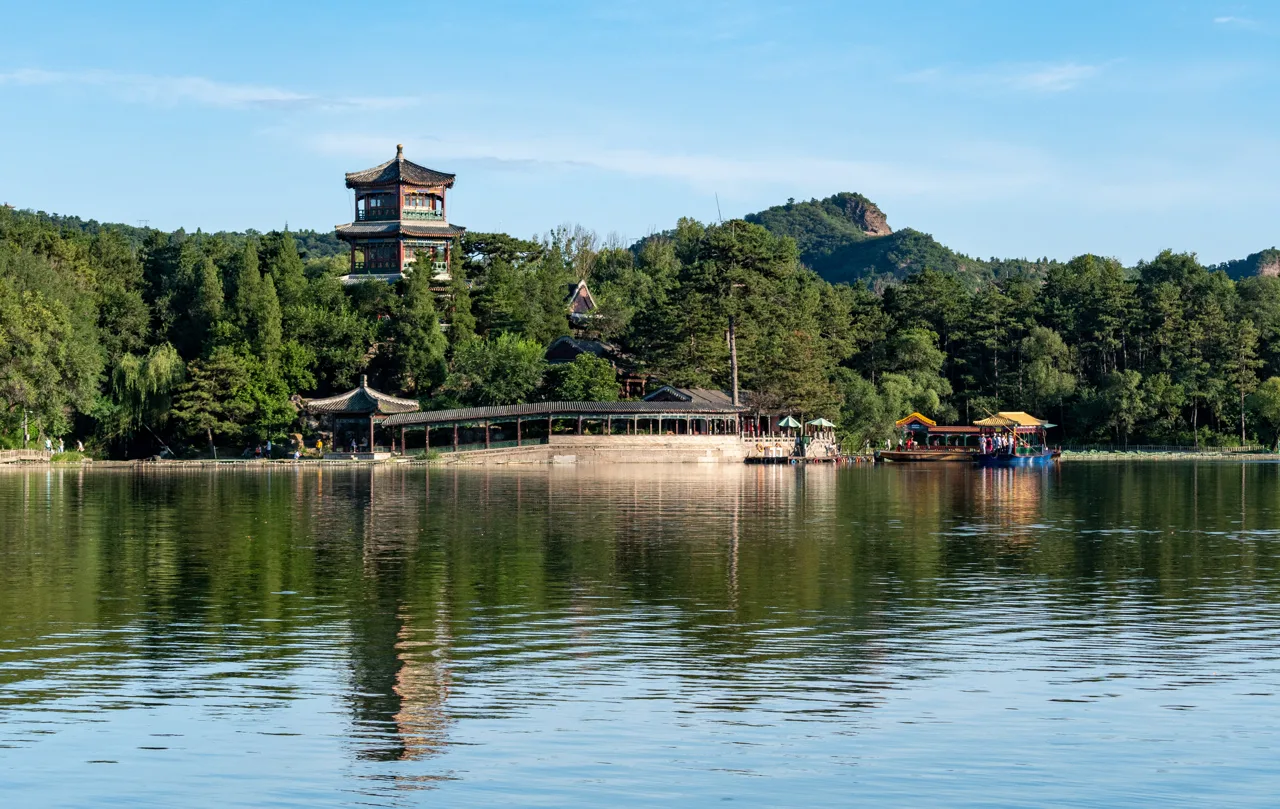
Behind a sprawling, unpolished stone wall north of Beijing lies a miniature empire where pine-scented mountains seamlessly dissolve into misty lakes and grassland plains. The Mountain Resort in Chengde was conceived not as a mere palace, but as China's vastest imperial sanctuary, built by Qing emperors seeking an escape from the suffocating summer heat of the Forbidden City. Rather than imposing rigid geometric symmetry upon the landscape, the architects meticulously mirrored the diverse topography of the entire realm. Beyond the palace walls, a crescent of twelve monumental temples rises dramatically against the jagged ridges, blending Tibetan, Mongolian, and Han architectural styles. This vast complex functions as a profound geopolitical statement rendered in timber, brick, and living water, where the natural world serves as the ultimate throne room.
Behind a sprawling, unpolished stone wall north of Beijing lies a miniature empire where pine-scented mountains seamlessly dissolve into misty lakes and grassland plains.

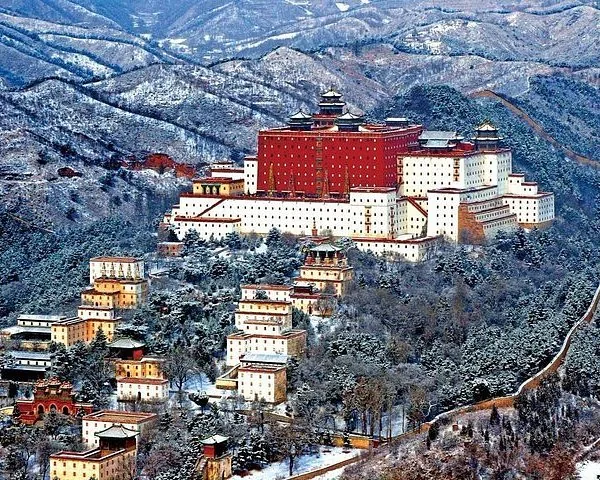
The Kangxi Emperor chanced upon this cool, well-watered valley in 1703 while leading an annual hunting expedition designed to keep his nomadic banners militarily sharp. Recognizing the strategic tactical advantage of holding court closer to the northern frontiers, he initiated a massive construction project that would span nearly nine decades. His grandson, the Qianlong Emperor, completed the grand vision by erecting the Outlying Temples, including the colossal Putuo Zongcheng, which was modeled directly after Tibet's Potala Palace. These massive religious monuments were built to pacify and honor visiting Mongolian princes and Tibetan spiritual leaders, ensuring their loyalty through lavish architectural flattery. When British emissary Lord Macartney arrived here in 1793, he found an empire at its absolute zenith, negotiating global diplomacy amid lakeside pavilions and rugged hunting grounds.
Passing through the simple, unpainted cedar gateways of the main palace, you notice a sharp drop in temperature and the clean fragrance of weathered wood and pine needles. The sound of wind rustling through ancient, gnarled cypresses replaces the frantic roar of modern Chengde just beyond the walls. You feel the distinct texture of the cool stone pathways that wind along the lake district, where traditional southern Chinese gardens have been recreated with obsessive precision. Moving out toward the hills, the intimate scale of the waterscapes shifts dramatically as the towering red facades of the Tibetan-style temples dominate the skyline. Most visitors overlook the quiet, shaded corridors of the Puning Temple, where the chanting of monks still reverberates around a massive wooden Bodhisattva. The moment that stays with you is standing on the highest terrace of the simulated Potala at noon, watching the golden roof decorations blaze against the deep blue sky.
Chengde is situated approximately 230 kilometers northeast of Beijing, a distance easily bridged by high-speed trains that make the journey from Beijing Chaoyang Station in under an hour. From the Chengde East Station, local city buses and taxis run directly to the main palace entrance. Exploring the sprawling parklands thoroughly requires a full day, and renting a small boat to cross the central lakes remains the most evocative way to transition between the palace apartments and the northern grasslands. Taxis or dedicated tourist mini-buses are required to navigate the distances between the isolated hillside temples scattered outside the northern walls.
Chengde is situated approximately 230 kilometers northeast of Beijing, a distance easily bridged by high-speed trains that make the journey from Beijing Chaoyang Station in under an hour.
The Experience
You notice the way the morning mist clings to the lotus ponds, creating an ethereal landscape that feels entirely detached from the concrete city outside. The sound of wind chimes hanging from the eaves of the multi-tiered pavilions echoes softly across the water. You feel the physical exertion of climbing the stone stairs of the Putuo Zongcheng Temple, where the towering pink walls create an illusion of infinite height. Most visitors miss the small, quietly shaded rockeries hidden behind the main imperial library. The moment that stays with you is encountering the gentle, enormous gaze of the thousand-armed Guanyin statue within the Puning Temple.
Why It Matters
The Chengde Mountain Resort represents the finest surviving example of an imperial Chinese landscape garden integrated with monumental religious architecture. Culturally, it is a brilliant monument to multi-ethnic harmony and political statecraft, capturing the specific moment when Chinaβs boundaries were secured and its diverse traditions were brought under a unified imperial umbrella.
Why Visit
Visit Chengde to see how an empire used geography as a tool of absolute power and diplomacy. This site offers an expansive, wild alternative to the domestic, enclosed layout of Beijingβs Forbidden City. It provides a rare chance to see Tibetan and Han architecture clashing and blending beautifully together in a single, unified landscape designed by imperial decree.
β¦ Insider Tips
- 1
Enter the park through the Lizheng Gate at 8:00 AM sharp to walk the lakeside pavilions before the midday crowds arrive.
- 2
Hire one of the electric open-air carts to access the remote mountain wall section; the elevation provides an unparalleled view of the external temples.
- 3
Bring cash for a boat ticket across the lake to save time when moving from the palace section to the Wanshu Garden grassland.
- 4
Look for the unpainted Nanmu wood pillars in the main audience hall; the rare timber naturally repels insects and emits a subtle, lingering perfume.
- 5
Ensure you purchase a combined ticket that includes entry to both the Putuo Zongcheng and the Puning Temple to maximize your day.