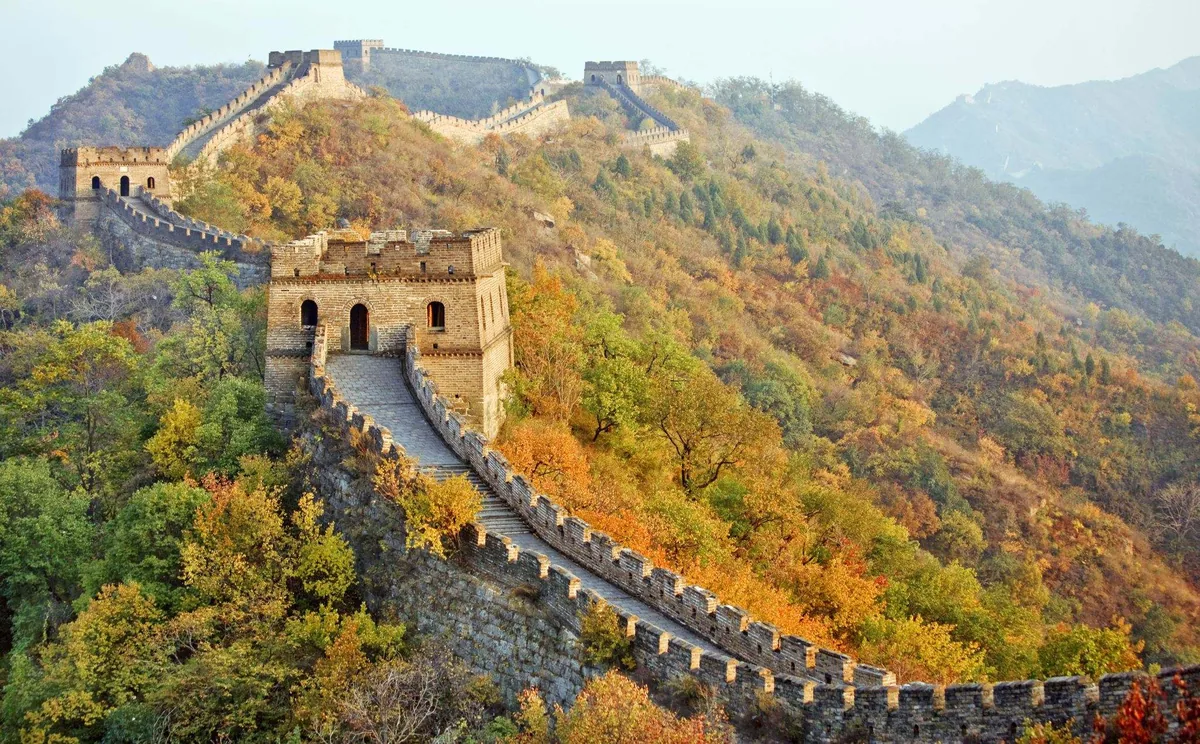
This stretch of the Great Wall is packed with 22 watchtowers and even has a toboggan run back down.
About The Great Wall at Mutianyu
The Mutianyu section was first built in earlier dynasties and substantially constructed and fortified under the Ming, with its closely spaced watchtowers guarding a strategic approach to Beijing. Restored in modern times, it became a popular and scenic place to experience the Great Wall. The broader wall, built across more than two thousand years, is a UNESCO World Heritage Site and an icon of China.
Mutianyu is one
Mutianyu is one of the best-preserved and most scenic sections of the Great Wall of China, winding along forested mountain ridges northeast of Beijing. With its densely set watchtowers, restored battlements and beautiful natural setting, it offers a spectacular and less crowded alternative to the busier nearby sections of the world's most famous fortification.
A Wall Across the Mountains
The Great Wall was built and rebuilt over many centuries by successive dynasties to defend China's northern frontier, and the Mutianyu section largely dates from the Ming dynasty, restored to show the wall at its finest. This stretch is notable for its unusually dense line of watchtowers, around 22 along a few kilometres, and its setting amid forested hills that turn brilliant colours in autumn. A cable car and a toboggan run make it accessible and fun.
The Experience
You ride a cable car or climb up to the wall and walk along the restored battlements as they snake over the ridges, passing watchtower after watchtower with sweeping views over forested mountains, especially glorious in autumn colours. Reaching steeper, wilder stretches rewards the energetic, while a toboggan run offers a thrilling way back down. Mutianyu combines grandeur, scenery and relative calm.
Why It Matters
The Great Wall is one of the most famous and significant monuments on Earth and a symbol of China, a UNESCO World Heritage Site representing centuries of engineering and defence. Mutianyu showcases the wall at its most beautiful and best-preserved, offering an unforgettable encounter with this wonder.
Why Visit
One of the best-preserved and most scenic sections of the Great Wall, with 22 watchtowers and mountain views, an accessible day trip from Beijing.
✦ Photo Gallery
Best Season
🌤 Autumn brings spectacular colours and clear skies; spring is also pleasant. Summers are hot and winters cold but atmospheric with snow. Go early to avoid crowds.
Quick Facts
Entry
Around 45 RMB entry, with the cable car, chairlift or toboggan an extra charge each way.
Opening hours
Open daily, roughly 8am to 5pm, with seasonal variation.
Time needed
About half a day from Beijing including travel.
Best time to visit
Autumn brings spectacular colours and clear skies; spring is also pleasant. Summers are hot and winters cold but atmospheric with snow. Go early to avoid crowds.
Getting there
About 70 km northeast of Beijing; reached by car, tour or a bus-plus-shuttle combination, then a cable car or steps up to the wall.
Location
Beijing, China
Type
attraction
Insider Tips
- 1
Take the cable car up and the toboggan run down.
- 2
Walk toward the steeper, wilder towers for fewer crowds.
- 3
Autumn colours make it especially beautiful.
- 4
It is a quieter alternative to the Badaling section.