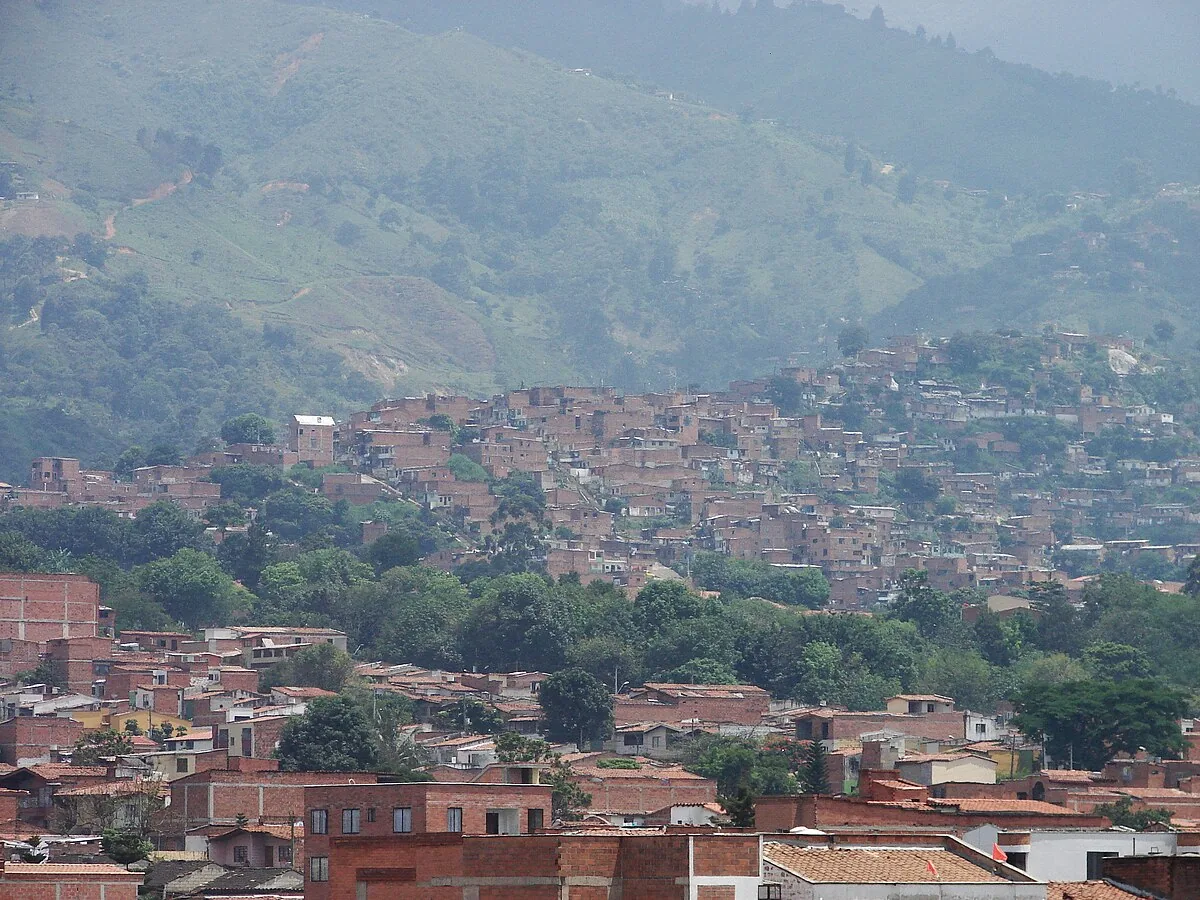
Twenty years ago, this Medellín hillside neighborhood was a no-go zone controlled by armed groups. The city responded with escalators, libraries, and murals. The neighborhood responded with everything else.
About Comuna 13
A stronghold of paramilitary and drug gang control through the 1990s and early 2000s, Comuna 13 became the site of Medellín's most celebrated urban transformation after 2004, when infrastructure investment and community arts programs began reshaping the neighborhood. The outdoor escalator system, opened 2011, is the infrastructure symbol of the shift.
Comuna 13
Comuna 13 is a hillside neighborhood in Medellín that was, in the early 2000s, among the most violent urban areas in the world. The transformation since then, through urban infrastructure investment, art programs, and community organizing, has made it one of the most discussed examples of urban social recovery in Latin America. The outdoor escalators that connect the steep hillside streets to the metro network, the murals covering building exteriors, and the community-led cultural programs are all visible within a neighborhood that still functions as a working-class urban community.
In the 1980s and 1990s,
Medellín was controlled by Pablo Escobar's Medellín Cartel, and Comuna 13 was a stronghold of competing armed groups, paramilitaries, guerrillas, and drug gangs, that made it effectively inaccessible to outsiders. A 2002 military operation cleared some of the groups, but the underlying poverty and marginalization that had made the area vulnerable remained. The city government that began the transformation from the mid-2000s onward, under Mayor Sergio Fajardo and successors, invested in infrastructure, parks, libraries, and an outdoor escalator system (the first of its kind in Latin America) that reduced commute times for hillside residents from 45 minutes to 6 minutes. Murals commissioned and painted by community artists turned the neighborhood's walls into a visual record of its history.
The outdoor escalators are the practical infrastructure but also the experience, ascending through the neighborhood levels while the city spreads below. The murals along the escalator route document the community's history, including the violence, the recovery, and the future the neighborhood intends. Local guides from the community offer walking tours that give context the murals alone cannot provide. Music and dance performances on the outdoor terraces near the escalator are organized most weekends.
Comuna 13 is in western Medellín , accessible from San Javier station on Metro Line B. Walking from the station into the neighborhood takes about 15 minutes; the escalator system begins further up the hill.
The Experience
Outdoor escalators ascending through the neighborhood with city views expanding at each level, murals documenting community history, and local guides whose personal connection to the transformation adds dimension that the visual program alone cannot provide.
Why It Matters
Comuna 13 is the most discussed example of urban social transformation in Latin America, a neighborhood that changed not through displacement or gentrification but through infrastructure investment directed at existing residents.
Why Visit
The transformation of Comuna 13 is visible in the murals, the infrastructure, and the people, it is a neighborhood whose story is physically encoded in its walls and streets in a way that a guided walk makes legible.
✦ Photo Gallery
Best Season
🌤 Year-round; Medellín's climate is consistently temperate at 1,495 meters. Weekend afternoons offer the most cultural activity near the escalator terraces.
Quick Facts
Best time to visit
Year-round; Medellín's climate is consistently temperate at 1,495 meters. Weekend afternoons offer the most cultural activity near the escalator terraces.
Getting there
In Medellín, Colombia; reach Medellín first, then continue to the site.
Location
Medellín, Colombia
Type
attraction
Insider Tips
- 1
Take a community-led tour rather than a generic Medellín tour, the guides who grew up here give the murals their meaning.
- 2
The escalators operate during daylight hours only; plan to ascend and descend before dark.
- 3
The Graffitown section near the top of the escalator system is the densest concentration of murals, budget extra time there.