“Over 500 stone statues guard burial mounds in the southern Colombian Andes, left by a culture that disappeared around 800 CE without successors who remember building them. No one fully understands what the jaguar-human faces mean.”
About San Agustín Archaeological Park
Created by the San Agustín culture (approx. 100–800 CE) in the upper Magdalena River valley. The culture left no written records and no identifiable direct descendants. Archaeological study began in 1913; UNESCO World Heritage designation in 1995.
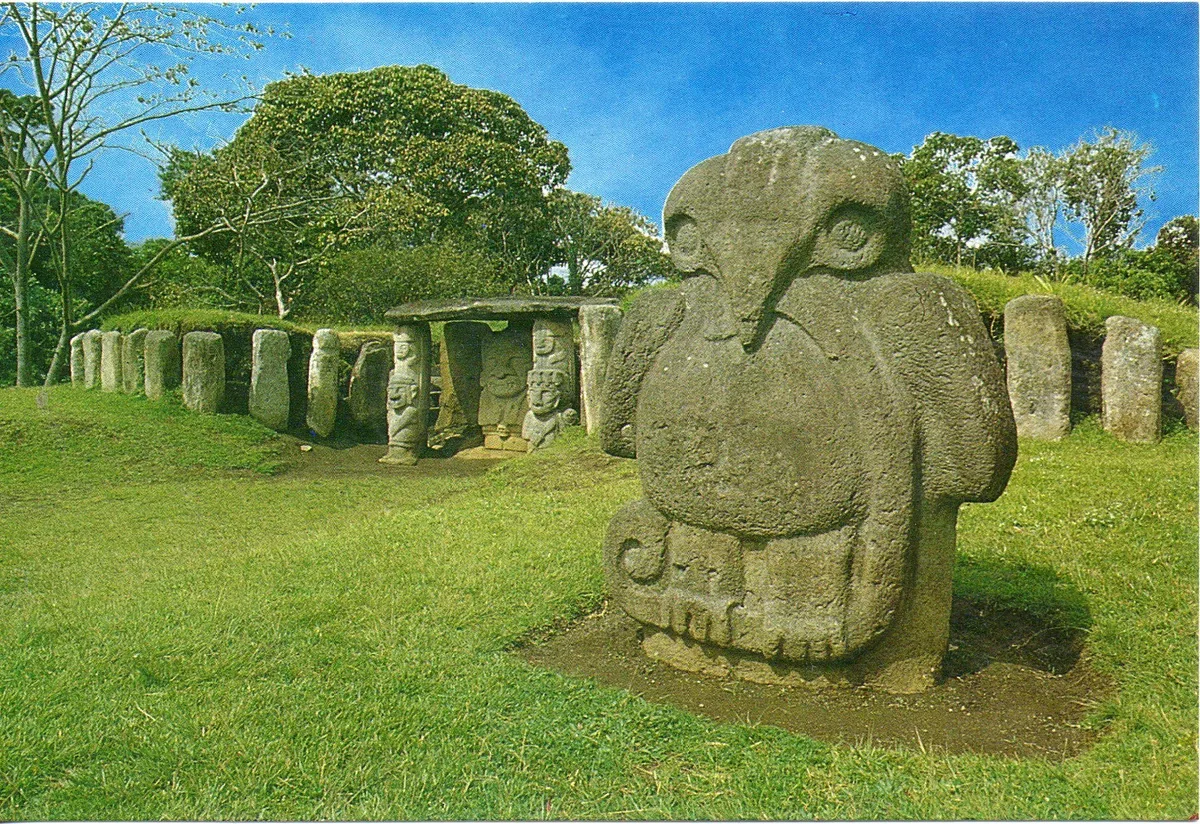
What this is
The San Agustín Archaeological Park in the Huila Department of southern Colombia contains the largest group of pre-Columbian funerary monuments in the Americas, over 500 stone statues and burial mounds created by a culture that flourished in the upper Magdalena River valley from the first to the eighth century CE. The culture that built them left no written records and no surviving descendants who can identify themselves directly with it, making San Agustín one of the most significant and least understood archaeological complexes in South America.
the archaeological record, 100
The San Agustín culture appears in the archaeological record around 100 CE and disappeared or transformed, the mechanism is unclear, around 800 CE. They built burial mounds for elites and placed stone statues at the entrances, many of which combine human and jaguar features in a style that has no direct equivalent in other Andean cultures. The statues range from 20 centimeters to 4 meters in height; some stand guard over tomb entrances, others are incorporated into the mound structure itself. Serious archaeological study of the site began with German ethnologist Konrad Theodor Preuss in 1913; the park was established in 1995 and UNESCO designation followed in 1995.
The park covers four main archaeological zones spread across 78 square kilometers, walking or horseback are both valid means of moving between mound clusters. The Fuente de Lavapatas, a carved ceremonial water channel in the riverbed, channels spring water through serpent and face carvings that direct the flow in patterns still fully functional. The Mesita A and Mesita B burial mound clusters contain the largest concentration of statues under protective thatched roofs. The surrounding landscape, Andean cloud forest, the Magdalena River valley, waterfalls, is exceptional.
San Agustín town
San Agustín town is the base for visiting the park. Flights from Bogotá to Pitalito (1 hour) followed by a 2-hour bus; or direct bus from Bogotá (10–12 hours). Horses are available for hire in town to reach the more distant mound clusters.
Flights from Bogotá to Pitalito (1 hour) followed by a 2-hour bus; or direct bus from Bogotá (10–12 hours).
The Experience
Four archaeological zones across 78 square kilometers, burial mounds with guardian statues under thatched shelters, the Fuente de Lavapatas carved water channel still directing flow through serpent carvings, and Andean cloud forest landscape throughout.
Why It Matters
San Agustín is the largest pre-Columbian funerary complex in the Americas and one of the few major archaeological sites whose creators remain genuinely unknown, the absence of decipherable continuity with any later culture gives it an unusual archaeological character.
Why Visit
The combination of genuinely mysterious statuary, functional pre-Columbian hydraulic engineering, and a setting in cloud forest landscape makes San Agustín a more layered experience than most archaeological parks in South America.
✦ Insider Tips
- 1
Hire horses for the outlying mound clusters, the distances between zones are too great for comfortable walking.
- 2
The Fuente de Lavapatas is easy to miss on standard tours; ask specifically to include it.
- 3
Stay in San Agustín town for at least two nights, one day is not enough for the full park.