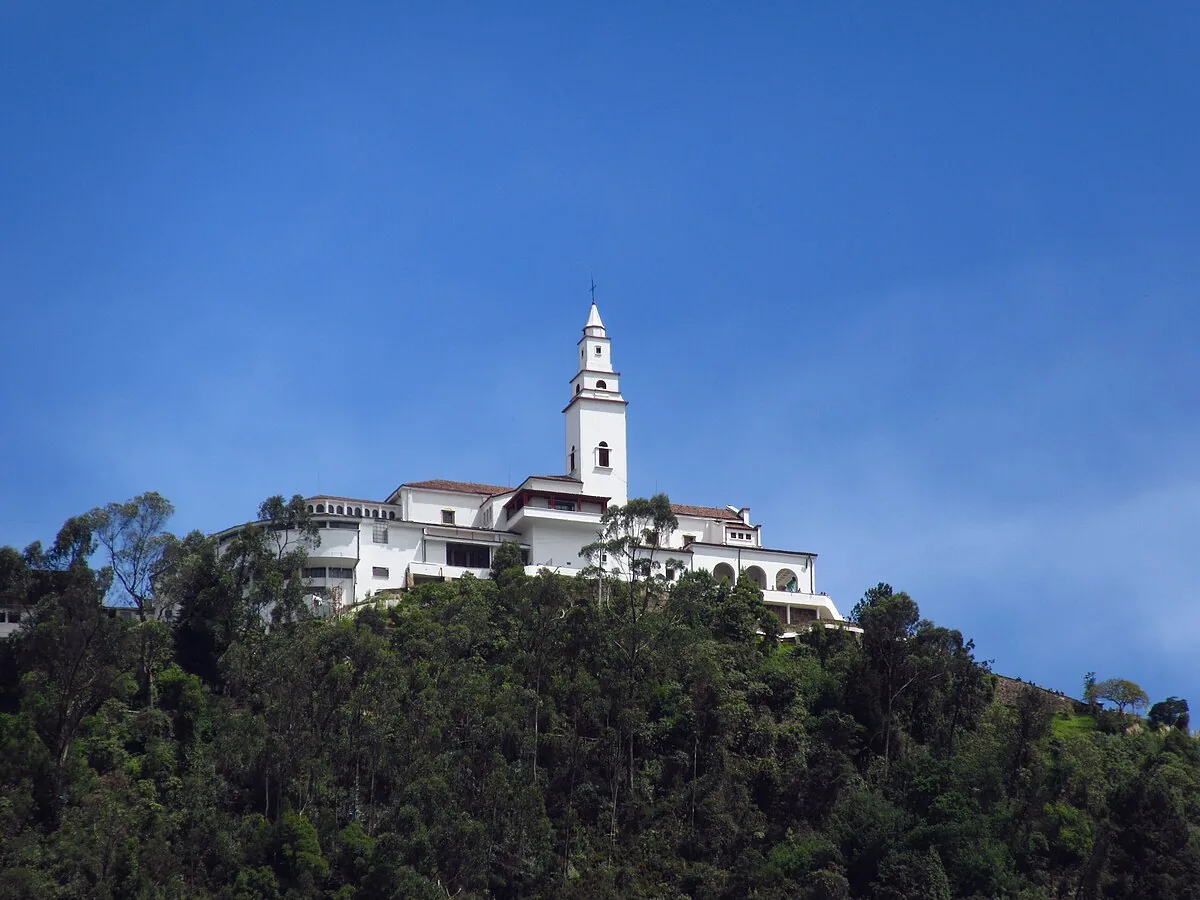
Bogotá has a 3,152-meter mountain rising directly above it. The church at the top has been a pilgrimage site since the 1650s. The view from the summit shows the full ten-million-person city spread across the savanna below.
About Monserrate
A colonial hermitage has stood on Monserrate since the early seventeenth century. The Señor Caído pilgrimage tradition dates to miraculous healing claims in the 1650s. The funicular was installed in 1929, the cable car in 1955. The stone-paved hiking trail predates both.
About Monserrate
Monserrate is a 3,152-meter mountain that rises directly above Bogotá, visible from virtually every point in the city and accessible by cable car, funicular, or a stone-paved hiking trail. The white church at its summit, a pilgrimage site centered on a seventeenth-century image of a fallen Christ, has been the defining symbol of Bogotá's skyline since the colonial period. The view from the top encompasses the full extent of the city's 10-million-person urban spread across the Bogotá savanna.
The past
A hermitage existed on Monserrate from the early seventeenth century, and the Señor Caído, Fallen Lord, image inside the current church became the focus of a pilgrimage tradition after several miraculous healings were attributed to it in the 1650s. The peak's prominence above the city made it a natural site for colonial-era religious architecture asserting spiritual authority over the urban settlement below. The funicular was installed in 1929; the cable car followed in 1955. The hiking trail, used by pilgrims and fitness walkers, is the oldest means of ascent and involves 1,500 stone steps climbing 600 meters of elevation gain.
The cable car ascent takes 5 minutes ; the funicular 10; the foot trail 1.5 to 2 hours. At the summit, the church is an active pilgrimage site with Sunday Masses drawing large crowds of working-class Bogotanos. The view east across the city shows Bogotá's full urban extent, a sprawling grid interrupted by the Cerros Orientales ridge. On clear days (most reliably in the dry season), the plains of the Cundinamarca savanna extend beyond the city's edge to the far horizon. Two restaurants and a market with crafts and food operate at the summit. The cable car and funicular depart from La Candelaria, at the base of the Cerros Orientales. TransMilenio to Las Aguas station, then a short walk. The hiking trail begins at the same base station.
The Experience
Cable car, funicular, or 1,500-step hiking trail to a summit church that functions as an active pilgrimage site, with panoramic views of the full Bogotá urban spread and the Cundinamarca savanna beyond.
Why It Matters
Monserrate is the most visible landmark in South America's third-largest city and a pilgrimage site continuously active for nearly four centuries, a mountain whose dual function as geography and religious symbol is inseparable from Bogotá's identity.
Why Visit
The view from Monserrate is the best available orientation to Bogotá's scale and geography, the city makes more sense from above it than from within it. The Sunday pilgrimage crowd adds a social dimension that the cable car tourists and fitness walkers create together.
✦ Photo Gallery
Best Season
🌤 December through February for the clearest views. Bogotá's rainy season (April–May, October–November) brings frequent cloud that obscures the savanna panorama.
Quick Facts
Best time to visit
December through February for the clearest views. Bogotá's rainy season (April–May, October–November) brings frequent cloud that obscures the savanna panorama.
Getting there
In Bogotá, Colombia; reach Bogotá first, then continue to the site.
What's nearby
Salt Cathedral of Zipaquirá is also close by.
Location
Bogotá, Colombia
Type
attraction
Coordinates
4.6058°, -74.0564°
Insider Tips
- 1
Hike up on a Sunday morning and take the cable car down, the trail crowd and the pilgrimage activity are both most alive on Sunday.
- 2
The hiking trail is safe during daylight but do not walk it after dark.
- 3
Bring a warm layer, the summit is several degrees cooler than the city below.