Seventy million years of Cretaceous marine organisms compressed into chalk and lifted vertical by glacial pressure. The cliff is 128 meters high and eroding continuously, which means fresh fossils appear on the beach below after every collapse.
About Møns Klint
Cretaceous chalk formed 70 million years ago from marine organism remains. Lifted to near-vertical by glacial pressure during the last ice age. The same geological formation as the White Cliffs of Dover and Rügen's chalk cliffs. Møn is a designated Dark Sky Reserve.
Møns Klint is a 6-kilometer chalk cliff rising up to 128 meters above the Baltic Sea on the eastern coast of the island of Møn in southern Denmark. The white chalk face, formed from the shells and skeletons of marine organisms that accumulated on a warm seabed 70 million years ago and were lifted vertical by glacial pressure, drops directly to the sea below, accessible by a staircase of 498 wooden steps from the cliff-top trail to the beach. Møn is also a designated Dark Sky Reserve, making the island one of the best places in Denmark to observe the night sky.
“Møns Klint is a 6-kilometer chalk cliff rising up to 128 meters above the Baltic Sea on the eastern coast of the island of Møn in southern Denmark.”
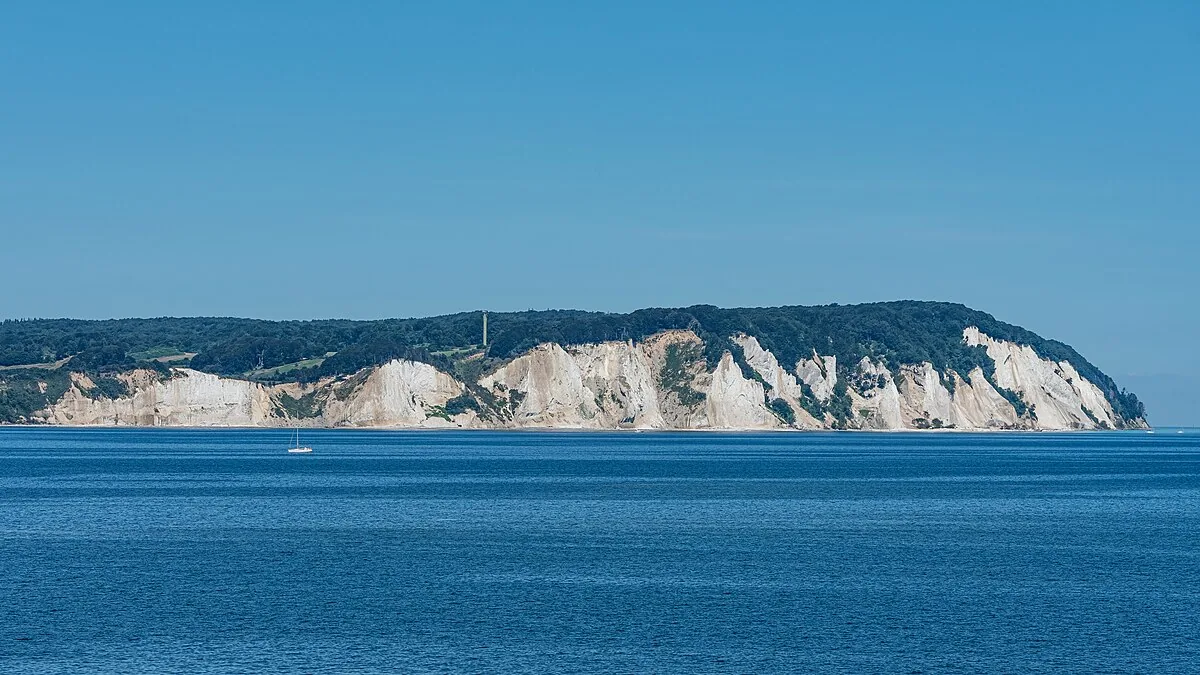
Møns Klint, Denmark
The chalk of Møns Klint is of the same Cretaceous period formation as the White Cliffs of Dover and the Rügen chalk cliffs in Germany, all remnants of the same shallow Cretaceous sea that covered northwestern Europe 70 million years ago. Glacial movement during the last ice age compressed and tilted the chalk layers in Møn, lifting them from horizontal seabed deposits to near-vertical cliff face. The cliff has been eroding continuously since exposure; blocks of chalk fall regularly, which is both a hazard and the mechanism by which new fossil exposures appear on the beach below. The cliff face regularly yields crinoid, sea urchin, and ammonite fossils in the fresh chalk falls.
The cliff-top trail follows the edge for 6 kilometers through beech forest, with viewpoints over the Baltic and the white face below. The staircase at GeoCenter Møns Klint descends to the beach, where the chalk falls and fossil hunting are the main activities. The GeoCenter museum explains the geology and the fossil record. The beach at the cliff base is accessible only via the staircase or by boat from the southern end. At night, the Dark Sky Reserve conditions make the Milky Way visible on clear evenings from the cliff meadows.
Møn is accessible by car from Copenhagen (1.5 hours via the bridges). Buses run from Vordingborg (30 minutes) to Stege, the island's main town; a local bus reaches Møns Klint from Stege in 20 minutes. A car is the most practical independent option.
“Buses run from Vordingborg (30 minutes) to Stege, the island's main town; a local bus reaches Møns Klint from Stege in 20 minutes.”
The Experience
A 6-kilometer cliff-top trail through beech forest, a 498-step staircase to the chalk beach below, fossil hunting in fresh chalk falls, and Dark Sky Reserve night-sky viewing from the cliff meadows.
Why It Matters
Møns Klint is the most dramatic coastal geology in Denmark and one of the most accessible fossil-hunting sites in Scandinavia, a cliff whose continuous erosion makes each visit geologically current rather than static.
Why Visit
Finding a genuine fossil in fresh chalk on the beach below the cliff is an experience available without specialist knowledge or equipment. The combination of the cliff's visual drama, the beach access, and the Dark Sky Reserve makes Møn one of the more layered island destinations in Denmark.
Insider Tips
- 1
Descend the staircase to the beach and walk the chalk base, fossil hunting is most productive immediately after visible chalk falls.
- 2
The GeoCenter museum explains the geology before the cliff walk, context makes the formations more readable.
- 3
Book accommodation on Møn for a night and stay for the Dark Sky evening, the Milky Way is visible on clear nights.