Every king of France from the 13th century to 1825 was crowned inside this cathedral, and one of its stone angels has been smiling about it for 800 years.
About Cathédrale Notre-Dame de Reims
The site has been a place of coronation since the baptism of Clovis around 496 AD. The current Gothic cathedral was begun in 1211 and served as the coronation church for French kings until 1825. German shelling badly damaged the cathedral in 1914, and restoration continued until the 1930s. Chagall's stained-glass windows were installed in 1974.
What this is
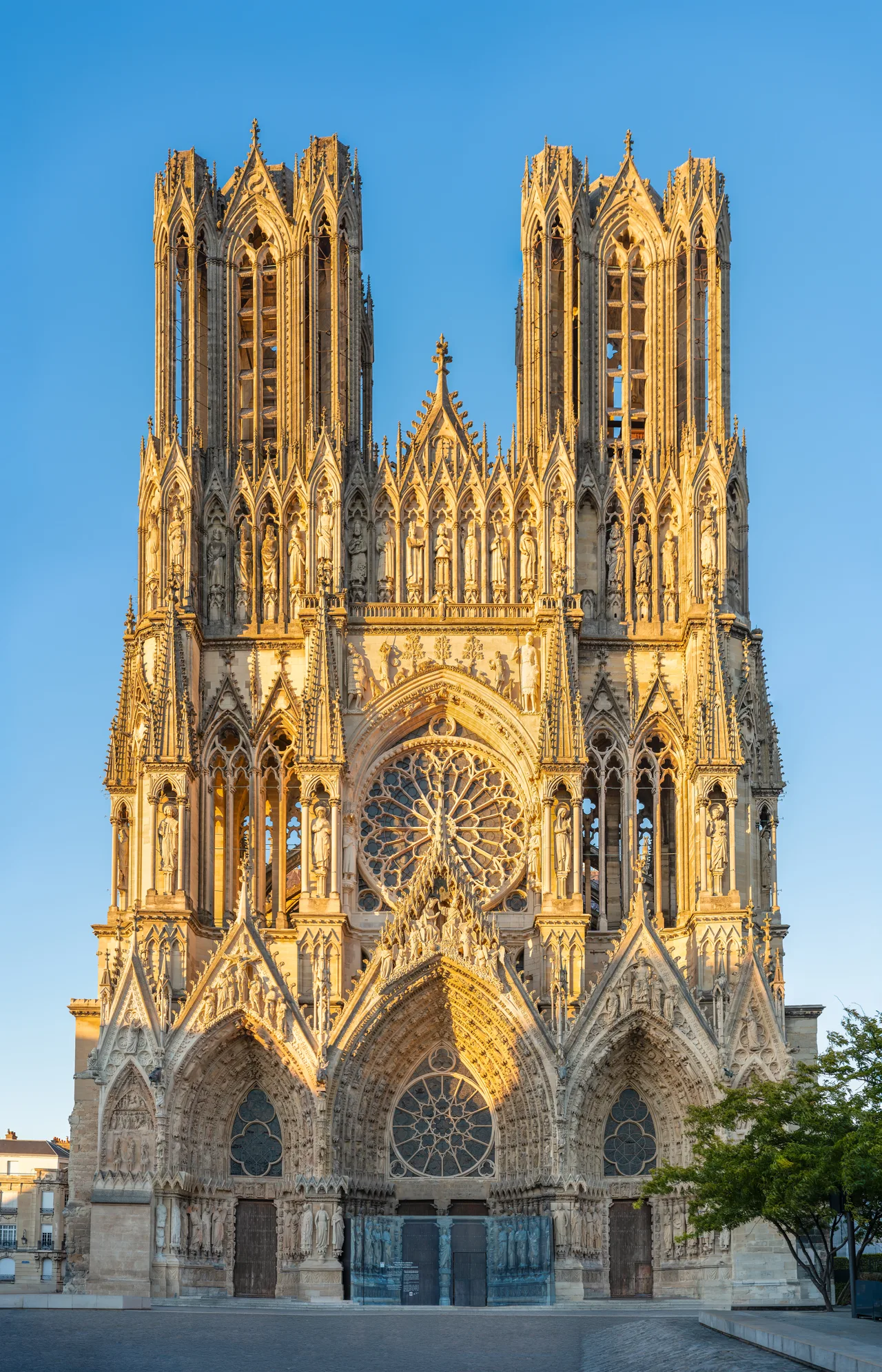
Reims Cathedral is a masterpiece of High Gothic architecture and the traditional coronation church of the kings of France. Located in the Champagne region northeast of Paris, it hosted the crowning of French monarchs from the 13th century until Charles X in 1825. The facade is famous for its sculptural programme, including the Smiling Angel, and the interior contains stained-glass windows by Marc Chagall.
“Reims Cathedral is a masterpiece of High Gothic architecture and the traditional coronation church of the kings of France.”
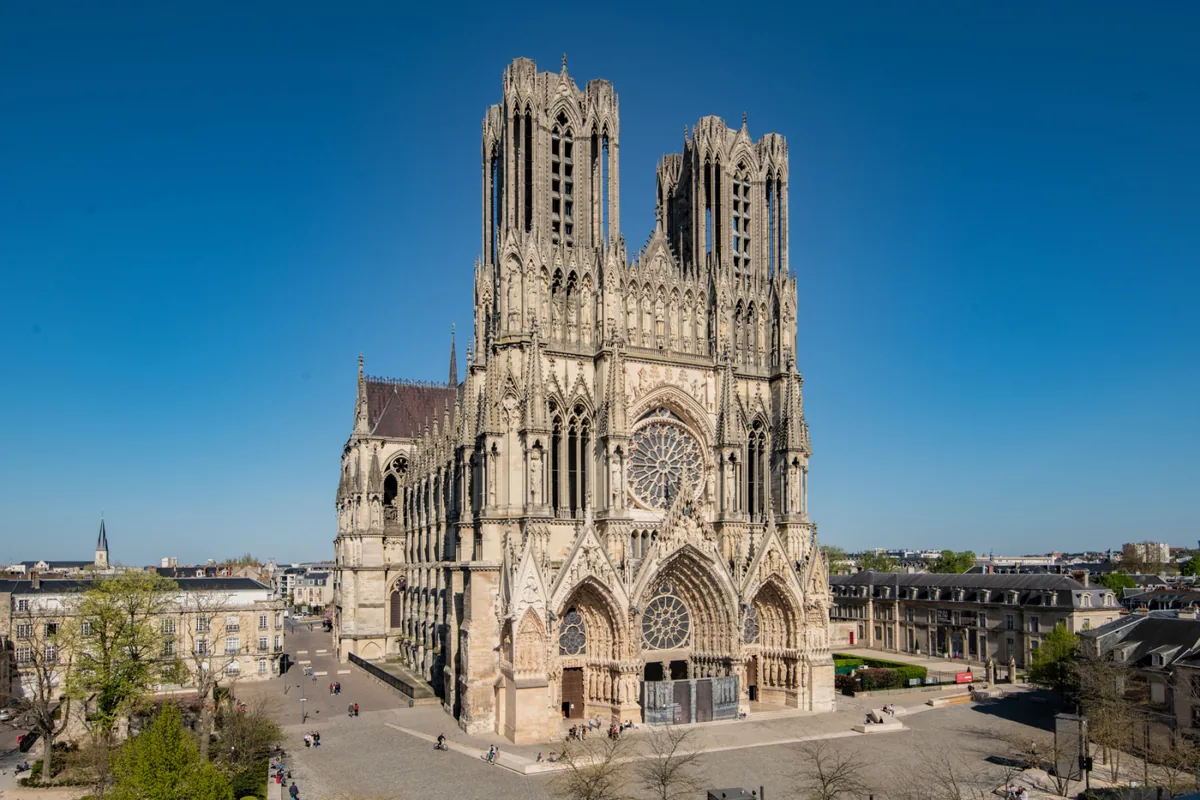
Cathédrale Notre-Dame de Reims, France
Where France Made Its Kings
The tradition of royal coronation at Reims dates to the baptism of Clovis, the first king of the Franks, by the Bishop of Reims around 496 AD. The current cathedral, begun in 1211, was designed specifically to serve as the coronation church and is built on a scale to match that purpose. The facade holds more than 2,300 sculpted figures, more than any other cathedral in France, and the Smiling Angel on the north portal has become one of the most recognised images in Gothic art. The cathedral suffered severe damage during the First World War when German shelling in 1914 set fire to the scaffolding and roof, melting the lead and destroying many of the original stained-glass windows. The restoration took twenty years. In 1974, Marc Chagall designed a set of stained-glass windows for the axial chapel, depicting Old Testament scenes in his distinctive blue palette.
The Experience
The facade hits you from across the square: more than 2,300 sculpted figures cover the stone, and the Smiling Angel seems genuinely pleased to see you, which is unusual for medieval sculpture. Inside, the nave is tall, pale and rhythmically uniform. Chagall's blue windows in the axial chapel glow with a colour that is distinctly his. The scale of the building communicates the seriousness of its purpose: this was where power was made legitimate.
Why It Matters
Reims Cathedral is one of the supreme achievements of Gothic architecture and the most historically significant coronation church in Europe. Its sculptural programme and its Chagall windows span 800 years of French artistic ambition.
Why Visit
The coronation cathedral of France's kings, with 2,300 facade sculptures including the famous Smiling Angel, and Chagall's blue stained-glass windows inside.
Insider Tips
- 1
Find the Smiling Angel on the north portal of the facade.
- 2
See Chagall's blue stained-glass windows in the axial chapel.
- 3
Combine with a visit to a Champagne cellar in Reims.
- 4
The light is best in the morning for the facade, afternoon for the interior.