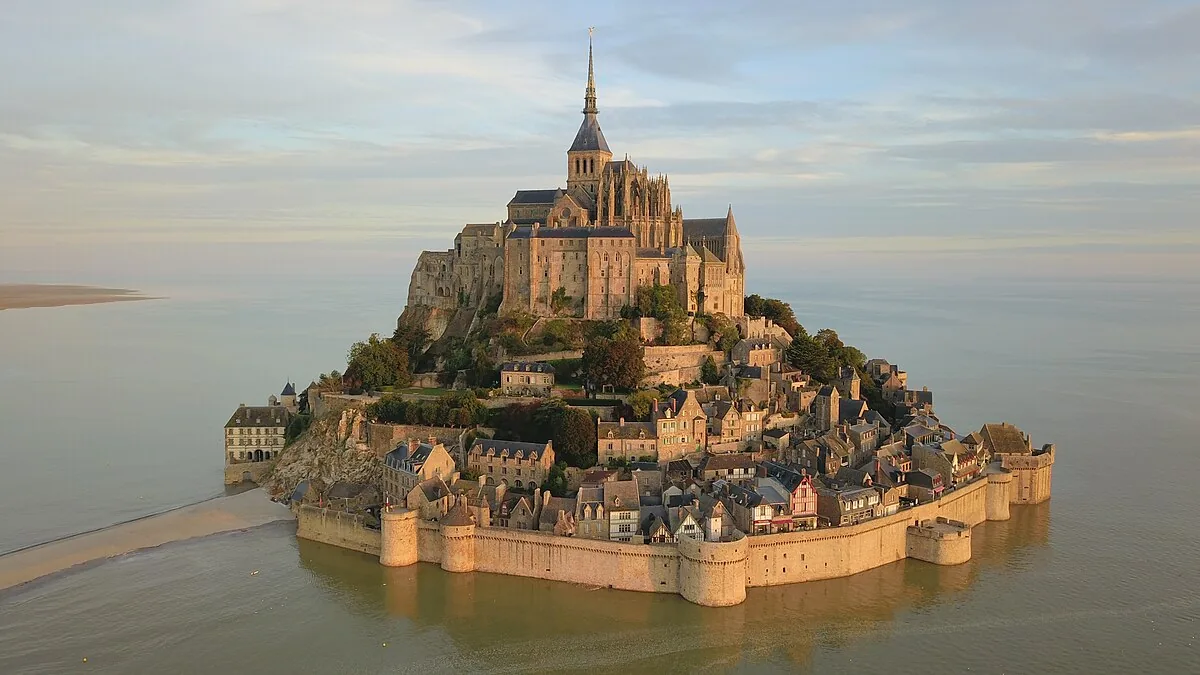
“A Benedictine abbey has occupied this tidal island since 708 CE, when a bishop reported a vision from the Archangel Michael, and the abbey resisted English siege for over two decades during the Hundred Years' War.”
About Mont Saint Michel
From a bishop's vision in 708 CE, the abbey grew into one of medieval Europe's great pilgrimage destinations, survived a twenty-year English siege, was converted to a prison during the Revolution, and returned to religious use in 1966. A monastic community still lives in residence.
What Abbaye du Mont-Saint-Michel is
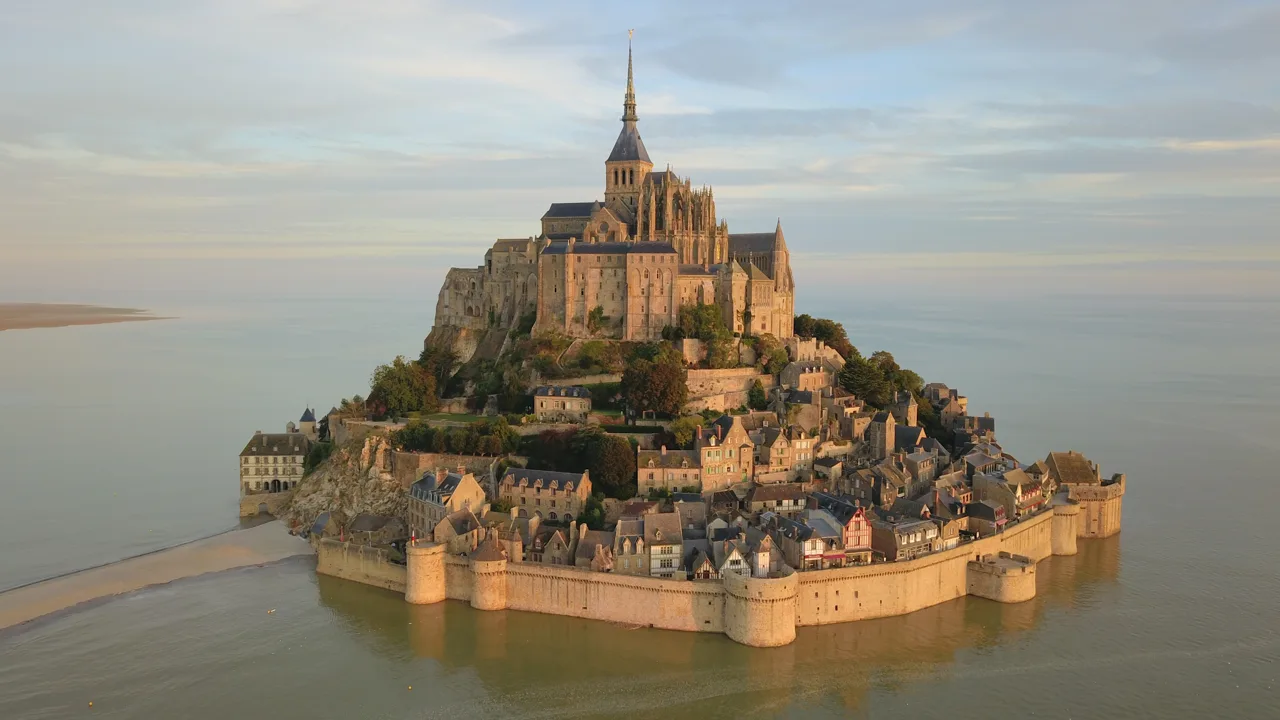
Mont-Saint-Michel is a tidal island in the bay where Normandy and Brittany meet, topped by a Benedictine abbey that has been continuously inhabited since the eighth century. At high tide, the island is surrounded by water; at low tide, the surrounding bay becomes a vast expanse of sand and mudflat. The abbey's position, stacked over the Gothic fortress, monastery, and village that occupy the island's lower levels, produces a silhouette that has been one of Europe's defining pilgrimage images for over a thousand years.
Mont-Saint-Michel is a tidal island in the bay where Normandy and Brittany meet, topped by a Benedictine abbey that has been continuously inhabited since the eighth century.
Bishop of Avranches, 708
The abbey tradition at Mont-Saint-Michel begins with a vision reported by the Bishop of Avranches in 708 CE, in which the Archangel Michael instructed him to build a church on the rocky island then called Mont Tombe. The church grew into a monastery, the monastery attracted pilgrims from across Europe, and the growing fame and wealth of the abbey made it a political as well as religious institution. During the Hundred Years' War, the abbey resisted English siege for over two decades, a resistance that gave it a particular significance in French national mythology. The French Revolution converted it to a prison; it was returned to religious use in 1966, and a small monastic community remains in residence.
The island receives millions of visitors annually , and the single main street, the Grande Rue, is narrow, steep, and crowded in summer. The abbey at the top, reached by a long staircase through the town, is architecturally complex: Romanesque nave, Gothic choir, the Merveille, a three-level Gothic construction of refectory, cloister, and hall built between 1211 and 1228, and the ramparts. The bay itself is as much of the experience as the island: the tides are among the fastest rising in Europe, the difference between high and low reaching over fourteen metres. Walking on the sand with a guide at low tide, approaching the island on foot across the bay, is a different experience from the causeway bus.
Mont-Saint-Michel is in Normandy, approximately three and a half hours by road from Paris. TGV trains run from Paris Montparnasse to Rennes (ninety minutes), with a bus connection to the island. Private vehicles park on the mainland; a free shuttle bus or a 35-minute walk crosses the causeway.
Mont-Saint-Michel is in Normandy, approximately three and a half hours by road from Paris.
The Experience
Climb through the village to the abbey complex, walk the Gothic cloister and the three-level Merveille construction, and walk the bay on foot at low tide with a guide to approach the island across the sand as medieval pilgrims did.
Why It Matters
One of France's most significant medieval abbeys and a UNESCO World Heritage Site, a thousand years of continuous religious life on a tidal island that defined pilgrimage in western Christianity.
Why Visit
The bay walk at low tide, approaching the island on foot across sand with the silhouette rising ahead, is the experience that photographs of the island suggest but the causeway bus doesn't provide. The Merveille's cloister is architecturally exquisite.
✦ Insider Tips
- 1
Book bay walking guides through the Mont-Saint-Michel tourist office, crossing the tidal flats without a guide is dangerous due to quicksand and fast tides.
- 2
Staying overnight on the island after day visitors leave produces an entirely different atmosphere, reserve well ahead for the island hotels.
- 3
The abbey audio guide is the clearest way to follow the architectural layers from Romanesque to Gothic.
- 4
The Grande Rue restaurants are overpriced and mediocre, eat on the mainland before or after the island visit.