A thirteenth-century Gothic chapel built to house the Crown of Thorns replaces its stone walls almost entirely with 1,113 stained-glass panels, the space reads as a glass lantern rather than a stone building.
About Sainte-Chapelle
Louis IX commissioned Sainte-Chapelle after acquiring the Crown of Thorns from the Latin Emperor of Constantinople in 1238 for a sum that exceeded the chapel's building cost. The structure was built in under six years and consecrated in 1248, still housing the reliquary context for which it was designed.
What Sainte-Chapelle actually is
Sainte-Chapelle stands within the Palais de la Cité complex on the Île de la Cité in Paris, a Gothic royal chapel consecrated in 1248 whose upper level contains fifteen stained-glass windows covering nearly every surface of the walls from floor to vaulted ceiling. The windows, 1,113 individual panels covering over 600 square metres, tell the story of the Old and New Testaments in a visual narrative of extraordinary density and color. The chapel was built with a structural ambition that verges on recklessness: the walls between the windows are minimal, and the entire building reads as a glass lantern rather than a stone structure.
“The windows, 1,113 individual panels covering over 600 square metres, tell the story of the Old and New Testaments in a visual narrative of extraordinary density and color.”
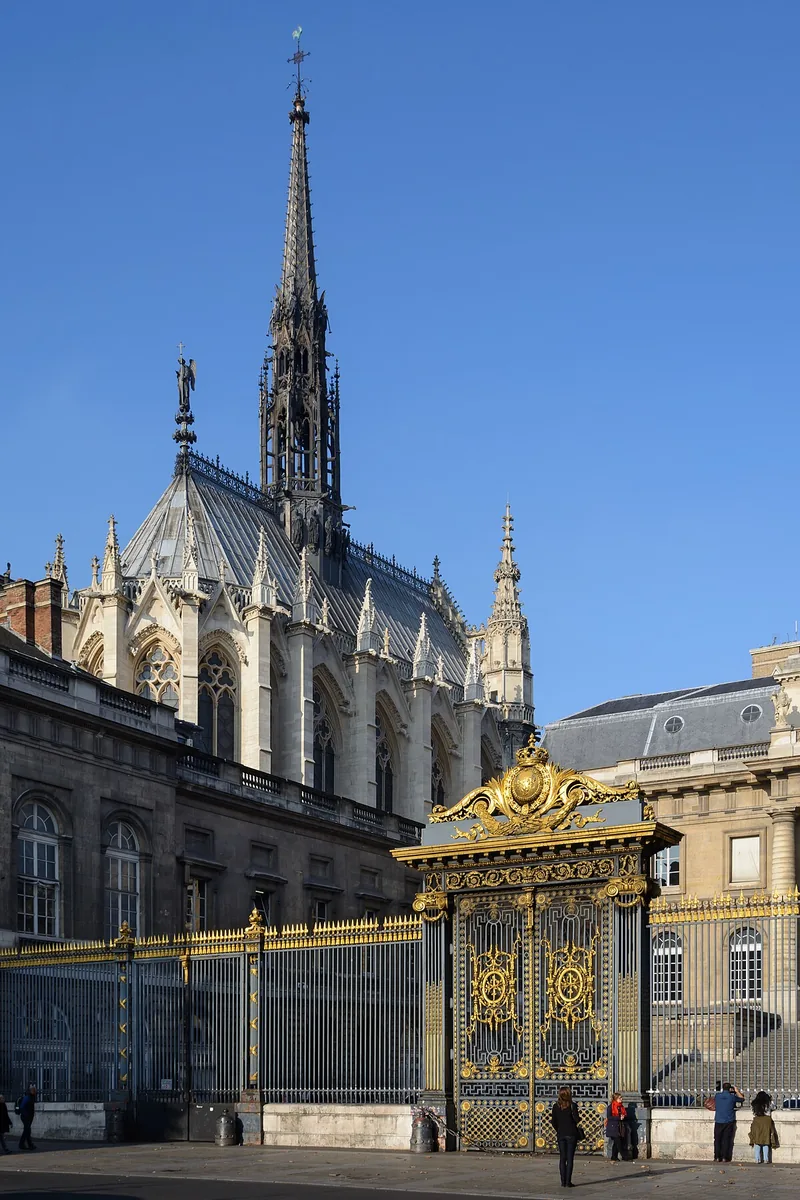
Sainte-Chapelle, France
The past
King Louis IX, later canonized as Saint Louis, commissioned Sainte-Chapelle to house the Crown of Thorns, which he had acquired from the Latin Emperor of Constantinople in 1238 at a price that exceeded the cost of the chapel by a multiple. The acquisition of such a significant relic gave France a claim to spiritual authority that Louis intended to reinforce with appropriate architectural magnificence. The chapel was built in under six years, an astonishing speed for a structure of this complexity, and consecrated in 1248. The Crown of Thorns is now held at Notre-Dame de Paris; Sainte-Chapelle retains the architectural shell built to house it.
The lower chapel, used by palace servants , is dim and blue-toned, a complete contrast to what follows. The spiral staircase to the upper chapel opens into the full window program, which floods the space with colored light on sunny days in a way that is difficult to describe and difficult to photograph accurately. The red and blue dominant tones of the windows shift with the changing light throughout the day; morning visits when the east windows catch the rising sun produce different effects from afternoon visits when the western windows glow. The June-September evening classical concerts held in the chapel use the space with particular care.
Sainte-Chapelle is within the Palais de la Cité complex on the Île de la Cité, sharing security screening with the Conciergerie. The nearest Metro is Cité (line 4). Pre-booking tickets online avoids the security queue and is strongly recommended in summer.
“Sainte-Chapelle is within the Palais de la Cité complex on the Île de la Cité, sharing security screening with the Conciergerie.”
The Experience
Move from the dim blue lower chapel up the spiral stair to the upper level's full window program, watch the colored light shift with the changing sun angle throughout the day, and attend a summer evening classical concert in the chapel if dates align.
Why It Matters
The finest example of High Gothic Rayonnant architecture in France and the most complete medieval stained-glass program in Paris, built to house a relic and still functioning as a sacred space and concert venue.
Why Visit
The upper chapel in direct sunlight is one of the most saturated color experiences in any historic building in Europe. The structural audacity, walls reduced almost entirely to glass, is an achievement that becomes more impressive the longer you understand what Gothic engineering was working against.
Insider Tips
- 1
Visit in direct sun if at all possible, the color impact on overcast days is a fraction of what sun produces.
- 2
Morning visits when the eastern windows catch the sun produce the best effect; late afternoon reverses the dynamic.
- 3
The evening concert program (June-September) uses the space exceptionally well, check the schedule on the Sainte-Chapelle website.