“Over 10,000 pieces of batik in one mansion, including cloths that took years to make and patterns that encode the politics of Javanese court life.”
About Danar Hadi Santosa Batik Museum
Batik has been practised in Java for centuries and was recognised by UNESCO as an Intangible Cultural Heritage in 2009. The Danar Hadi collection was assembled by the Santosa family through their textile business and opened as a museum in the family's 19th-century mansion in Solo. The collection includes pieces from multiple Javanese traditions as well as Chinese and European-influenced works.
The short version
The Danar Hadi Batik Museum in Solo (Surakarta), Central Java, holds over 10,000 pieces of batik spanning three centuries, making it the largest and most comprehensive batik collection in the world. The museum is housed in a 19th-century Javanese aristocratic mansion and includes a working atelier where master artisans demonstrate the hand-drawn batik process.
The Danar Hadi Batik Museum in Solo (Surakarta), Central Java, holds over 10,000 pieces of batik spanning three centuries, making it the largest and most comprehensive batik collection in the world.
10,000 Pieces of Wax and Dye
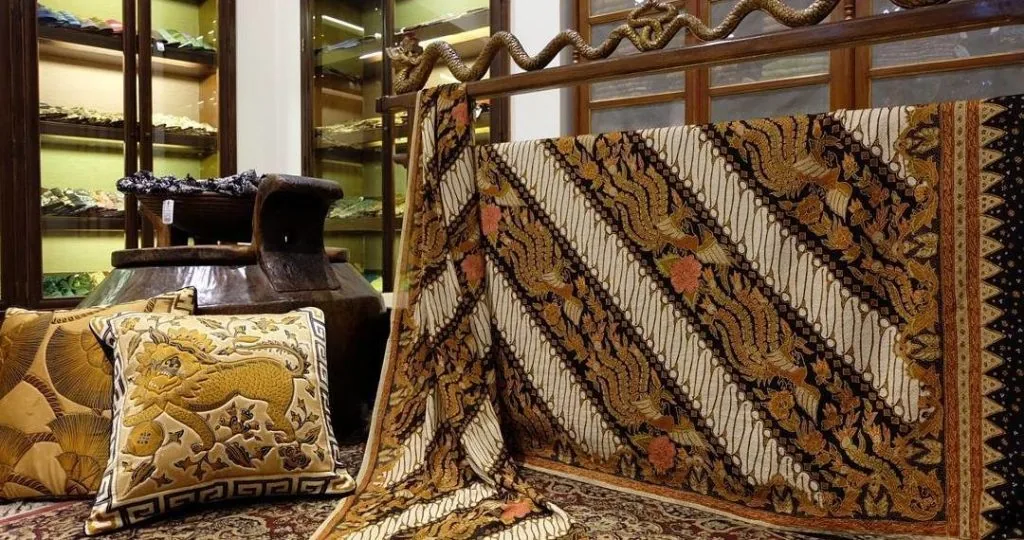
Batik is the art of applying wax to fabric to resist dye, building up patterns through repeated applications of wax and colour. In Java, it was a court art, and the finest pieces took months or years to complete. The Danar Hadi collection spans royal court batik from the Surakarta and Yogyakarta sultanates, Dutch colonial-era pieces that blend European floral motifs with Javanese patterns, Chinese-influenced coastal batik and contemporary works. The oldest pieces date to the 19th century, with some attributed to specific palace workshops. The museum is organised chronologically and regionally, so you can trace how patterns migrated and mutated as they moved between courts, communities and cultures. In the atelier attached to the museum, artisans use the canting, a small copper tool with a spout, to draw wax patterns by hand onto cotton in a process that requires steady hands and deep pattern knowledge.
The Experience
The mansion itself is elegant, with carved teak doors and tiled courtyards. The galleries are organised so that you move from the oldest court batik to colonial-era and modern pieces, and the evolution is visible: the patterns change as outside influences arrive and are absorbed. In the atelier, watching an artisan apply hot wax through the canting is hypnotic. The smell of heated wax and dye fills the room. The precision required for the finest patterns is immediately apparent when you see it done by hand.
Why It Matters
The Danar Hadi museum holds the world's most comprehensive collection of Javanese batik and is an essential resource for understanding the art form's history, regional variations and cultural significance. It preserves examples from court traditions that might otherwise have been lost.
It preserves examples from court traditions that might otherwise have been lost.
Why Visit
The world's largest batik collection: 10,000 hand-drawn textiles in a Javanese mansion, with master artisans demonstrating the wax-resist process in the workshop.
✦ Insider Tips
- 1
Watch the atelier artisans; the canting technique is best understood in person.
- 2
The court batik section shows the most complex patterns.
- 3
Solo is a smaller and more traditional city than Yogyakarta; worth exploring.
- 4
Combine with a visit to the Surakarta Kraton (palace) nearby.