Local legend claims a princess was turned to stone to become the final statue in this complex, but the real mystery is how these forty-seven-meter spires survived centuries of volcanic fury.
About Prambanan Temple
Rising during the mid-ninth century under the Sanjaya Dynasty, Prambanan was a grand response to the Buddhist Borobudur, designed to show that Shiva’s glory could reach just as high into the heavens. The site was built following the Vastu Shastra architectural philosophy, ensuring every stone was placed in accordance with cosmic alignment. However, the glory was short-lived; within eighty years of its completion, the entire Mataram Kingdom relocated to East Java, leaving the masterpiece to the mercy of the jungle. Earthquakes in the sixteenth century dealt a final blow to the structural integrity of the spires, leaving a landscape of rubble that locals believed was the work of giants. Serious restoration only began in 1918, and the main Shiva temple was not fully inaugurated until 1953. Even modern history has been unkind, as the 2006 Yogyakarta earthquake caused significant new damage, reminding the world that these stone needles remain at the mercy of the very tectonic forces that provided the volcanic rock for their construction.
What Prambanan Temple actually is
Jagged stone needles pierce the Javanese sky, rising with a sudden, violent grace that contrasts sharply with the rounded stupas of nearby Buddhist sites. Prambanan is still a forest of stone, a ninth-century Hindu masterpiece dedicated to the Trimurti: Shiva the Destroyer, Brahma the Creator, and Vishnu the Preserver. The central spire of Shiva reaches forty-seven meters upward, a vertical mountain of grey volcanic rock carved with an intricacy that defies the passage of a millennium. As you walk through the outer courtyards, the sheer scale of the ruins suggests a city of the gods that was once far more vast. The space around the complex carries the scent of sun-baked dust and tropical jasmine, creating an atmosphere that feels heavy with antiquity and the lingering heat of the volcanic plain. Unlike the horizontal spread of many ancient sites, Prambanan demands that you look up, its sharp silhouettes creating a dramatic crown against the turquoise horizon.
“Jagged stone needles pierce the Javanese sky, rising with a sudden, violent grace that contrasts sharply with the rounded stupas of nearby Buddhist sites.”
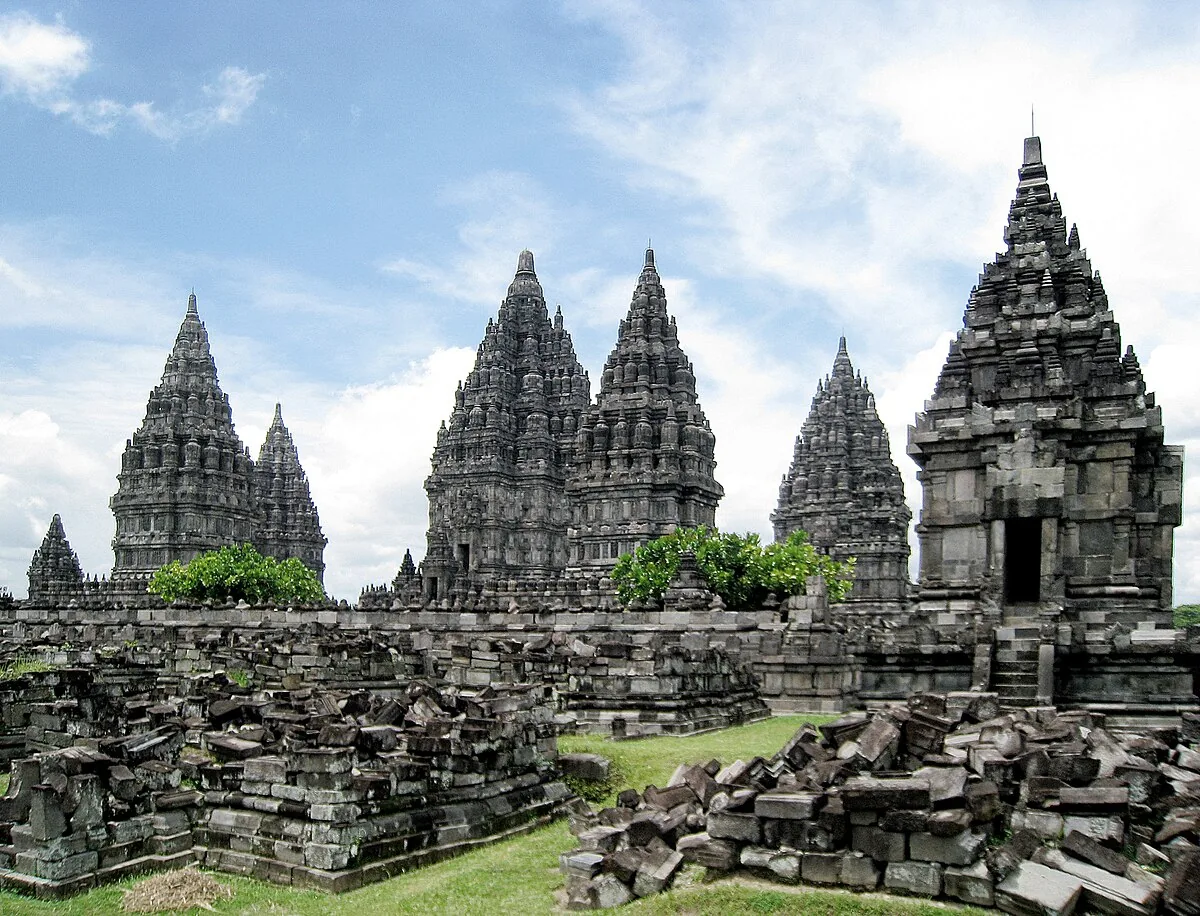
Prambanan Temple, Indonesia
History
King Rakai Pikatan commissioned this sprawling complex around 850 AD, likely as a bold political statement from the Sanjaya Dynasty to reaffirm Hindu power in a landscape then dominated by the Buddhist Sailendras. Local folklore tells a more tragic tale of the Thousand Temples, where a prince was cursed to turn a beautiful princess into stone to complete the final shrine. Real history is no less dramatic, involving a sudden abandonment in the tenth century as the royal court fled eastward, possibly driven by a catastrophic eruption of Mount Merapi. Over the centuries, the temples lay in a state of collapse, their stones scattered by earthquakes and swallowed by the roots of banyan trees. It was not until the early twentieth century that Dutch archaeologists began the painstaking process of anastylosis, fitting the stone fragments back together like a gargantuan three-dimensional puzzle. The reconstruction continues today, as workers still sift through the debris of the outer shrines to restore the original geometric harmony of the site.
The specific texture of the volcanic andesite under your palms, a rough and porous surface that holds the midday heat long after the sun begins to set. Walking up the steep stairs of the Shiva temple, the sound of the wind whistling through the stone lattices creates a low, ghostly hum that follows you into the inner sanctums. A shift in temperature entering the cool, dark chambers where statues of the gods wait in silent meditation, their stone faces smoothed by the touch of countless devotees. Along the outer galleries, the Ramayana reliefs unfold in a cinematic sweep; The detail of a dancer's jewelry or the ripple of an elephant’s trunk carved into the rock. The light at twilight is particularly transformative, turning the grey spires into dark, sharp silhouettes against a sky of violet and orange. Visitors generally overlook the smaller Candi Sewu complex further north, but wandering through its silent, uncrowded ruins provides a sense of the lonely majesty this valley possessed before the modern world arrived. The moment that stays with you is watching the first spotlights hit the spires during a performance of the Ramayana Ballet, when the stone seems to regain its ancient, pulse-quickening life.
Direct access from Yogyakarta
Direct access from Yogyakarta is remarkably simple, with the TransJogja bus system offering a cheap and efficient route that drops you nearly at the temple gates in under an hour. Many travelers prefer the flexibility of a private driver or a rented scooter, allowing for a sunrise arrival when the air is still crisp and the crowds are thin. The drive follows the busy Solo-Yogyakarta highway, a road that feels entirely modern until the grey spires of the temples suddenly emerge above the palm trees. For a more evocative journey, taking a train to the nearby Maguwo station provides a rhythmic introduction to the rural landscape of Central Java before the final short taxi ride to the archaeological park.
“Direct access from Yogyakarta is remarkably simple, with the TransJogja bus system offering a cheap and efficient route that drops you nearly at the temple gates in under an hour.”
The Experience
How the light catches the moss in the deep carvings, turning the grey stone into a collection of green and silver during the rainy season. Within, the space the main shrines is thick with the smell of old stone and the faint, sweet lingering of incense left by modern pilgrims. The chatter of macaques in the trees bordering the site, their sharp cries punctuating the hushed reverence of the temple grounds. The immense weight of the masonry above you as you stand in the central cella, a sensation of being inside the heart of a mountain. The majority miss the small, hidden carvings of 'Kalpataru' trees and mythical animals at the very base of the shrines, which are some of the most whimsical and well-preserved details on the site. The most profound moment is standing in the central courtyard as the evening call to prayer from nearby mosques drifts over the Hindu spires, a beautiful collision of Java’s complex religious layers.
Why It Matters
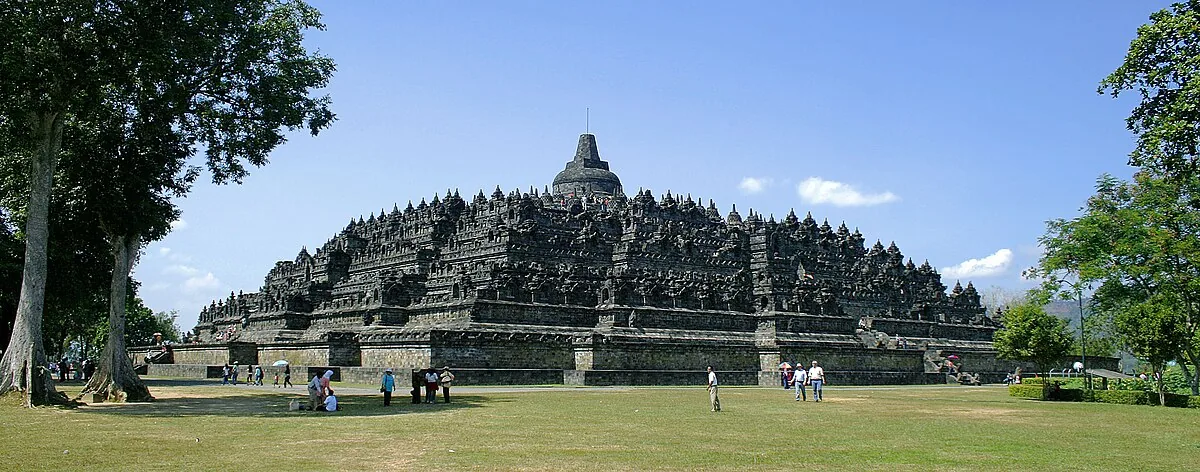
Prambanan is the definitive expression of Hindu-Javanese art, representing a unique cultural synthesis where Indian religious concepts were reimagined through the lens of local craftsmanship. It matters as proof of the sophisticated engineering of a civilization that could build skyscrapers of stone without modern tools. Beyond its physical beauty, it remains a vital symbol of Indonesia’s diverse heritage, standing as a grand neighbor to the world's largest Buddhist temple.
Why Visit
Visit Prambanan because while other temples feel like monuments of the past, this one feels like a living drama in stone. It offers a vertical, aggressive beauty that serves as the perfect counterpoint to the meditative, horizontal sprawl of Borobudur. You come here to see the Ramayana come to life on the walls and to witness the sheer audacity of architects who dared to build stone needles in a land of earthquakes.
Insider Tips
- 1
Walk to the often-ignored Candi Plaosan nearby to see the 'Twin Temples' where Buddhist and Hindu motifs are intricately blended in a single site.
- 2
Stay for the evening Ramayana Ballet, but choose the outdoor stage performances held during the dry season for a backdrop of the illuminated temples.
- 3
Carry a small torch or use your phone light to illuminate the interior carvings of the Brahma and Vishnu temples, which are often shrouded in deep shadow.
- 4
Look for the 'Temple of the Cursed Princess' statue in the north room of the Shiva temple; it is actually a depiction of the goddess Durga.