“Thirty-three years of colonial influence and local rebellion are captured here in a palace where the Prince of Ubud hid the island's finest paintings to keep them from leaving Indonesian shores.”
About Museum Puri Lukisan
Puri Lukisan was born from a desperate need for cultural preservation in 1936, a time when Balinese art was in danger of becoming a mere souvenir for the Western world. Prince Tjokorda Gde Agung Sukawati and Rudolf Bonnet realized that without a dedicated sanctuary, the island’s aesthetic evolution would be dictated by the market rather than the spirit. They founded the Pita Maha artists' association, which acted as a rigorous gatekeeper of quality and innovation for over a decade. Construction on the current site began in 1954, after years of delay caused by World War II and the Indonesian Revolution. The first pavilion was opened in 1956, marking a new era where Balinese artists were celebrated as individuals rather than anonymous craftsmen. Over the years, the museum expanded to four distinct buildings, each funded by a mix of royal patronage and international support. It was Bonnet himself who curated the initial collection, selecting pieces that showed the dramatic shift from the flat, two-dimensional shadow-puppet styles to the depth and perspective influenced by his own European training.
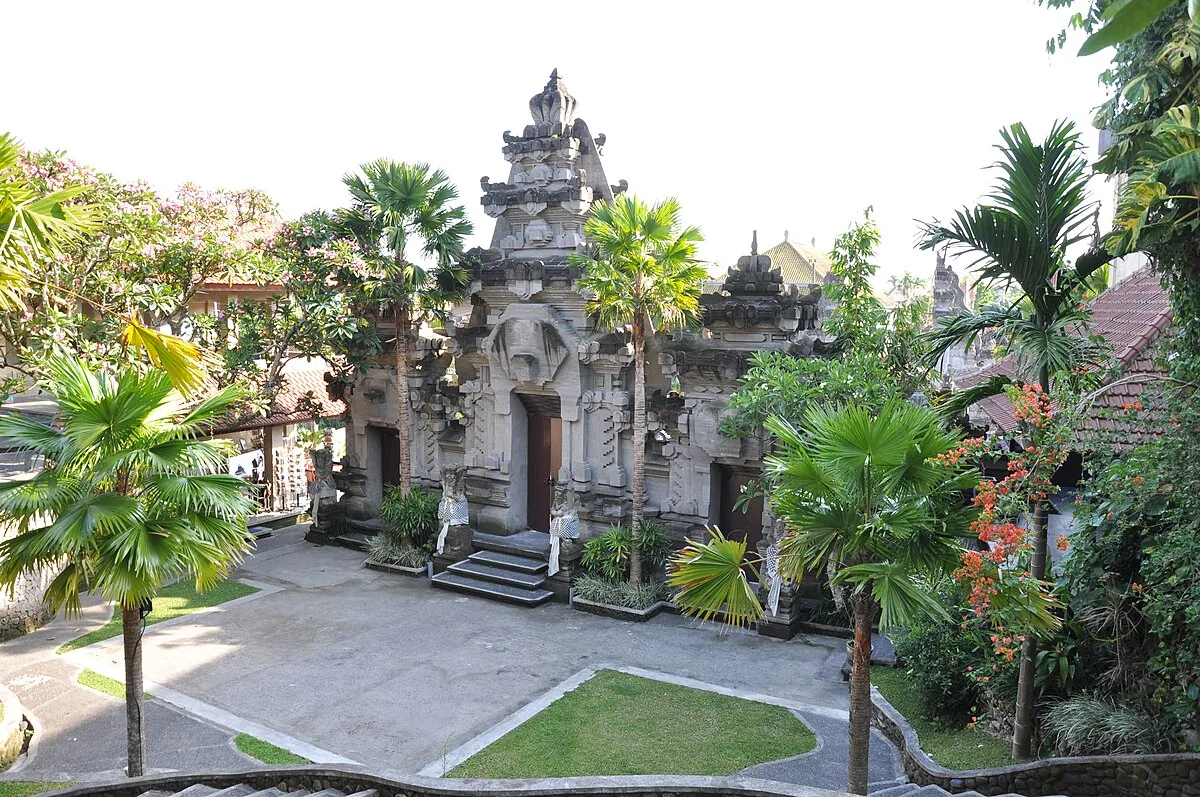
Deep within the rhythmic pulse of Ubud, behind a modest gate on the main thoroughfare, lies a sanctuary where the very soul of Balinese art was saved from extinction. Museum Puri Lukisan, the 'Palace of Paintings,' does not merely house a collection; it is a botanical and architectural sanctuary that reflects the island's transition from ancient myth to modern expression. Four elegant pavilions sit set among lush tropical gardens where the sound of splashing fountains and the scent of damp moss create a heavy, contemplative stillness. Unlike the larger, more sterile galleries found in metropolitan hubs, this site feels like a private estate where the art breathes in harmony with the orchids and lotus ponds. Each building chronicles a specific era of the Balinese aesthetic, from the dense, traditional Wayang style to the vibrant, experimental splashes of the twentieth century. It remains a quiet defiance against the frantic commercialism of the surrounding streets, offering a space where time slows to the pace of a brushstroke.
Deep within the rhythmic pulse of Ubud, behind a modest gate on the main thoroughfare, lies a sanctuary where the very soul of Balinese art was saved from extinction.
What it represents
The mid-1930s saw Bali at a cultural crossroads as foreign influences began to reshape local traditions. Fearing that the island's finest artistic treasures were being drained away by wealthy tourists and overseas collectors, the Prince of Ubud, Tjokorda Gde Agung Sukawati, joined forces with Dutch painter Rudolf Bonnet. Together with the influential artist Walter Spies, they formed the Pita Maha movement in 1936 to ensure Balinese art evolved without losing its spiritual identity. The museum was finally established in 1954, serving as a permanent home for works that the movement deemed essential to the island's heritage. This collaboration between local royalty and European expatriates was revolutionary at the time, creating a standard of quality that prevented the commodification of sacred imagery. Through the turbulent decades of Indonesian history, the museum has remained a steadfast guardian of these stories, surviving as the oldest art institution on the island.
The temperature drop walking the stone path through the gardens, a natural cooling provided by the dense canopy of tropical trees. The environment smells of sweet incense and the faint, earthy musk of old wood and ink. Inside the pavilions, the light filters through soft woven blinds, illuminating the intricate details of 'The Birth of Ganesha' or the haunting, elongated figures characteristic of the Sanur school. The soft, metallic clink of a gamelan being tuned in a distant corner of the compound, a sound that feels inseparable from the visual narratives on the walls. Those who come overlook the subtle differences in the woodcarving styles between the various villages represented, but a closer look reveals the distinct personalities of Batuan and Keliki artists. A weight of the humidity standing before the massive, detailed canvases of the Pita Maha era, realizing that every square inch was labored over for months. The element that stays with you is sitting on the pavilion steps at midday, watching a dragonfly hover over a lotus while the quiet whispers of the gallery visitors merge with the rustle of palm fronds.
Situated in the dead center of Ubud
Situated in the dead center of Ubud, the museum is easily accessible on foot from the Ubud Palace or the central market. Those visiting find that walking is the only sensible way to navigate the narrow, congested lanes of the town center, though a scooter offers more flexibility if you are staying in the outlying rice fields of Penestanan or Nyuh Kuning. If you are arriving from the southern beach enclaves like Seminyak or Sanur, a private car is the standard choice, taking roughly ninety minutes to wind through the increasingly green and terraced landscapes of central Bali. The entrance is marked by a green sign and a long bridge that spans a lush ravine, effectively separating the noise of the traffic from the tranquility of the galleries.
Situated in the dead center of Ubud, the museum is easily accessible on foot from the Ubud Palace or the central market.
The Experience
You feel the textured grain of the hand-carved doors as you move between the distinct pavilions, each step taking you further into a spread of myth and local legend. Audible here of the surrounding town fades into a low, oceanic hum, replaced by the trickle of water in the central koi ponds and the occasional chirp of a gecko. First, the way the old ink on the lontar-leaf manuscripts has aged to a deep, resonant sepia, a stark contrast to the brilliant acrylics of the more modern wing. People generally miss the small studio in the back where local masters sometimes teach the traditional techniques to the next generation. From somewhere comes the scratch of a pen or the soft tap of a mallet, sounds of a culture that is still actively being created. The light at four in the afternoon is particularly soft, casting long shadows across the garden sculptures and making the stone faces appear to shift in the gloaming.
Why It Matters
Puri Lukisan matters as the ground zero for modern Balinese art, representing the moment the island’s artists moved from the communal to the individual. It is a product of the power of cross-cultural friendship and royal foresight in protecting heritage during times of global upheaval. Humanly, it proves that art can be a shield for a society's identity, preserving the sacred even as the world around it changes.
Why Visit
Visit Puri Lukisan because it offers a narrative clarity that the chaotic art markets outside cannot provide. While other galleries in Ubud can feel like a blur of repetitive themes, this museum curates the 'why' behind the beauty. You come to escape the heat, but you stay because the transition from ancient gods to modern life is told here with a quiet, dignified authority that is found nowhere else.
✦ Insider Tips
- 1
Look for the original sketches by Rudolf Bonnet in the North Pavilion to see the European influence that sparked the Pita Maha movement.
- 2
Book a traditional painting workshop in advance to sit with a local master in the back garden and learn the grueling process of Balinese layering.
- 3
Use the museum's quiet cafe as a retreat; the price of admission often includes a drink, and it is the most peaceful spot in Central Ubud for a coffee.
- 4
Pay close attention to the Batuan school paintings in the second pavilion; the level of detail is so dense that a magnifying glass is almost required.
- 5
Check the museum's schedule for temporary evening performances, as the central garden becomes a hauntingly beautiful stage under the moonlight.