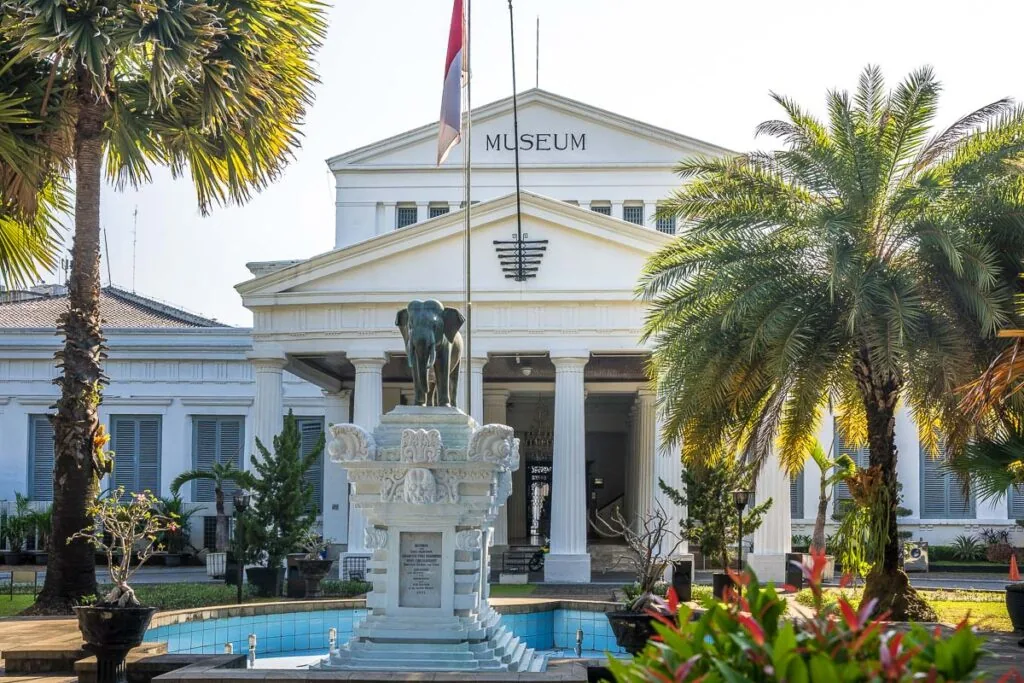
“A bronze elephant from a Thai king stands guard over a collection so vast it takes four floors and two centuries to explain how seventeen thousand islands became one nation.”
About National Museum of Indonesia
The Royal Batavian Society of Arts and Sciences birthed this collection in 1778, driven by an Enlightenment-era obsession with documenting the flora, fauna, and cultures of the East Indies. Initially housed in the Old Town, the artifacts moved to the current 'Elephant Building' in 1868 to provide a grander stage for the massive stone sculptures arriving from Central Javanese temples like Borobudur. Following Indonesia's independence in 1945, the museum transitioned from a colonial research center to a national symbol of 'Unity in Diversity.' It became the primary repository for the nation's most precious heritage, including the regalia of various sultanates and the deep-sea treasures found in the Java Sea. Despite recent challenges, including a major fire in 2023 that spurred a massive international conservation effort, the museum continues to evolve, using its newer wings to tell a more contemporary story of the Indonesian people.
Overview
Standing before the bronze elephant that guards the entrance, you leave the humid roar of Jakarta’s traffic for a world carved from stone, gold, and memory. The National Museum of Indonesia, affectionately known as Gedung Gajah, remains the most comprehensive sanctuary of the archipelago’s dizzying cultural diversity. Its older wing possesses the quiet gravity of a nineteenth-century colonial hall, while the modern expansion rises with glass-walled ambition. Within these walls, the story of seventeen thousand islands converges. Moving past towering Hindu-Buddhist statues that seem to vibrate with ancient energy, their stone features smoothed by a thousand years of tropical air. The scent of floor wax and old paper mingles with the faint, metallic tang of the massive bronze drums and intricate jewelry that occupy the upper floors. Every corner of this building offers a reminder that Indonesia is not merely a country but a sprawling, multifaceted epic of human migration and artistic evolution.
Standing before the bronze elephant that guards the entrance, you leave the humid roar of Jakarta’s traffic for a world carved from stone, gold, and memory.
established this institution, 1778
Founding members of the Royal Batavian Society of Arts and Sciences established this institution in 1778, making it one of the oldest and most significant intellectual hubs in Southeast Asia. The core of the collection began in a modest building on Kalibesar, but the sheer volume of archaeological finds soon demanded the grand Neoclassical structure on Medan Merdeka Barat, completed in 1868. King Chulalongkorn of Siam gifted the famous bronze elephant statue during his visit in 1871, providing the museum with its enduring nickname. Throughout the twentieth century, the museum weathered the transitions from Dutch colonial rule to Japanese occupation and finally to Indonesian independence, serving as the central archive for a newborn nation. A modern wing was added in 2007 to house the ever-growing ethnographic treasures, though a significant fire in late 2023 reminded the world of the extreme fragility of these irreplaceable artifacts. The ongoing restoration efforts have only deepened the public’s connection to the site, highlighting the museum's role as the guardian of the Indonesian soul.
The shift in light as you transition from the open-air courtyard, filled with volcanic stone sculptures, into the dimly lit treasure rooms where the Wonoboyo hoard glitters with defiant brilliance. Sound-wise of your footsteps on the polished tiles provides a rhythmic backdrop to the hushed murmurs of students sketching the intricate reliefs of Javanese deities. Something like a sense of overwhelming scale in the ethnographic section, where life-sized traditional houses and ritual masks from Papua to Sumatra create a vibrant, wooden forest of ancestral spirits. Visitors generally overlook the collection of ancient ceramics salvaged from shipwrecks, yet staring into the clouded glaze of a thousand-year-old plate brings the history of the Spice Route into visceral focus. From somewhere comes the distant, muffled chime of a gamelan rehearsal nearby, a sound that bridges the gap between the static exhibits and the living culture outside. The bit that stays with you is standing before the Prajnaparamita statue; her serene stone face conveys a stillness so profound it seems to quiet the chaos of the city streets just a few meters away. Reaching the museum is an exercise in navigating Jakarta’s central spine via the TransJakarta busway, which has a dedicated stop at Monas right across from the entrance. The red and white buses offer a cool, air-conditioned reprieve from the midday sun and provide a straight shot from most major districts. If you arrive by the North-South MRT line, a short walk or a quick ride from the Bundaran HI station will lead you through the greenery of Merdeka Square. Taxis and ride-hailing apps are ubiquitous, though timing your arrival for the early morning is essential if you wish to avoid the gridlock that defines the capital's afternoons. The museum is a perfect starting point for a day spent exploring the colonial landmarks that circle the National Monument park.
The Experience
The cool, damp smell of stone and history as you wander through the central courtyard, where centuries of rain have left a dark patina on the statues of Ganesha and Shiva. The light in the upper 'Gold Room' is carefully controlled, making the 10th-century necklaces and crowns seem to float in a velvet darkness. From somewhere comes the low, melodic drones of traditional music playing in the background of the puppet galleries, where hundreds of wayang kulit shadows dance against the walls. The immense age of the ‘Purnavarman’ stone, an ancient footprint carved into a boulder that serves as one of Indonesia's earliest written records. Almost all visitors miss the collection of pre-colonial textiles in the back galleries, where the intricate ikat patterns tell stories of village life that have remained unchanged for generations. The experience is one of constant discovery, where a single turn can take you from a prehistoric burial jar to a diamond-encrusted kris.
The cool, damp smell of stone and history as you wander through the central courtyard, where centuries of rain have left a dark patina on the statues of Ganesha and Shiva.
Why It Matters
The National Museum of Indonesia matters as the supreme archive of the Malay Archipelago's human history, housing over 140,000 objects that span from the prehistoric era to the modern age. It is the only place where the fragmented histories of countless ethnic groups are woven into a single narrative. Humanly, it provides Indonesians with a tangible anchor to their ancestors, proving that their cultural sophisticated predates colonial contact by thousands of years.
Why Visit
Check out this museum because it is the only way to comprehend the sheer, impossible scale of Indonesia in a single afternoon. While the beaches of Bali offer relaxation, this building offers the keys to understanding the people who live there. You come to see the gold, but you stay because the stone faces of the past provide a clarity that the modern city cannot.
✦ Insider Tips
- 1
Join the free English-language tours led by the Indonesian Heritage Society on Tuesday or Thursday mornings for stories you won't find on the placards.
- 2
Head straight to the fourth floor of the new wing first to see the gold treasures before the school groups arrive in the late morning.
- 3
Check the museum's social media for updates on which galleries are open, as restoration work following the 2023 fire is still ongoing in parts of the old wing.
- 4
Use the basement level of the new wing for the cleanest restrooms and a quiet spot to sit before heading back out into the Jakarta heat.