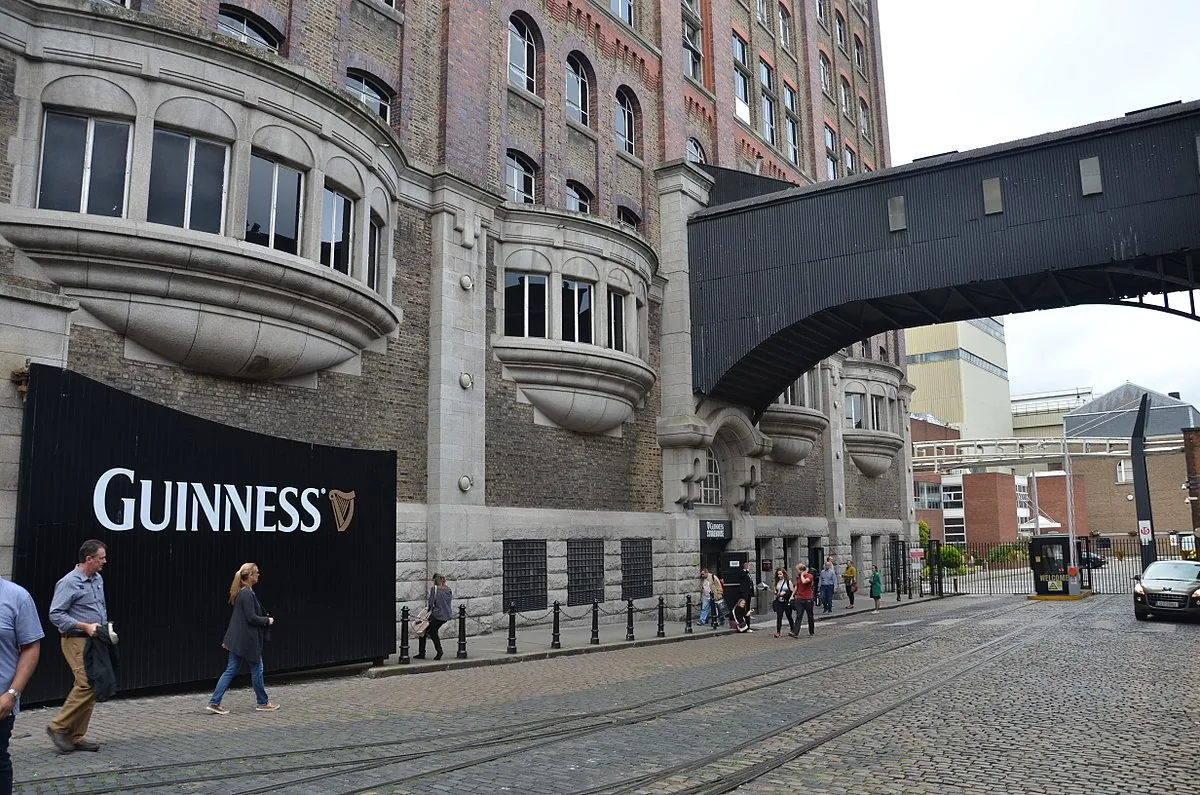
Arthur Guinness was so confident in his recipe that he signed a 9,000-year lease on his brewery, a document that still sits embedded in the floor of this former fermentation plant.
About Guinness Storehouse
The Storehouse occupies the 1904 Grain Store, a marvel of Edwardian engineering that utilized a steel skeleton to support its massive weight. For decades, this was the literal engine room of the brewery, where yeast was added to the cooled wort to begin the transformation into porter. The Guinness family were unconventional employers for the time, providing their workers with healthcare, high wages, and even subsidized housing in the nearby Iveagh Trust. This social history is woven into the exhibits, showing how the brewery functioned as a city within a city, with its own railway, power station, and fire brigade.
What Guinness Storehouse actually is
At the heart of Dublin's St. James’s Gate, a colossal brick edifice functions as a cathedral to industry and brewing. The Guinness Storehouse is housed in a former fermentation plant, a steel-framed structure that once pulsed with the heat of boiling wort and the rhythmic clanging of copper tuns. Inside, the architecture is designed as a giant pint glass, a glass atrium that widens as it rises through seven floors. The space smells heavily of roasted barley, a thick, biscuity scent that has defined the Liberties neighborhood for over two centuries. This is not a dusty museum; it is a sensory immersion into a brand that is inextricably linked to the Irish identity.
In 1759, Arthur Guinness signed a lease so audacious it remains a legendary piece of business lore: 9,000 years at an annual rent of 45 pounds. At the time, St. James’s Gate was a dilapidated brewery, but Guinness saw the potential in the water of the Wicklow Mountains. The business survived the Napoleonic Wars, the Great Famine, and the Irish Revolution, becoming at one point the largest brewery in the world. The Storehouse building itself, completed in 1904, was the first multi-story steel-framed building in the British Isles, a pioneer of Chicago-style architecture in the middle of Dublin. It ceased functioning as a fermentation plant in 1988, reopening its doors in 2000 to tell the story of the dark, creamy liquid that conquered the globe.
The journey begins with the sound of rushing
The journey begins with the sound of rushing water, representing the 100,000 gallons that flow through the brewery every day. Walking over the original 9,000-year lease, protected under glass in the floor, before ascending through levels dedicated to the chemistry of hops and the art of the cooper. The lighting is theatrical, casting long shadows across vintage advertising posters and giant wooden casks. The experience culminates in the Gravity Bar, a glass-walled circle perched atop the brewery. Here, you receive your pint, watching the nitrogen bubbles surge and settle into a perfect white head while the Dublin skyline stretches out in every direction, from the Poolbeg chimneys to the Dublin Mountains. Located in the Liberties, the Storehouse is a twenty-minute walk from Trinity College or a short hop on the Luas red line to the James’s stop. The approach takes you past the towering stone walls of the active brewery, where The rumble of trucks and see the steam rising from the vents. It is a working industrial site, so expect the grit and bustle of a busy city district. Entry is strictly ticketed by time slot, a necessary measure for a site that welcomes over a million visitors a year, so booking ahead is the only way to ensure passage into the black-and-gold heart of Dublin.
The Experience
The roasted aroma of barley hits you the moment you cross the threshold, a warm and toasted scent that feels almost edible. The vibration of the industrial past in the heavy ironwork and the vast, echoing spaces of the atrium. The most quiet moment happens in the tasting rooms, where white clinical light and concentrated vapors help you identify the notes of coffee and chocolate in the brew. Finally, the atmosphere shifts to a social hum in the Gravity Bar, where the 360-degree view of Dublin provides a visual soundtrack to the first cold sip of a perfectly poured stout.
Why It Matters
The Storehouse is more than a commercial attraction; it is a monument to Dublin’s industrial golden age. It represents the successful global export of Irish culture and the technical innovation that made mass production possible in the nineteenth century. For many, it is a site of secular pilgrimage, celebrating a drink that has become a global shorthand for Ireland itself.
Why Visit
The architecture and the view, even if you aren't a fan of the stout. The building is a masterpiece of industrial design, and the Gravity Bar offers the only unobstructed 360-degree panorama of the capital. It is a rare chance to see the scale of an industry that still powers the city’s economy.
✦ Photo Gallery
Best Season
🌤 Mid-week in November or February allows you to avoid the staggering summer crowds and secure a window seat in the Gravity Bar without a fight.
Quick Facts
Best time to visit
Mid-week in November or February allows you to avoid the staggering summer crowds and secure a window seat in the Gravity Bar without a fight.
Getting there
In Dublin, Ireland; reach Dublin first, then continue to the site.
What's nearby
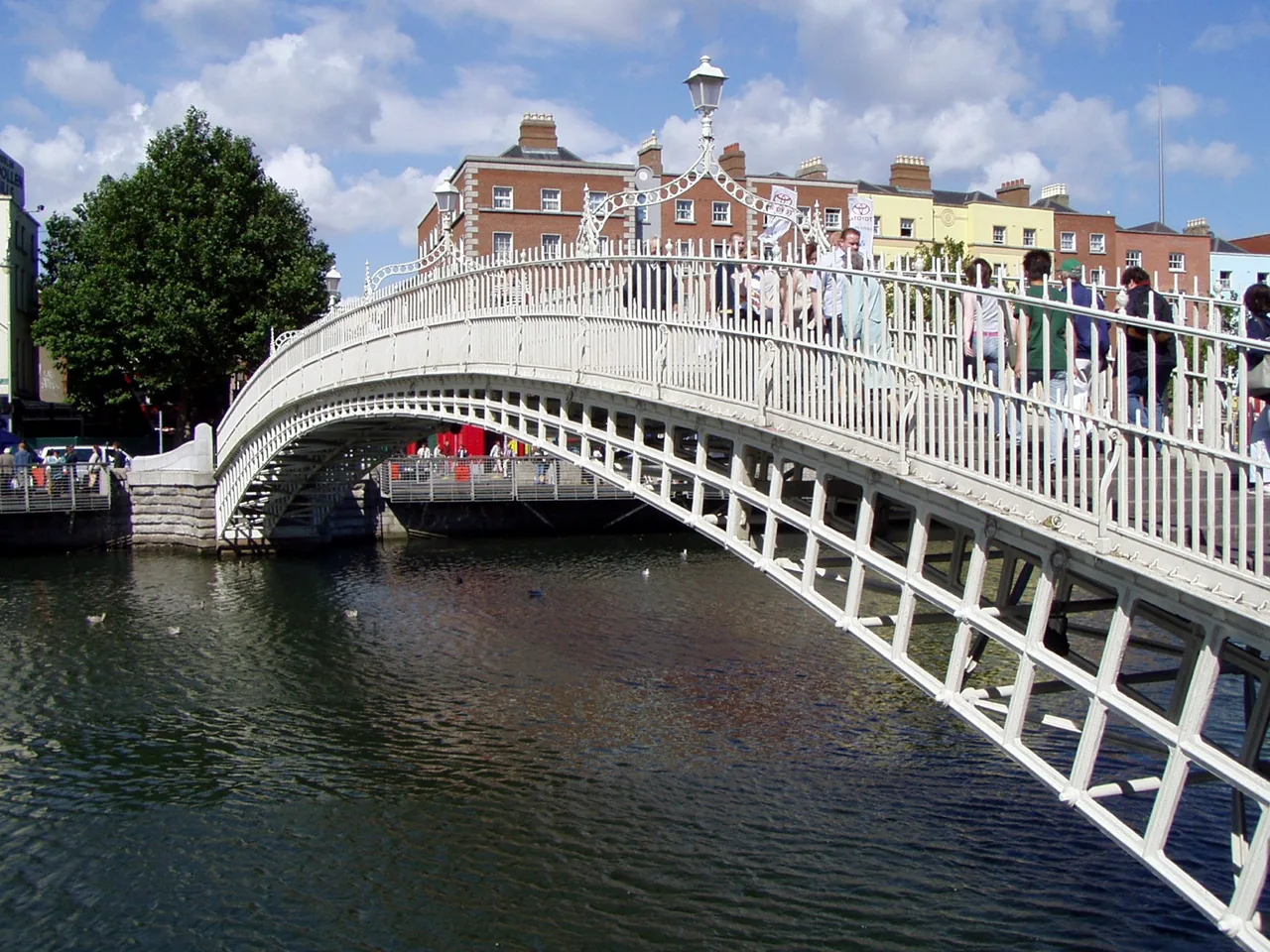
Kilmainham Gaol, Ha'penny Bridge and Trinity College Old Library are also in the area.
Location
Dublin, Ireland
Type
attraction
Coordinates
53.3419°, -6.2867°
Insider Tips
- 1
Look for the hidden 'Guinness Academy' floor where you can learn to pour your own pint and get a certificate to prove your technique.
- 2
Spend time in the advertising gallery; the creative history of their campaigns is as significant to British and Irish pop culture as the beer itself.
- 3
Eat at the 1837 Bar & Brasserie on the fifth floor; the beef and Guinness stew is legitimately excellent and uses the brewery's own yeast in the bread.
- 4
Check out the nearby St. James’s Gate itself, the historic stone archway, which is a two-minute walk from the main entrance.