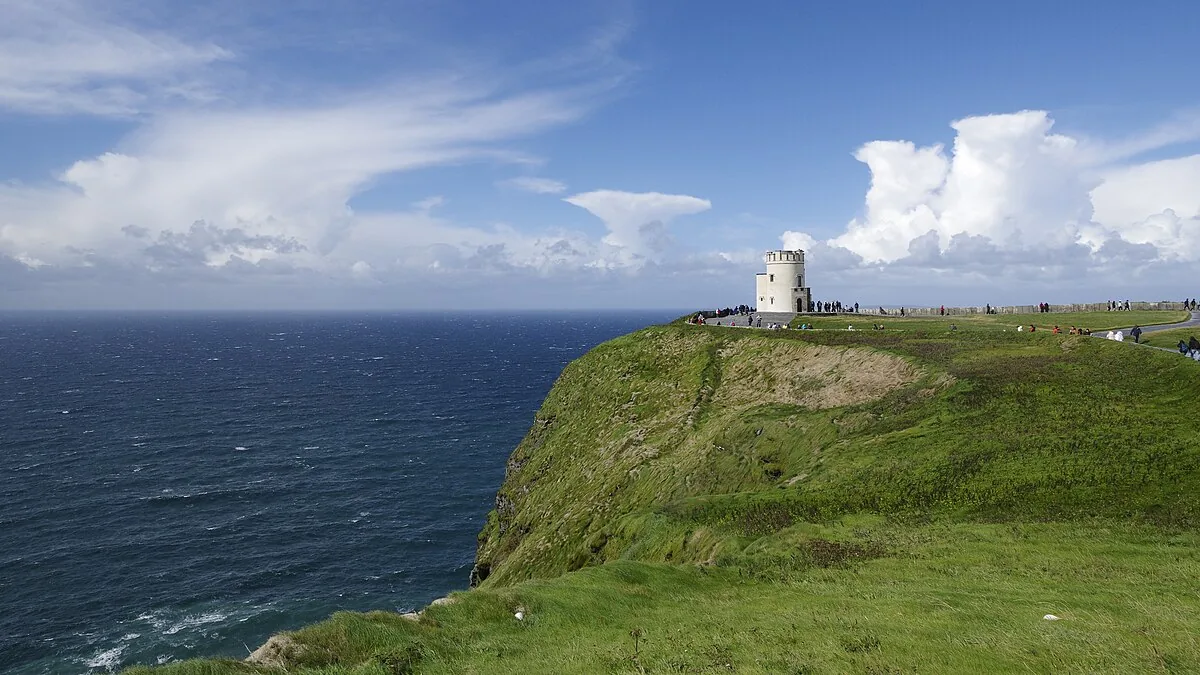
“Two hundred thousand ancient leather-bound books share their oxygen with a medieval harp and the ghosts of Ireland’s greatest writers in a wooden hall that smells of honey and history.”
About Trinity College Old Library
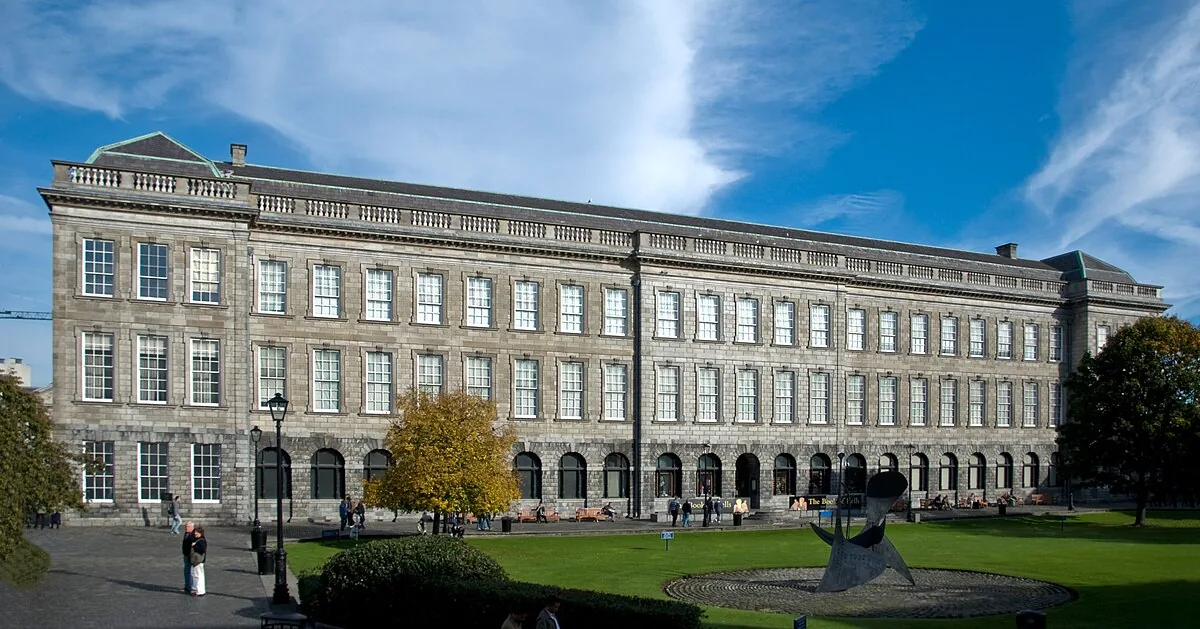
The library’s origins are intertwined with the very birth of the university in 1592, though the current 'Old Library' building didn't begin to take shape until the early 18th century. Thomas Burgh’s original design was a flatter, more austere space until the Victorian expansion literally raised the roof to accommodate a burgeoning national archive. In 1661, the Bishop of Meath presented the college with its greatest treasure, the Book of Kells, an 8th-century masterpiece of Celtic illumination that survived Viking raids and centuries of concealment. Throughout the 19th century, the library evolved from a private academic resource into a national monument, formalizing its role as a legal deposit library. This meant the building had to physically grow to keep pace with the printing presses of the industrial age, resulting in the soaring galleries of the Long Room we see today.
About Trinity College Old Library
Dublin’s cobblestones usually echo with the boisterous energy of a capital city, but behind the heavy gates of Trinity College, the atmosphere shifts into a scholarly hush that feels centuries deep. The Old Library is the architectural heart of this university, a granite and timber sanctuary that houses the intellectual soul of the nation. Most who visit arrive drawn by the vibrant, swirling pigments of the Book of Kells, yet the true revelation lies just up the stairs. The Long Room stretches for sixty-five meters, a cathedral of oak and vellum where the air is heavy with the intoxicating scent of beeswax and slowly decaying paper. Light filters through high, arched windows, illuminating dust motes that dance above rows of leather-bound volumes stacked toward a barrel-vaulted ceiling. This space does not merely store books; it preserves the very sensation of human curiosity.
Dublin’s cobblestones usually echo with the boisterous energy of a capital city, but behind the heavy gates of Trinity College, the atmosphere shifts into a scholarly hush that feels centuries deep.
the original structure, 1712
Thomas Burgh designed the original structure in 1712, though the library we experience today owes its dramatic silhouette to a massive mid-nineteenth-century renovation. By 1850, the shelves were groaning under the weight of a legal deposit law that gave Trinity a copy of every book published in Britain and Ireland. Architects Deane and Woodward were tasked with expanding the capacity, which led to the installation of the iconic wooden barrel ceiling and the upper gallery of shelves. This Victorian engineering feat managed to harmonize with the earlier Georgian aesthetic, creating a unified vision of academic grandeur. Along the central aisle, a series of marble busts depict the giants of Western thought, from Aristotle to Jonathan Swift. These silent guardians were commissioned starting in the 1740s, a physical manifestation of the university's commitment to the Enlightenment ideals of reason and rigorous inquiry.
Crossing the threshold into the Long Room feels like stepping into a sepia-toned dream where the modern world is deliberately excluded. The way the light catches the intricate grain of the dark oak, casting long, soft shadows across the floorboards. Sound-wise is unique; even when the room is full of people, the height of the ceiling seems to swallow the noise, leaving only a low, rhythmic murmur of footsteps. The weight of two hundred thousand ancient volumes pressing down from the galleries, a presence that is both humbling and inspiring. Almost all visitors forget to look closely at the Brian Boru Harp, a medieval instrument that sits in a glass case near the center, its weathered wood a haunting reminder of Ireland’s Gaelic past. What stays with you is usually the transition back into the bright, grey light of Fellows’ Square, as if you are resurfacing from a deep, atmospheric dive into another century.
Finding the library is straightforward
Finding the library is straightforward, as it sits at the geographic center of Dublin’s downtown core. Entrances to the college are located on College Green and Nassau Street, with the Old Library building situated just south of the main Library Square. The nearest DART station is Tara Street, while the Luas green line stops almost at the front gate at Trinity. Tickets are strictly timed and must be booked in advance, as the college manages the flow of visitors to protect the delicate environment of the manuscripts. Passing through the front arch and across the main courtyard provides the necessary mental transition from the commercial bustle of Grafton Street to the quiet dignity of the campus.
Finding the library is straightforward, as it sits at the geographic center of Dublin’s downtown core.
The Experience
The interior of the Long Room is cool and remarkably still, carrying the distinct, earthy perfume of vellum and aged timber. What hits is how the marble busts of philosophers seem to follow your movement with their blank, sightless eyes, adding to the room’s sense of timeless authority. While most visitors are focused on the books, you should look up at the intricate woodwork of the barrel vault, where the craftsmanship of the 1860s remains as sharp as the day it was finished. The floorboards give a slight, historic creak beneath your weight, a sound that has accompanied scholars for generations. The experience is defined by a sense of hushed reverence; people instinctively lower their voices as if they are in a temple. It is a place that celebrates the slow, tactile accumulation of knowledge in an era that feels increasingly digital and fleeting.
Why It Matters
Trinity College Old Library is the ultimate repository of Irish cultural identity and a reflection of the enduring power of the written word. It houses the most significant collection of medieval manuscripts in the world, including the Book of Durrow and the Book of Kells. Beyond its artifacts, the library signifies the continuity of the European intellectual tradition, serving as a physical bridge between the monastic scholarship of the early Middle Ages and the modern research university.
Why Visit
If you want to understand why Dublin is a UNESCO City of Literature, you have to start here. The Long Room provides an architectural high that no modern library can replicate, offering a sensory immersion into a world where books were considered the most valuable objects on the planet. It is the only place where you can feel the literal weight of Western history stacked in rows beside you.
✦ Insider Tips
- 1
Book the earliest possible morning slot to experience the Long Room before the peak mid-day tourist traffic breaks the scholarly silence.
- 2
Pay close attention to the 1916 Proclamation of the Irish Republic on display, a rare original copy that marks the birth of the modern state.
- 3
Look into the 'Book of Kells Experience' which often includes access to the secret subterranean levels where modern conservation work is performed.
- 4
Walk the full length of the Long Room to find the bust of Jonathan Swift; he was a Trinity alumnus and his likeness is considered one of the most accurate in existence.
- 5
Secure a 'Combined Campus' ticket if you want to see the Examination Hall and the Chapel, which are often closed to those only visiting the library.