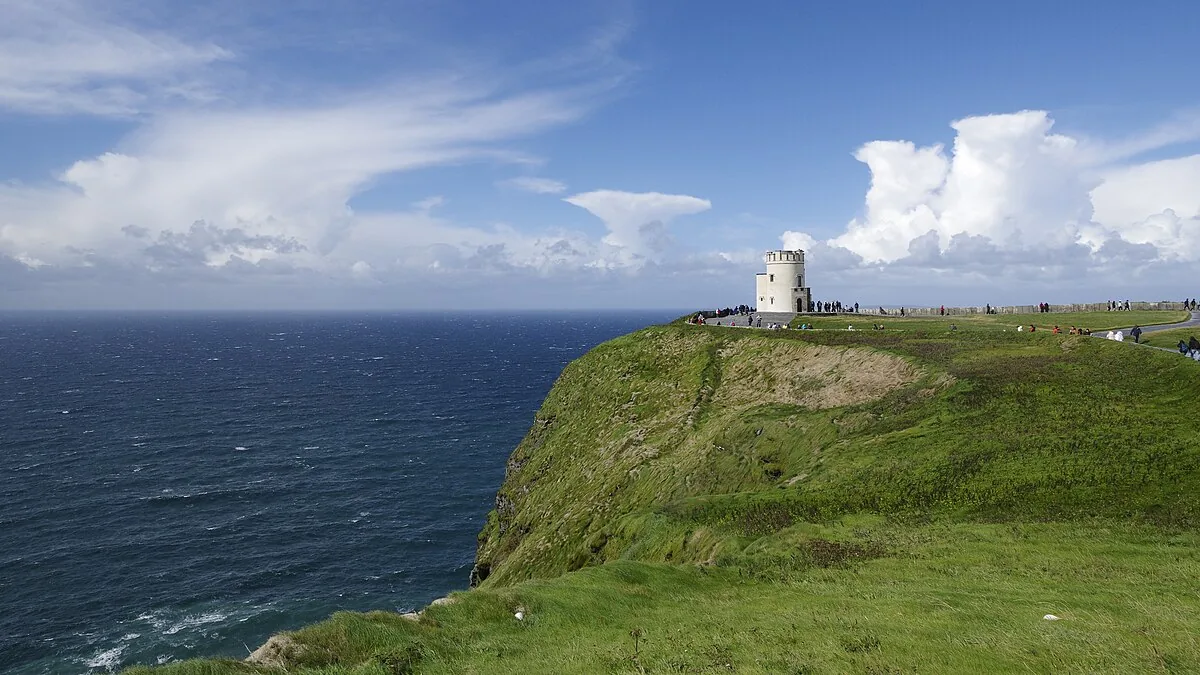
Six hundred stone steps, carved by hand over a thousand years ago, lead to a cluster of beehive huts where monks lived on the jagged edge of the known world.
About Skellig Michael
Monks first arrived on this precipitous rock in the sixth century, seeking a 'desert in the ocean' far from the distractions of society. They transformed the inhospitable slopes into a sophisticated liturgical center, building a series of terraces and cisterns to capture precious rainwater. In 823, a particularly brutal Viking raid resulted in the capture and subsequent death by starvation of the monastery’s abbot, Etgal, yet the community refused to abandon the site. By the 12th century, the monks even added a small Romanesque church, dedicated to Saint Michael. Eventually, the deteriorating weather of the Little Ice Age rendered the gardens non-viable, and the community transitioned to the mainland monastery at Ballinskelligs by 1222, though they continued to visit the island as a sacred site of penance for centuries.
Skellig Michael in Ireland
Twelve kilometers off the coast of County Kerry, a jagged pyramid of sandstone erupts from the Atlantic with such vertical violence that it seems less like an island and more like a tear in the horizon. Skellig Michael remains one of the most punishingly beautiful monastic settlements ever conceived, a place where the ascetic impulse drove sixth-century monks to the very brink of the habitable world. Six hundred and eighteen hand-carved stone steps rise like a spine up the southern face, leading to a cluster of dry-stone beehive huts that have clung to the ledge for over a millennium. Here, The air tastes of salt and ancient dust, thick with the cries of puffins and the rhythmic thrum of swells crashing into sea caves hundreds of feet below. It feels like a cathedral of rock and wind, where the distance between the terrestrial and the celestial is measured in sheer drops and mossy limestone.
“Six hundred and eighteen hand-carved stone steps rise like a spine up the southern face, leading to a cluster of dry-stone beehive huts that have clung to the ledge for over a millennium.”
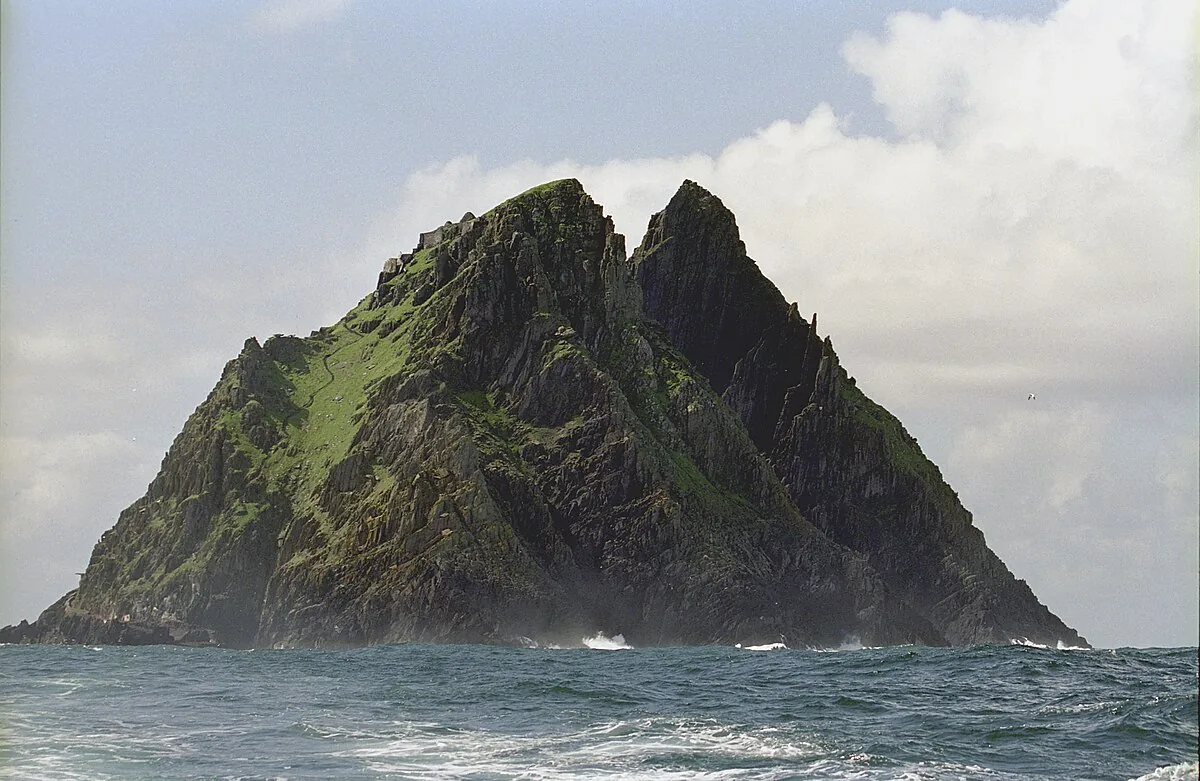
Skellig Michael, Ireland
Founding legends attribute the monastery to Saint
Founding legends attribute the monastery to Saint Fionán, though historical records suggest a dedicated community of roughly a dozen monks began carving a life here between the sixth and eighth centuries. These men were not mere hermits but master stonemasons who constructed their 'clocháns' without a single drop of mortar, relying on a corbeling technique that has withstood twelve hundred winters of North Atlantic gales. They survived on fish, seabird eggs, and the meager yields of rock-walled gardens, living in a state of constant prayer and environmental precarity. Viking raiders eventually discovered this lonely outpost in the ninth century, leading to several documented attacks, yet the monks persisted until the thirteenth century when a shifting climate and increasingly brutal storms forced them to retreat to the mainland. The island later was a site of pilgrimage and a lonely station for lighthouse keepers before its dry-stone architecture gained international recognition as a UNESCO World Heritage site.
On site
Stepping off a bobbing boat onto the narrow concrete pier, an immediate sense of vertigo looking up at the towering heights. The ascent is a physical conversation with the past; every stone under your boots was placed by a hand seeking solitude and salvation. Opening with the puffins first, thousands of them nesting in the grassy slopes, their comical presence softening the island’s severe, prehistoric aura. As you reach the monastery at the summit, the roar of the ocean fades into a high, lonely whistle of wind through the stone crevices. The interior of the beehive huts remains remarkably dry and cool, smelling faintly of old stone and sea mist. From the 'Saddle' between the two peaks, seeing the smaller Little Skellig island glowing white with gannet colonies, a view that makes you realize how tiny and fragile this human outpost is.
Reaching this limestone citadel requires
Reaching this limestone citadel requires a mix of forward planning and atmospheric luck. Small, licensed passenger boats depart daily from Portmagee, Valentia Island, and Ballinskelligs, but only during a strict window from mid-May to September. These crossings are entirely dependent on the Atlantic’s temperament; many travelers find their long-awaited trips canceled at the harbor mouth due to excessive swells. The journey across the open water takes roughly an hour, often accompanied by dolphins or minke whales. Once on the island, you are given a few hours to complete the climb and explore the ruins before the return leg, making the entire experience feel like a brief, stolen audience with a vanished world.
“Reaching this limestone citadel requires a mix of forward planning and atmospheric luck.”
The Experience
The wind at the summit has a weight to it, a constant pressure that reminds you how far you are from the safety of the shore. The way the light changes rapidly, shifting from a bright, crystalline blue to a brooding slate grey in the span of a few minutes. The most striking sensation is the texture of the steps; they are uneven, worn smooth by centuries of leather sandals and modern rubber soles, requiring a mindful, meditative pace. Something like a strange sense of companionship with the puffins that waddle just inches from the path, seemingly indifferent to the humans passing by. The detail that stays with you is the silence within the monk’s cells, a heavy, resonant quiet that seems to hold the echoes of a thousand years of whispered prayers.
Why It Matters
Skellig Michael stands as the ultimate shaped by the endurance of Early Christian monasticism in Europe. It represents a rare survival of an intact sixth-century settlement, preserved by its sheer inaccessibility. Culturally, it is a monument to the human desire to seek the divine in the most extreme environments, serving as a physical bridge between the prehistoric stone traditions of Ireland and the medieval Christian world.
Why Visit
Most landmarks allow you to be a spectator, but the Skelligs demand you be a participant. You come here to feel the burn in your lungs and the salt on your skin, experiencing a landscape that has ignored the passage of modern time. It is a pilgrimage in the truest sense, offering a clarity and isolation that is increasingly impossible to find on the mainland.
Insider Tips
- 1
Book your boat landing permit at least four months in advance, as only 180 people are allowed to set foot on the island each day.
- 2
Eat a light breakfast and bring ginger sweets for the boat crossing, as the swells between Portmagee and the rock can be notoriously stomach-churning.
- 3
Pause at the 'Saddle' to catch your breath and look for the 'Needle’s Eye,' a narrow vertical chimney that monks once climbed as a final act of devotion.
- 4
Watch the weather forecast from the Valentia Coast Guard, but be prepared for the boatman to make the final call at the pier based on the swell, not the rain.
- 5
Keep your hands free for the climb by using a backpack; the 600 steps are steep, often wet, and have no handrails for most of the ascent.