“In 1967, after six centuries of aristocratic rule, the 6th Marquess of Ormonde handed over the keys to this massive fortress for the price of two twenty-five pound notes.”
About Kilkenny Castle
William Marshall began the stone construction in 1195 to guard a crossing on the River Nore. The Butlers took possession in 1391 and transformed the castle into a center of culture and politics for the southeast of Ireland. During the 17th century, it was the site of the Confederate Parliament, a short-lived attempt at self-governance. The 19th century saw a massive Gothic Revival renovation which gave the castle its current residential appearance, including the installation of the magnificent Picture Gallery. Today, the Office of Public Works manages the site, meticulously restoring rooms to their Victorian splendor using original furniture and archival records.
About Kilkenny Castle
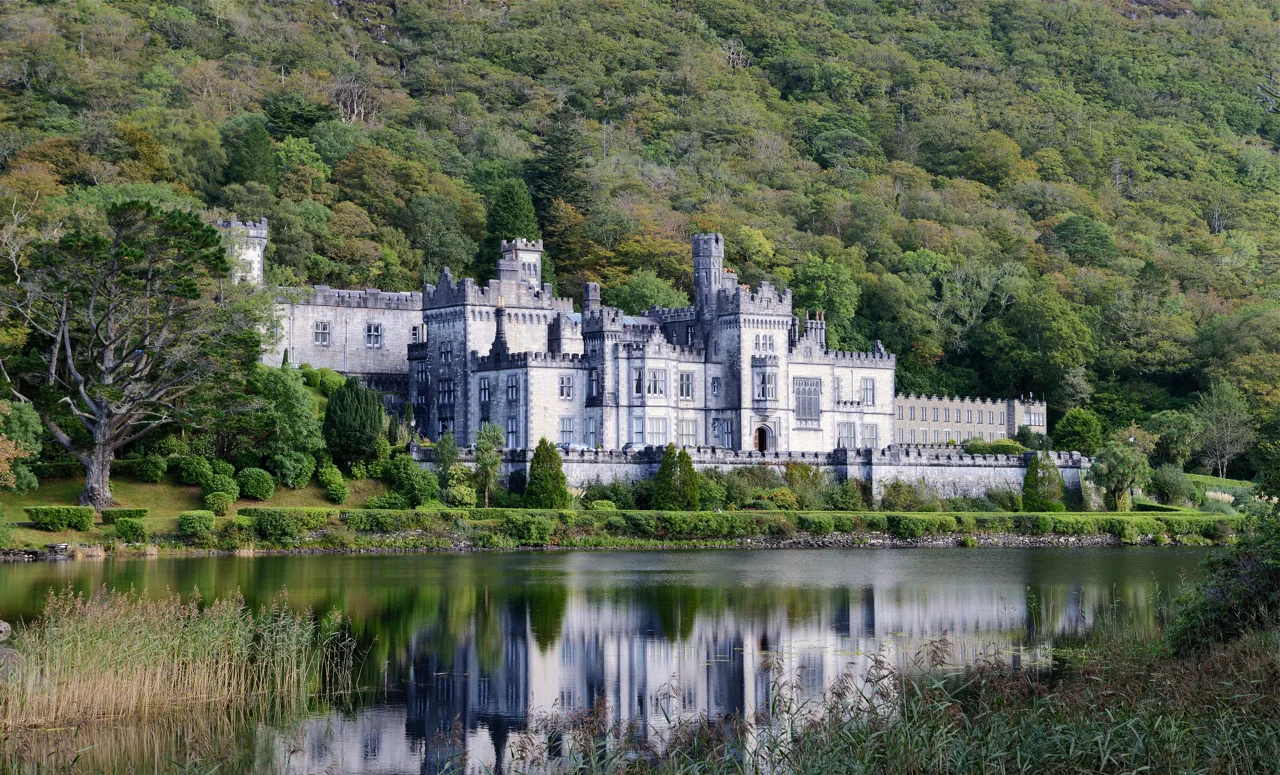
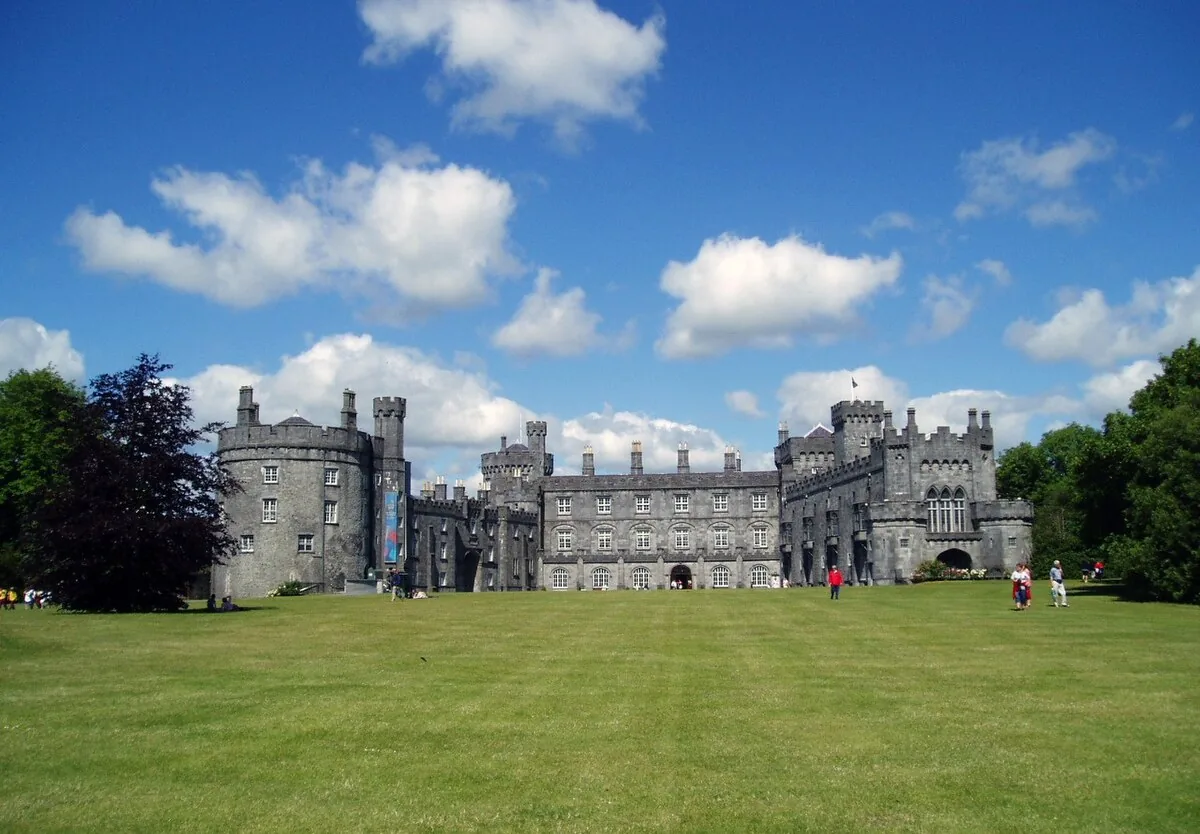
Kilkenny Castle sits like a heavy stone anchor at the bend of the River Nore, its three massive drum towers dominating the skyline of the Marble City. Unlike the crumbling ruins scattered across the Irish countryside, this fortress feels remarkably intact, a seamless blend of medieval defensive grit and Victorian luxury. The castle walls are thick and formidable, built from the local dark grey limestone that shines like polished silk after a rain shower. Surrounding the stone structure are fifty acres of rolling parkland where the sound of the city fades into the background, replaced by the rustle of ancient oaks and the occasional splash of an otter in the river below.
Kilkenny Castle sits like a heavy stone anchor at the bend of the River Nore, its three massive drum towers dominating the skyline of the Marble City.
The site has been a seat of power
The site has been a seat of power since the late twelfth century, when the Anglo-Norman invader Strongbow built the first wooden tower here. William Marshall, perhaps the greatest knight of the Middle Ages, replaced it with a stone castle that formed the core of what we see today. For nearly six hundred years, the castle was the headquarters of the Butler family, the Earls and Dukes of Ormonde, who navigated the turbulent waters of Irish and English politics with varying degrees of success. They hosted royalty, survived sieges, and eventually remodeled the castle into a grand residential palace. The line finally ended in 1967 when Arthur Butler sold the castle to the people of Kilkenny for a symbolic fifty pounds, saving the decaying structure from total ruin.
Visiting Kilkenny Castle
Inside, the Long Gallery is a sensory triumph, with its hammer-beam roof painted with intricate pre-Raphaelite motifs and walls lined with centuries of family portraits. The presence of the warmth of the fire in the drawing rooms and see the light catching the heavy silken tapestries. Inside, the lower corridors is cooler, smelling faintly of stone and floor wax. In the parklands, the atmosphere is more democratic; dogs chase balls across the lawns and families picnic under the shadows of the battlements. The most striking moment occurs standing in the courtyard and look up at the towers, realizing the sheer physical effort required to move these massive stones into place eight hundred years ago.
Kilkenny is one of Ireland’s most
Kilkenny is one of Ireland’s most walkable cities, and the castle is its central hub. It is located at the end of the High Street, a ten-minute walk from the train station. Visitors usually arrive from Dublin or Cork via the M9 motorway. The castle is the starting point for the Medieval Mile, a stretch of the city that contains more historic buildings than any other in Ireland. While the castle interior requires a ticket and follows a set path, the gardens and parkland are open to the public and provide the best views of the river and the castle’s exterior fortifications.
Kilkenny is one of Ireland’s most walkable cities, and the castle is its central hub.
The Experience
The creak of the floorboards in the Blend Room and the muffled sound of the city outside create an atmosphere of quiet, faded grandeur. The deep crimson of the gallery walls and the way the light from the tall windows illuminates the dust motes dancing over the velvet furniture. Outside in the Rose Garden, the scent of hundreds of blooms mixes with the earthy smell of the river. It is a place that feels both like a military stronghold and a comfortable home, a rare architectural transition that you can feel as you move from the narrow stone stairs to the wide, airy corridors of the main wing.
Why It Matters
Kilkenny Castle is the premier example of a medieval stronghold adapted for modern living. It anchors the 'Medieval Mile' and serves as the visual identity of Kilkenny. Culturally, it represents the complex history of the Anglo-Irish aristocracy and their eventual integration into the fabric of the modern Irish state.
Why Visit
Visit Kilkenny Castle because it is the most complete 'fairytale' castle in Ireland. While other sites are beautiful skeletons, Kilkenny is a living body, fully furnished and vibrating with stories. The contrast between the martial exterior and the opulent, art-filled interior is a masterclass in historical evolution.
✦ Insider Tips
- 1
The 'Butler Gallery' in the castle basement houses one of Ireland's best contemporary art collections and is free to enter.
- 2
Check the schedule for the 'Medieval Mile' museum nearby; it complements the castle history perfectly by showing the lives of the townspeople.
- 3
The tea rooms located in the Victorian kitchen offer a look at the 'below stairs' architecture that most visitors rush past.
- 4
Visit the Rose Garden in the early morning before the tour groups arrive to see the castle reflected in the central fountain in total peace.