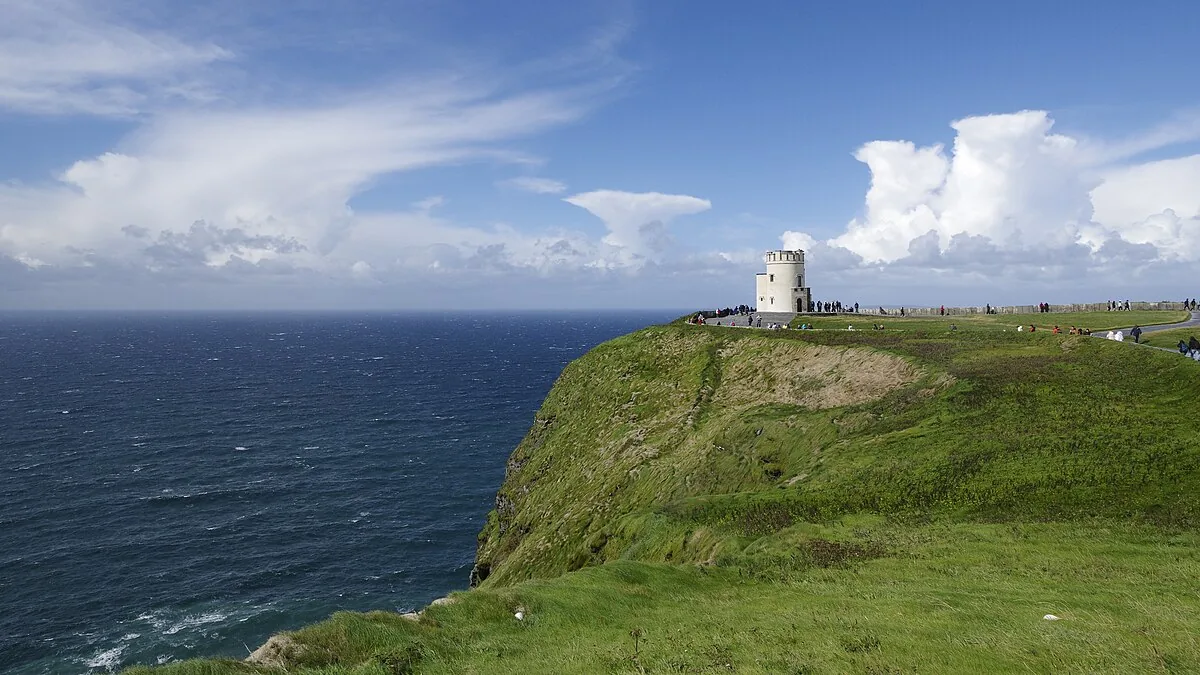
“Red deer stags have claimed these oak forests since the retreat of the glaciers, outlasting every king, monk, and chieftain who attempted to tame the Kerry wilderness.”
About Killarney National Park
The park began as the Muckross Estate, a vast private playground centered around a nineteenth-century manor. In 1932, the Bourn and Vincent families handed the keys of the eleven-thousand-acre property over to the Irish government as a memorial to Maud Vincent. This gesture saved the land from fragmentation and development, preserving the Killarney oakwoods which represent the largest remaining remnants of the native forest that once covered Ireland. Beneath the Victorian grandeur lies much older history, specifically the ruins of the seventh-century monastery on Inisfallen Island, where the Annals of Inisfallen were penned by scholarly monks over several centuries.
What Killarney National Park actually is
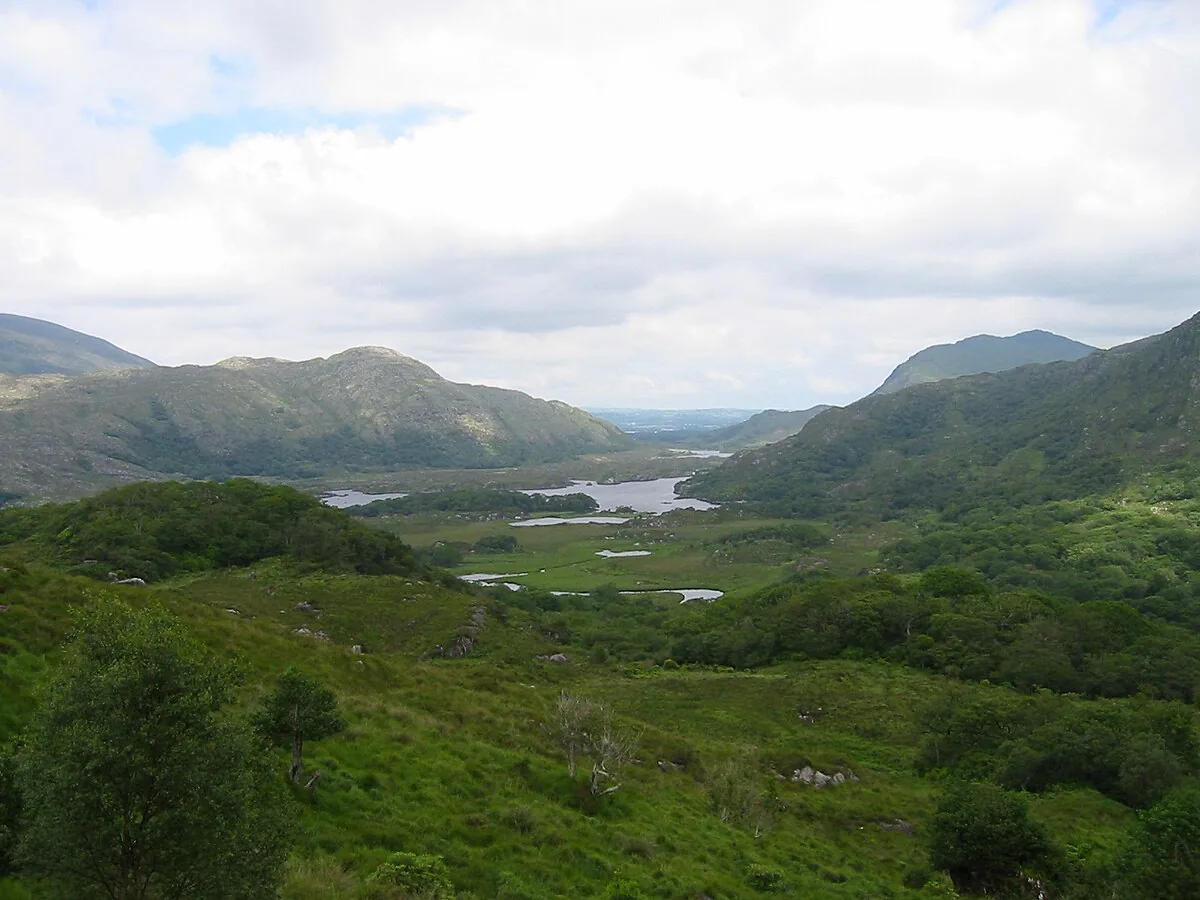
Rain in County Kerry is not merely weather; it is the architect of the landscape, a soft, persistent mist that turns the mountains a bruised purple and the oak woods a neon green. Within the twenty-six thousand acres of Killarney National Park, the Atlantic air collides with the MacGillycuddy’s Reeks, creating a microclimate where Mediterranean arbutus trees thrive alongside ancient ferns. This is a place defined by water, from the deep, still reservoirs of the three main lakes to the Torc Waterfall, which hums with a low frequency after a night of heavy downpour. There is a silence here that feels ancient, broken only by the sharp whistle of a stag or the rhythmic splash of an oar hitting the surface of Lough Leane.
Rain in County Kerry is not merely weather; it is the architect of the landscape, a soft, persistent mist that turns the mountains a bruised purple and the oak woods a neon green.
The survival of this wilderness owes much to a wedding gift and a subsequent act of staggering generosity. In 1911, William Bowers Bourn purchased the Muckross Estate for his daughter, Maud, creating a sprawling private sanctuary that kept the industrial revolution at bay. Following Maud’s untimely death, her husband and father gifted the entire estate to the Irish Free State in 1932, forming the nucleus of the country's first national park. Long before the landed gentry arrived, however, these woods belonged to the red deer. They are the only indigenous herd remaining in Ireland, descendants of the animals that crossed land bridges after the last Ice Age. Their presence provides a living link to a prehistoric Ireland, grazing among the ruins of Inisfallen Abbey where monks once recorded the early history of the island in the eleventh century.
Walking through the Yew Woods at Muckross feels like stepping into a cathedral of tangled silver limbs. The canopy is so dense that even on a bright afternoon, the light filters down in dusty, sepia shafts. The space smells of damp earth, wild garlic, and the faint, sweet decay of fallen leaves. If you take a traditional gap boat from Ross Castle, the scale of the mountains reveals itself. The water is dark, stained brown by peat, reflecting the jagged peaks of the Purple Mountain with such clarity that the horizon disappears. You might spot a white-tailed sea eagle circling high above, reintroduced to these skies after a century of absence. Their massive wingspan creates a momentary shadow over the boat, a record of the raw predatory power that still governs this valley.
Most travelers arrive via the town of Killarney
Most travelers arrive via the town of Killarney, which is a vibrant, if crowded, gateway. To enter the heart of the park, bypass the motorized tours and hire a bicycle or a jaunting car. The paths winding around Muckross Lake are closed to cars, allowing the sounds of the forest to take precedence. For those seeking the high ground, the climb to Ladies View offers a panoramic perspective that clarifies why Queen Victoria’s ladies-in-waiting were so captivated during their 1861 visit. The road is narrow and twists sharply, demanding a slow pace that suits the meditative atmosphere of the Kerry highlands.
Most travelers arrive via the town of Killarney, which is a vibrant, if crowded, gateway.
The Experience
Moss dampens every footstep as you navigate the shorelines of the lower lake, where the humidity carries the scent of pine and peat. The light in Killarney is notoriously fickle, shifting from a bright, watery gold to a heavy slate grey in the span of a heartbeat. Beginning with the temperature drop as you enter the limestone caves or the deep shade of the yew groves, where the stillness is so absolute it feels heavy. In the late afternoon, the calls of the native red deer echo across the valley, a primal, haunting sound that reminds you this is a landscape that operates on its own ancient clock.
Why It Matters
Killarney is the primary guardian of Ireland’s natural heritage, protecting the last surviving herd of native red deer and rare temperate rainforest ecosystems. It serves as a biological time capsule, offering a glimpse of the island’s ecology before human intervention altered the terrain. Culturally, the ruins within its borders represent the transition from early Christian scholarship to the era of the great Anglo-Irish estates.
Why Visit
Ignore the postcards of Killarney town and come for the silence of the back trails. This park offers a scale of solitude you cannot find elsewhere in Ireland, where the mountains feel tall enough to scrape the clouds and the lakes are deep enough to hold legends. It is the only place to witness the ancient red deer in their ancestral home.
✦ Insider Tips
- 1
Take the boat from Ross Castle to Lord Brandon’s Cottage to see the narrowest, most secluded channels of the upper lake.
- 2
Visit Torc Waterfall during a rainstorm; the increased volume creates a mist that makes the surrounding ferns look prehistoric.
- 3
The Muckross traditional farms nearby offer a genuine look at Irish agricultural life from the 1930s without modern artifice.
- 4
Walk the Blue Pool nature trail to see water colored an unusual turquoise by the presence of limestone minerals.
- 5
Avoid the main manor house at midday to escape the heaviest influx of tour buses.