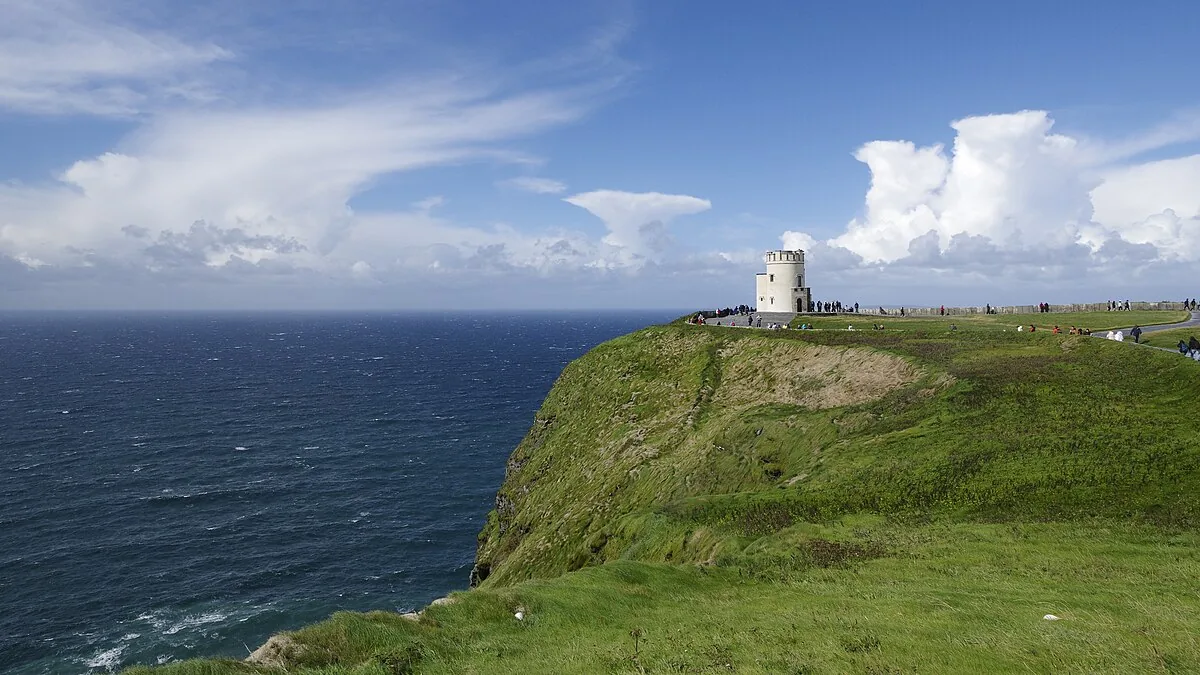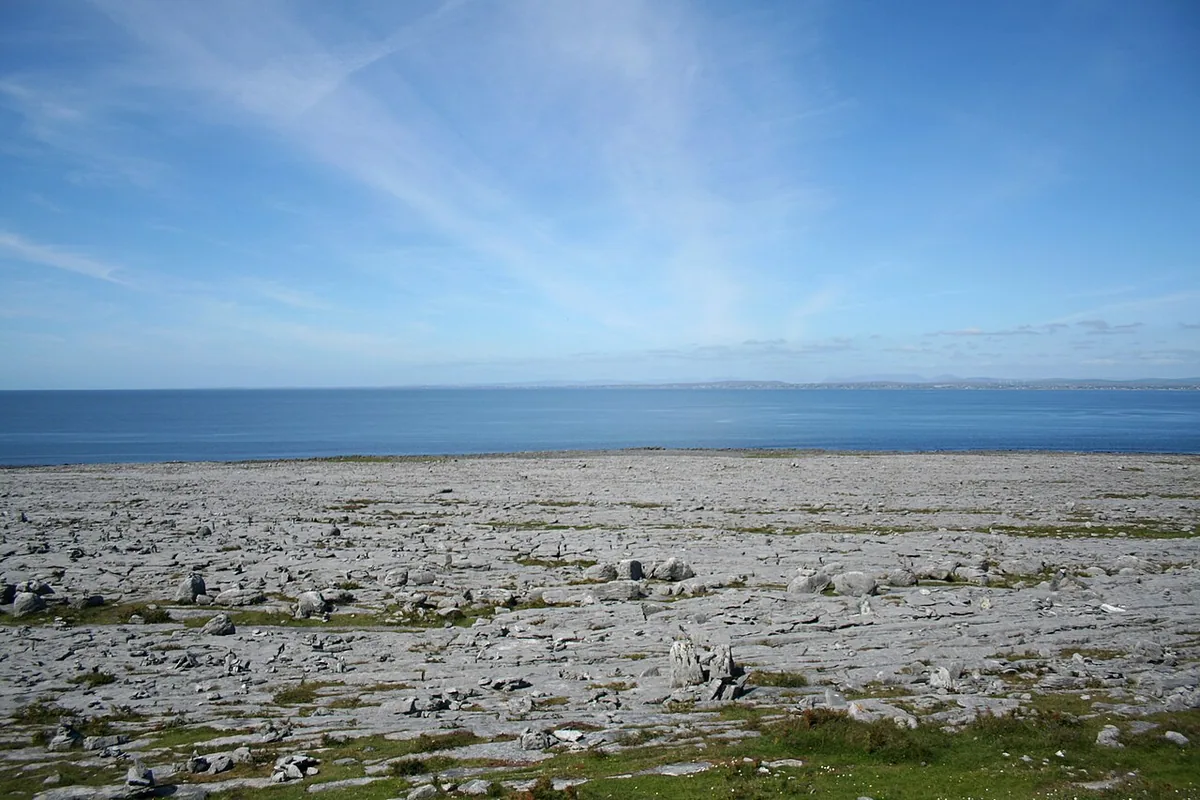
Cromwell’s surveyor famously complained this land had not enough water to drown a man, wood to hang him, nor earth to bury him, yet it supports the most diverse flora in Europe.
About The Burren
The Burren’s limestone began as a tropical seabed near the equator, formed by the accumulation of coral and shell debris during the Carboniferous period. During the last Glacial Maximum, about fifteen thousand years ago, grinding ice sheets polished the rock and deposited 'erratics', massive granite boulders carried from miles away that now sit precariously on the limestone flats. Neolithic settlers found the area surprisingly habitable, building over seventy portal tombs and hundreds of stone forts, including the massive Caherconnell. By the medieval period, the region became a center for Gaelic learning, housing famous law schools and the majestic Cistercian abbey of Corcomroe. The landscape we see today is a co-production between tectonic plate movements and thousands of years of pastoral farming that prevented the return of the forest.
The Burren in Ireland
Rainwater disappears here as if by magic, swallowed by a vast, silver-grey pavement of limestone that looks more like a lunar colony than the west of Ireland. The Burren occupies a strange, skeletal corner of County Clare, where the lush greens of the Emerald Isle give way to a sprawling karst landscape of deep fissures and weathered stone. The walk across the limestone pavements, known as grikes, The prehistoric scale of the earth beneath your boots. Every step reveals a botanical impossibility; delicate Arctic-alpine flowers bloom inches away from Mediterranean orchids, sheltered within the humid microclimates of the deep rock crevices. The horizon is a jagged line of terraced hills that catch the Atlantic light, turning from a cold slate to a glowing lavender as the sun dips toward the Aran Islands.
Beneath this karst skin lies a history three hundred and fifty million years in the making, beginning when this entire region was the bed of a warm, shallow tropical sea. The limestone is composed of the compressed remains of billions of microscopic marine creatures, later uplifted by tectonic shifts and scoured clean by the retreat of massive ice sheets. Human history here is just as visible and arguably more haunting. Stone Age farmers cleared the original pine forests six thousand years ago, inadvertently triggering the soil erosion that exposed the bare rock we see today. They left behind megalithic footprints like the Poulnabrone Dolmen, a portal tomb that has stood as a silhouette against the Clare sky since 3600 BCE. Local families have practiced a unique form of 'winterage' for centuries, driving cattle up into the hills during the cold months because the limestone retains the summer's heat and provides a dry, sheltered grazing ground.
Standing in the center of the Burren National
Park, a silence so profound that the buzz of a solitary bee sounds like a low-flying aircraft. The mass of the wind coming off the Atlantic, carrying a sharp, mineral scent that is entirely distinct from the peaty air of the Connemara bogs. The grain of the rock is surprisingly tactile, ranging from smooth, water-worn basins to sharp, fluted edges that catch on your clothing. Those visiting overlook the turloughs, or disappearing lakes, which can fill with water after a heavy rain and vanish back into the underground drainage systems within hours. Sunlight reflects off the limestone with a peculiar, silvery brilliance, making the blue of the Gentian flowers look preternaturally bright. The element that settles into your memory is finding a five-thousand-year-old stone wall still standing in a field of grey, a product of the stubborn persistence of life in a place that appears, at first glance, to offer none. Accessing this limestone wilderness requires a journey into the heart of North Clare, usually via the vibrant village of Ennistymon or the coastal hub of Ballyvaughan. Small, winding roads like the R480 snake through the most dramatic scenery, passing the Aillwee Caves and the high plateau of Mullaghmore. While many arrive on day tours from Galway or Limerick, the most intimate way to see the Burren is to stay in a local guesthouse and set out on foot. The Burren Way provides a marked trail for those seeking a long-distance trek, while the National Park offers several looped walks of varying difficulty. Public transport is sparse once you leave the main coastal towns, making a bicycle or a rental car essential for reaching the more isolated monastic ruins and megalithic sites.
The Experience
Walking across the 'clints' of the Burren feels like navigating a giant, petrified puzzle. First, the way the light changes the color of the hills every few minutes, shifting between a ghostly white and a deep, bruised purple. Beneath the surface, the sound of invisible water rushing through hidden caverns creates a low, resonant vibration that you feel through the soles of your feet. A sudden, sharp chill as the sea mist rolls in, followed by the sweet, honey-like fragrance of mountain avens blooming in the dark grikes. It is a place of contradictions, where the ground is hard and unforgiving, but the life emerging from its cracks is impossibly fragile. The thing most visitors overlook is the incredible variety of mosses and ferns that thrive in the permanent shadows of the rock, creating miniature rainforests just inches below the surface.
Why It Matters
The Burren is a globally unique ecosystem where Mediterranean, Alpine, and Arctic plants grow side-by-side, a botanical phenomenon found nowhere else on Earth. It serves as a living laboratory for geologists and an open-air museum for archaeologists, containing more than two thousand recorded monuments. Culturally, it preserves the ancient Irish tradition of winterage, a sustainable farming method that is vital for maintaining the region's rare biodiversity.
Why Visit
Forget the postcard-perfect cliffs for a moment and come here to walk on the bones of the planet. The Burren offers an eerie, quiet beauty that demands you slow down and look at the ground. It is the only place in Ireland where the landscape feels entirely alien, offering a sense of prehistoric isolation that stays with you long after you've returned to the green fields.
✦ Photo Gallery
Best Season
🌤 Visit in May or June to see the limestone pavements erupt in color as the rare orchids and spring gentians bloom simultaneously.
Quick Facts
Best time to visit
Visit in May or June to see the limestone pavements erupt in color as the rare orchids and spring gentians bloom simultaneously.
Getting there
In Galway, Ireland; reach Galway first, then continue to the site.
What's nearby
Cliffs of Moher, Croagh Patrick and Killarney National Park are also in the area.
Location
Galway, Ireland
Type
attraction
Coordinates
53.0078°, -9.0022°
Insider Tips
- 1
Look into the deep 'grikes' or fissures between the limestone slabs; they act as natural greenhouses for rare ferns that can't survive on the wind-swept surface.
- 2
Stop at the Burren Perfumery in Carron to smell scents literally distilled from the local wildflowers and the limestone-filtered air.
- 3
Avoid walking on the limestone when it is wet, as the surface becomes as slick as ice and the deep fissures can easily twist an ankle.
- 4
Visit the Poulnabrone Dolmen at sunrise to avoid the bus tours and see the ancient stone portal perfectly framed by the morning light.
- 5
Check the tide times if you are exploring the coastal stretches near Fanore, as the sea can reclaim the lower limestone shelves with surprising speed.