Guarded by a golden giant, these 400-million-year-old limestone halls transform every year into a sea of a million pilgrims and the scent of holy ash.
About Batu Caves
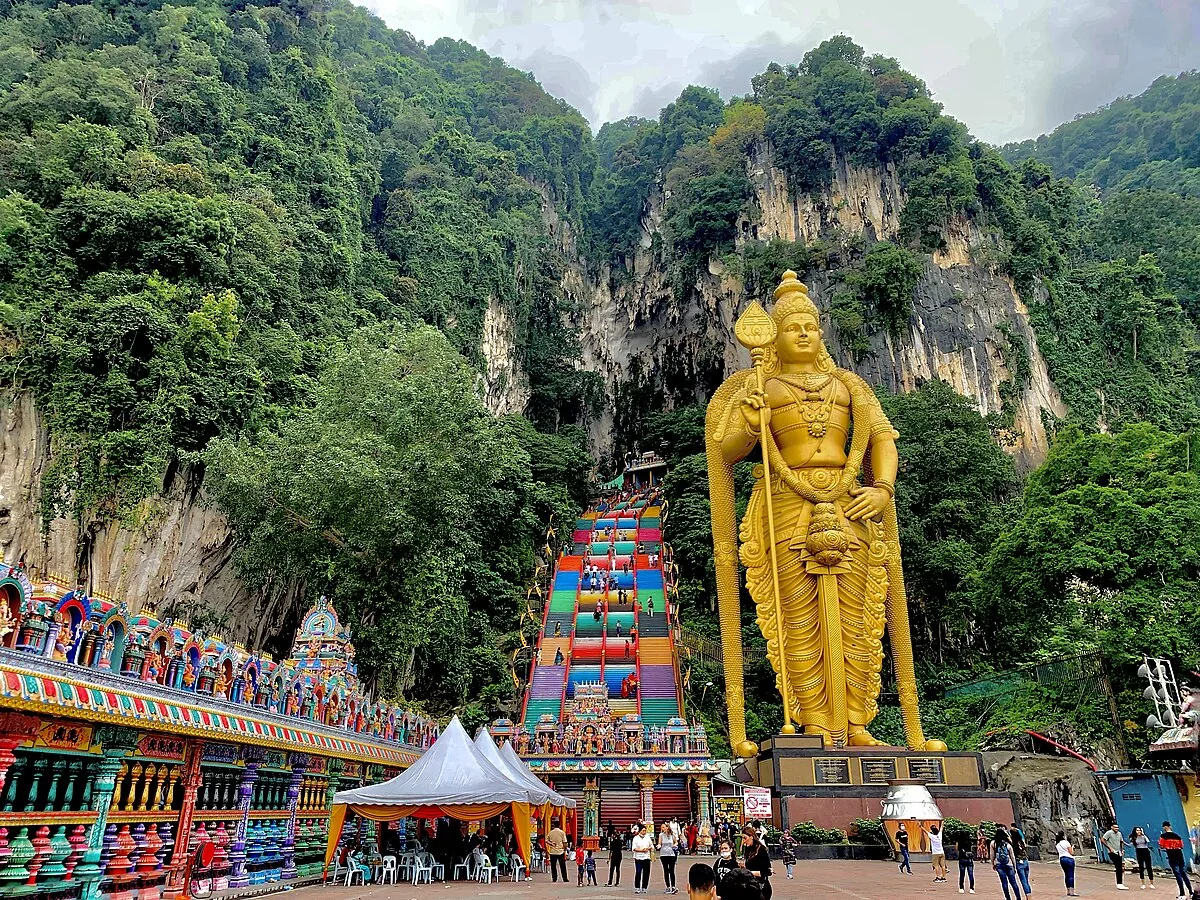
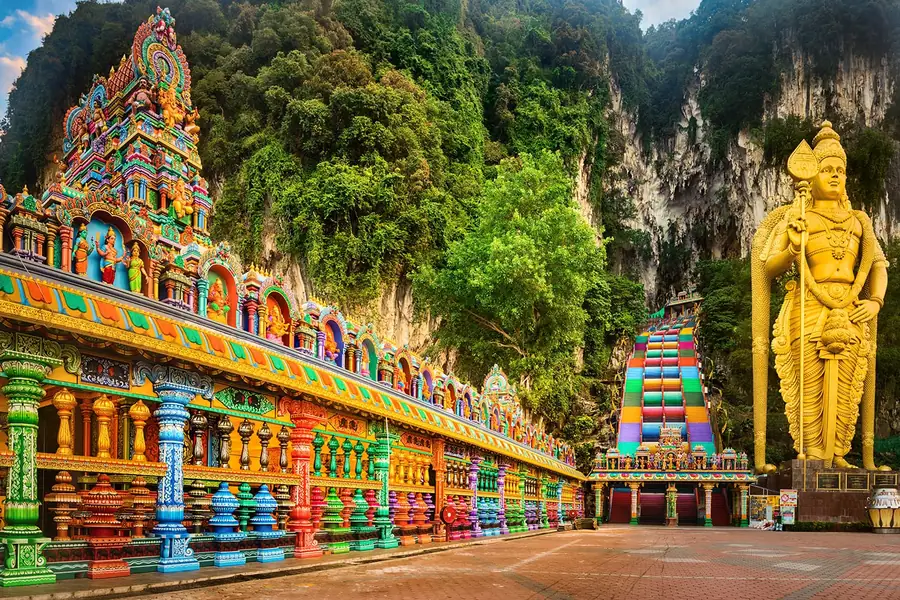
Batu Caves was once a remote outpost in the jungle, accessible only by arduous trekking before the development of the northern railway. The site survived the Japanese occupation during World War II, when the caverns were used as a hideout for resistance fighters and a storage area for supplies. The 272 concrete steps were originally built of wood in 1920 to help aging devotees reach the shrines, but the current stone structure was installed in the 1930s to accommodate the rapidly growing number of pilgrims. In 2018, the stairs underwent a controversial transformation when they were painted in bright, multi-colored hues as part of a temple rejuvenation project. This change sparked a debate between traditionalists and those who saw it as a celebration of the vibrant Tamil culture that has always defined the site.
Batu Caves in short
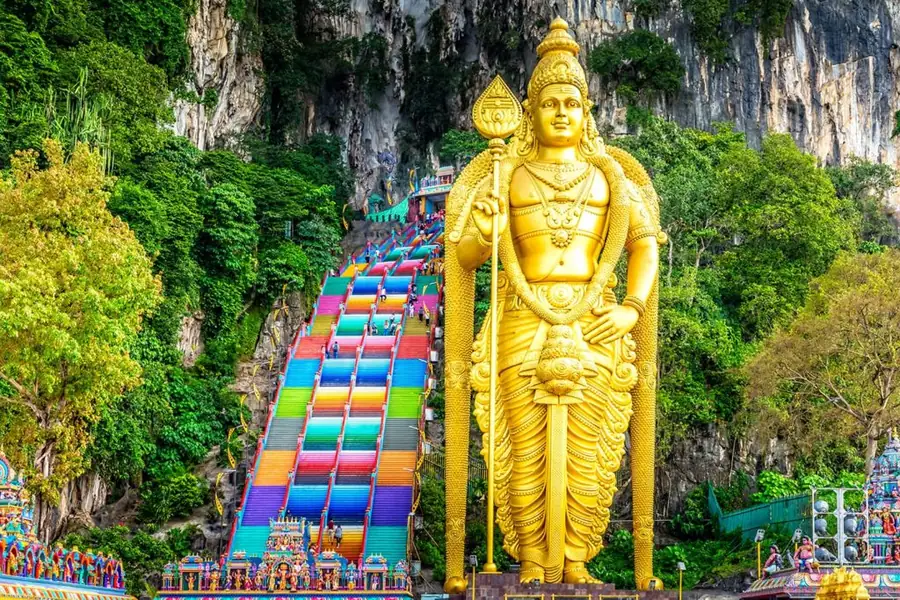
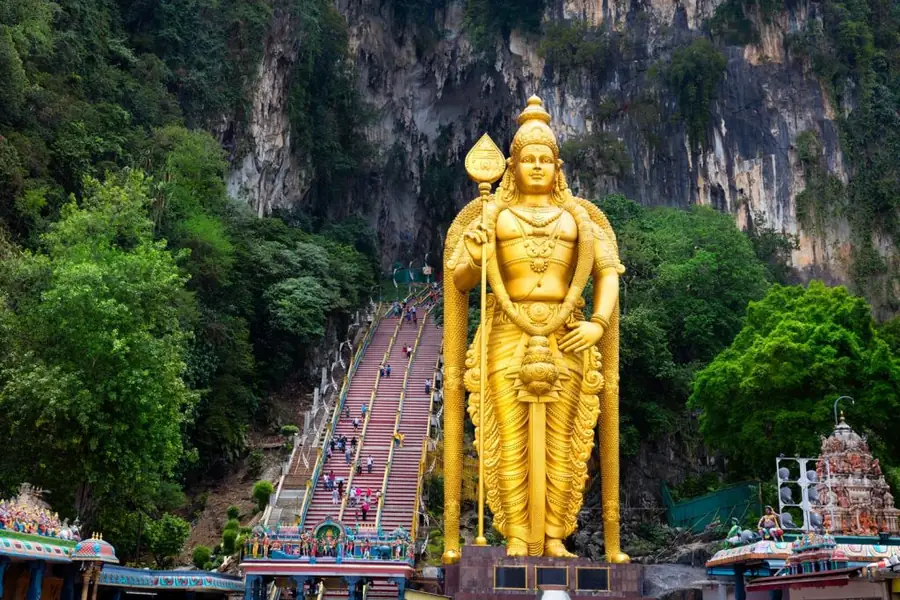
A massive gold-leafed deity stands forty-two meters tall at the threshold of a limestone mountain, guarding a series of cavernous halls that have was a spiritual lightning rod for over a century. Batu Caves is a sensory explosion where the natural grandeur of prehistoric rock meets the neon vibrancy of Tamil Hindu devotion. At the base smells of frying chickpeas, marigold garlands, and the exhaust of the nearby trains. The climb up the 272 steps, now painted in a psychedelic rainbow of colors. Notice how the humidity clings to your skin as you ascend toward the cool mouth of the cave. The sound layer is a frantic, beautiful cacophony of tolling temple bells, the chatter of mischievous macaques, and the rhythmic chanting of pilgrims who have traveled across the globe to offer prayers to Lord Murugan.
“A massive gold-leafed deity stands forty-two meters tall at the threshold of a limestone mountain, guarding a series of cavernous halls that have was a spiritual lightning rod for over a century.”
Batu Caves, Malaysia
The limestone that forms the caves is estimated to be roughly 400 million years old, originally serving as a shelter for the indigenous Temuan people long before the first temples were built. In the 1860s, Chinese settlers began excavating guano from the caverns for fertilizer, but the site's modern identity was forged in 1890 by K. Thamboosamy Pillay, a prominent leader of the local Tamil community. He was struck by the entrance's resemblance to a 'vel', the divine spear of Lord Murugan, and dedicated the caves as a religious site. Since 1892, it has been the focal point of the Thaipusam festival, an event that has grown from a local gathering into a massive pilgrimage of over a million people. The giant statue of Murugan, which took three years and 300 liters of gold paint to complete, was unveiled in 2006, instantly becoming one of the most recognizable landmarks in Asia.
Batu Caves, Malaysia
Reaching the summit of the stairs , the sudden, dramatic shift in atmosphere as the tropical heat gives way to the damp, limestone chill of the Cathedral Cave. What hits is the way the light streams through the high 'skylights' in the cave ceiling, illuminating the swirls of incense smoke that rise from the altars below. In your ears of water dripping from the stalactites creates a slow, rhythmic contrast to the echoes of human activity. The grit of the ancient stone floor beneath your bare feet approaching the inner sanctums. Immediately, the vibrant, almost cartoonish statues of gods and demons that populate every niche of the rock, their colors appearing surreal in the dim, natural light. The most striking moment is looking back toward the entrance from the darkness of the cave, seeing the city of Kuala Lumpur framed by the jagged, prehistoric mouth of the mountain.
Batu Caves, Malaysia
The caves are located roughly thirteen
The caves are located roughly thirteen kilometers north of Kuala Lumpur city center and are exceptionally easy to reach via the KTM Komuter train. The station is located just steps away from the main entrance, making it the most efficient way to bypass the city's notorious traffic. For those who prefer more comfort, ride-share services are available and affordable, though you should expect delays during peak morning hours. Arriving before 8:00 AM is highly recommended to avoid the heaviest crowds and the most punishing heat. You get no entrance fee for the main Temple Cave, though the Dark Cave tours and the Ramayana Cave require separate tickets and a slightly higher level of physical activity.
“The caves are located roughly thirteen kilometers north of Kuala Lumpur city center and are exceptionally easy to reach via the KTM Komuter train.”
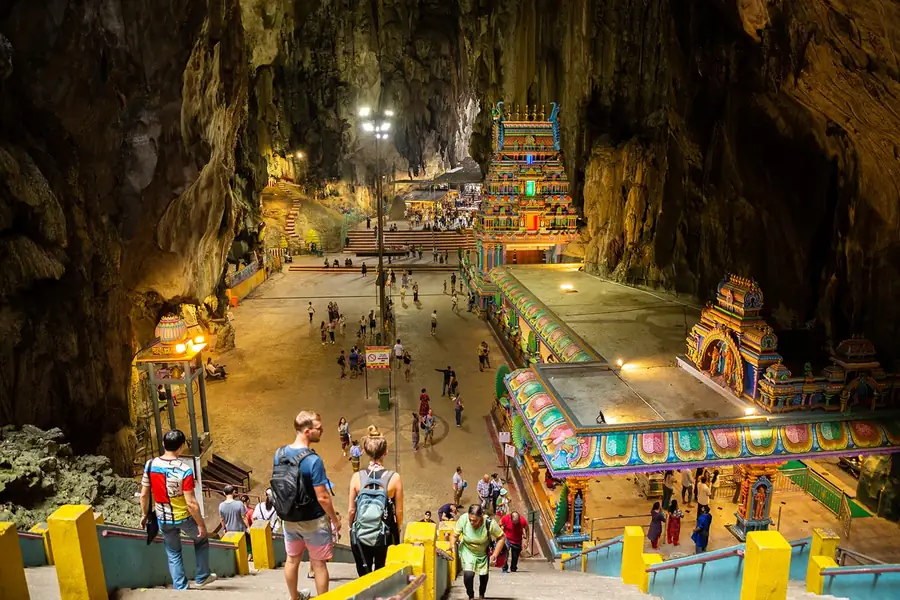
Batu Caves, Malaysia
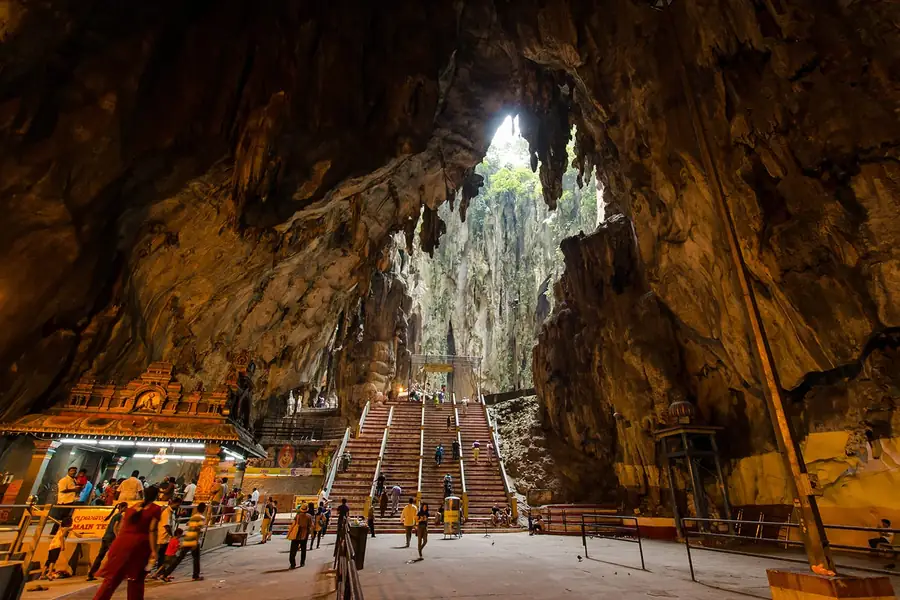
Batu Caves, Malaysia
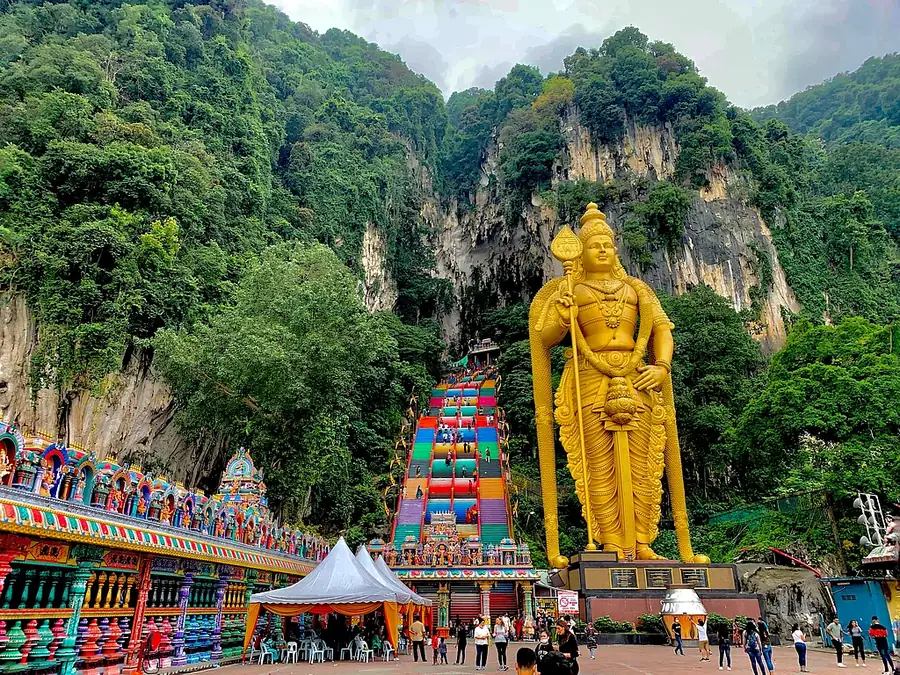
Batu Caves, Malaysia
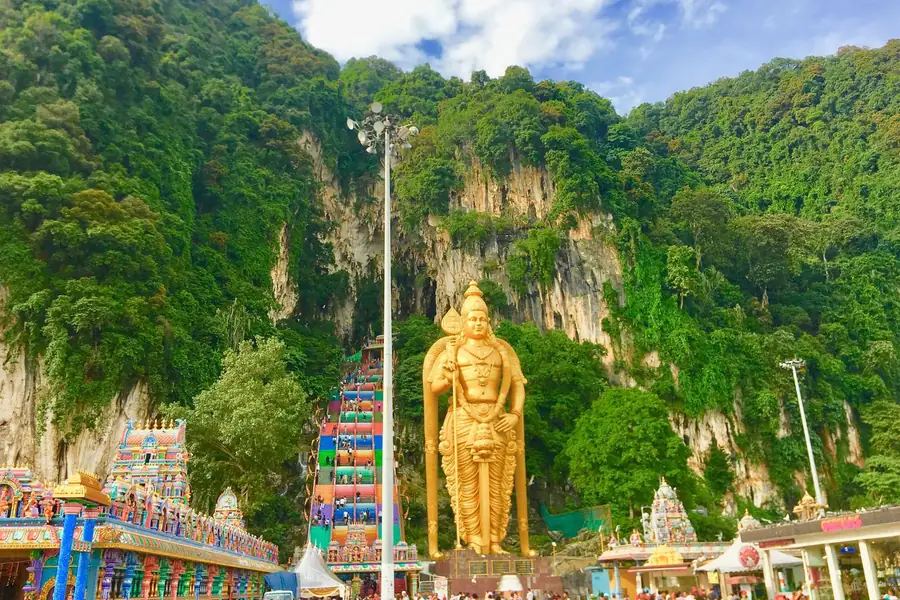
Batu Caves, Malaysia
Batu Caves, Malaysia
The Experience
The sense of Batu Caves is a dizzying mix of the ancient and the hyper-modern. What registers is the smell of the air, it is a combination of damp rock, fresh flowers, and the earthy scent of the monkeys that roam the cliffs. The physical exertion of the climb, a ritual in itself that makes the arrival at the top feel earned. The light inside the main chamber is theatrical, shifting with the movement of the clouds above the open apertures. The tiny, intricate details of the offerings left at the shrines, coconuts, milk pots, and peacock feathers. The most evocative detail is the vibration of the cave itself when the bells ring; it is a sound that feels as if the mountain is speaking. It is a place that celebrates the endurance of faith.
Why It Matters
Batu Caves is the most important Hindu temple complex outside of India and a symbol of Malaysia's multicultural heritage. It represents the successful integration and preservation of Tamil traditions within the Malay Peninsula over the last century. Historically, it is a geological and biological marvel, housing rare species of trapdoor spiders and fruit bats found nowhere else on earth.
Why Visit
The point is that you need to witness the scale of human devotion. While other temples are beautiful, Batu Caves is elemental, it is a mountain hollowed out by time and filled with color. You come here to stand in a prehistoric void and to see a gold-leafed god that looks the sun in the eye. It is the only place in Malaysia where the 21st century and the ancient world collide so spectacularly.
Insider Tips
- 1
Keep your belongings close and do not carry food in your hands; the macaques on the stairs are professional thieves and can be aggressive.
- 2
The 'Dark Cave' tour is a separate, educational experience that takes you into the non-religious sections of the mountain to see the unique cave life.
- 3
Dress modestly with shoulders and knees covered; if you forget, sarongs are available for rent at the base of the stairs.
- 4
Look for the smaller Ramayana Cave to the left of the main entrance; it features a massive statue of Hanuman and is often much quieter.
- 5
Walk to the very back of the Cathedral Cave to see the smaller, open-air temple where the light hits the floor most dramatically around noon.