Buried eighty meters beneath a quiet village lies a city with streets named 'Cabernet' and 'Sauvignon,' where the world's elite hide their most precious liquid treasures.
About Cricova Winery
Cricova was the first winery in the region to master the production of sparkling wine using the traditional French method, a process that requires each bottle to be turned manually over several months. The tunnels were expanded during the 1960s to accommodate a growing demand from the Kremlin, eventually reaching a depth of nearly 100 meters in some sections. In 2003, the winery was declared a 'cultural-national heritage' of Moldova by law, ensuring its preservation for future generations. The National Vinotheque housed here contains over a million bottles, including a rare 1902 bottle of Easter Jerusalem wine. Its history is a mirror of the 20th-century geopolitical shifts, serving as a setting for secret diplomatic negotiations and a refuge for rare vintages during times of war.
Cricova Winery in Moldova
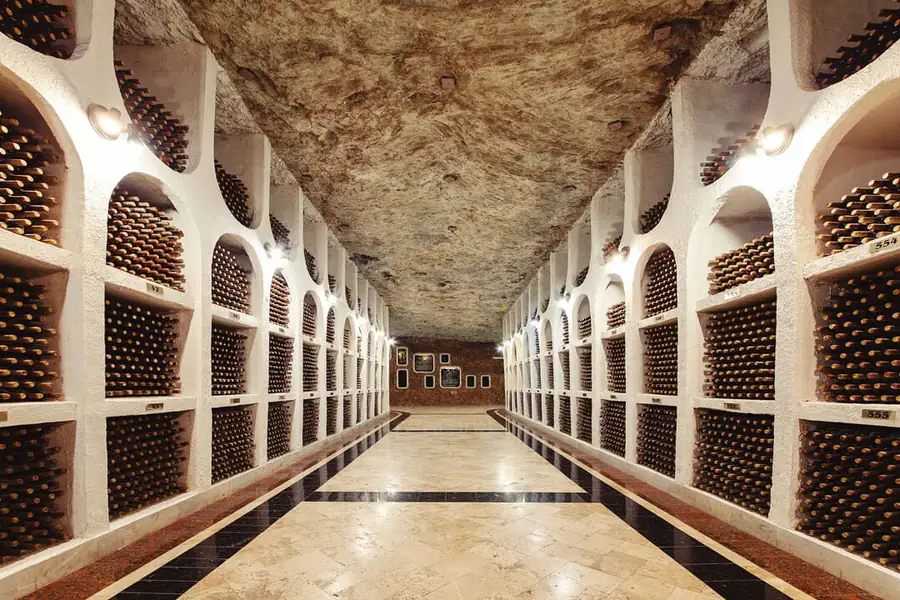
A limestone labyrinth stretches for 120 kilometers beneath the Moldovan countryside, creating a subterranean city where the streets are named after grapes and the traffic consists of electric trains laden with oak barrels. Cricova is not merely a cellar; it is an architectural marvel carved into the remnants of an ancient sea bed. The setting here remains a constant, damp 12 degrees Celsius, smelling of cold stone, wet sawdust, and the intoxicating, fruity evaporate known as the 'angel’s share.' You travel through dimly lit tunnels where millions of bottles rest under a thick velvet of grey dust, their corks keeping watch over some of the world's rarest vintages. The noise is a rhythmic dripping of condensation and the distant, metallic clink of bottles being turned by hand in the traditional methode champenoise.
“Cricova is not merely a cellar; it is an architectural marvel carved into the remnants of an ancient sea bed.”
Cricova Winery, Moldova
The tunnels began as an industrial
The tunnels began as an industrial limestone quarry in the 15th century, providing the white stone that built much of the capital. It wasn't until 1952 that visionary winemakers realized the quarry's natural microclimate, perfectly stable humidity and temperature, was ideal for aging sparkling wine. During the Soviet era, Cricova became the prestigious 'cellar of the USSR,' hosting space explorers like Yuri Gagarin, who famously spent two days lost in the tunnels and emerged claiming it was harder to leave the cellar than to orbit the Earth. The winery survived the collapse of the Soviet Union by reinventing itself as a global luxury brand, and today it houses the National Vinotheque, a collection that includes Hermann Göring’s private wine spoils seized during the Second World War.
Visiting Cricova Winery
Riding an open-air trolley through the tunnels, the sudden, bracing chill of the subterranean world as the entrance gates vanish behind you. The first thing you register is the way the limestone walls have been smoothed by decades of passage, their pale surfaces occasionally revealing a fossilized shell from the prehistoric era. The sound is a muffled, echoing silence that makes the popping of a cork in the tasting room sound like a gunshot. There is a texture of the thick mold on the oldest bottles, a protective biological blanket that winemakers treat with reverence. At first, the transition from the rough-hewn storage tunnels to the opulent tasting halls, designed with stained glass and carved wood to resemble secret banquet rooms for heads of state. The most surprising moment is standing in the 'Gagarin Room,' realizing that the world's most powerful people have sat in this exact silence to toast the harvest. Cricova is located about 15 kilometers north of Chisinau, a twenty-minute drive from the city center. Most visitors book a guided tour that includes a private transfer, though taking a local taxi or the number 2 trolleybus to the village and walking to the entrance is possible. Reservations are mandatory and should be made at least a week in advance, especially for tours that include a full tasting. The winery offers various packages, ranging from a simple drive through the tunnels to elaborate multi-course meals in the underground dining rooms. It is essential to bring a warm jacket, regardless of how hot the Moldovan summer is above ground.
The Experience
The mood at Cricova is one of cool, aristocratic secrecy. What registers is the smell of the air, it is heavy and sweet, almost like a cellar-aged fruitcake, which lingers in your nostrils long after you leave. The physical isolation from the world above, a sensation of being in a massive, silent fortress. The light is dim and golden, designed to protect the wine while highlighting the rugged beauty of the carved limestone. Right away, the precision of the 'remueurs,' the workers who turn the bottles with a speed and accuracy that seems superhuman. The most evocative detail is the sight of the private wine lockers belonging to world leaders, a reminder that wine is a universal language of power and celebration. It is a place that feels like a temple to patience.
Why It Matters
Cricova is the most famous wine cellar in Moldova and a pillar of the nation's identity as a premier wine producer. It represents the successful union of industrial mining history and agricultural excellence. Historically, it is significant as the repository of the National Vinotheque, preserving liquid history that spans over a century of European winemaking.
Why Visit
The appeal is that you need to see a city that lives for the bottle. While other wineries offer a walk through a vineyard, Cricova offers a journey into the earth itself. You come here to see the Göring collection, but you stay for the surreal experience of driving through a dark tunnel while surrounded by five centuries of limestone and millions of gallons of wine. It is the only place in Europe where the traffic lights are underground.
Insider Tips
- 1
Book the 'Sparkling Wine' tour specifically if you want to see the traditional riddling racks and the most impressive parts of the tunnel network.
- 2
Bring a heavy sweater or a light coat; the constant 12-degree temperature feels much colder after an hour underground than you might expect.
- 3
Ask your guide to show you the 'Secret Room' where political leaders held closed-door meetings during the Cold War.
- 4
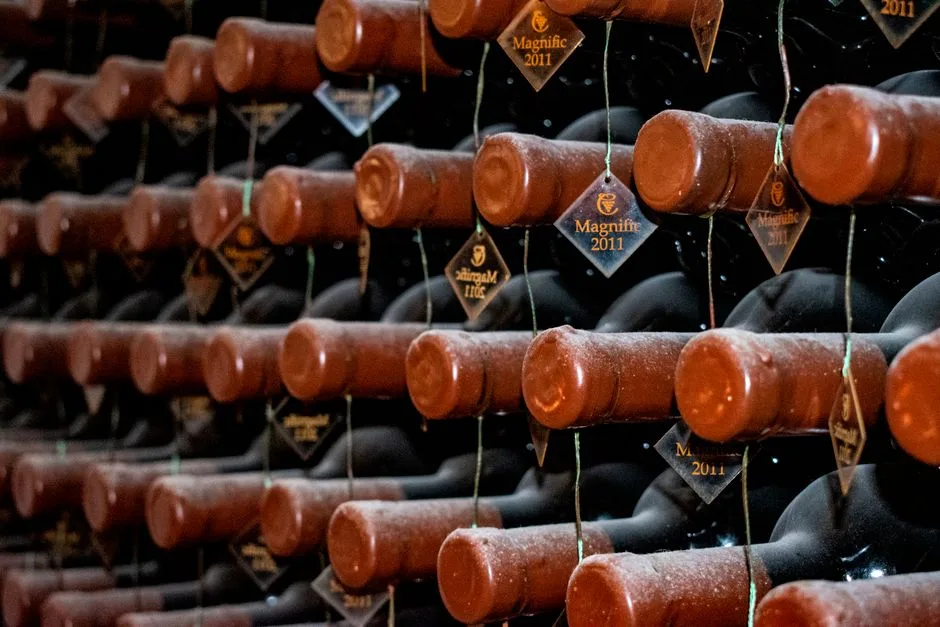
The on-site shop offers exclusive vintages that aren't exported; look for the 'Magnific' line for a high-end souvenir.
- 5
Don't plan much for the afternoon after a tasting session; the generous Moldovan pours and the lack of sunlight underground can leave you feeling remarkably sleepy.