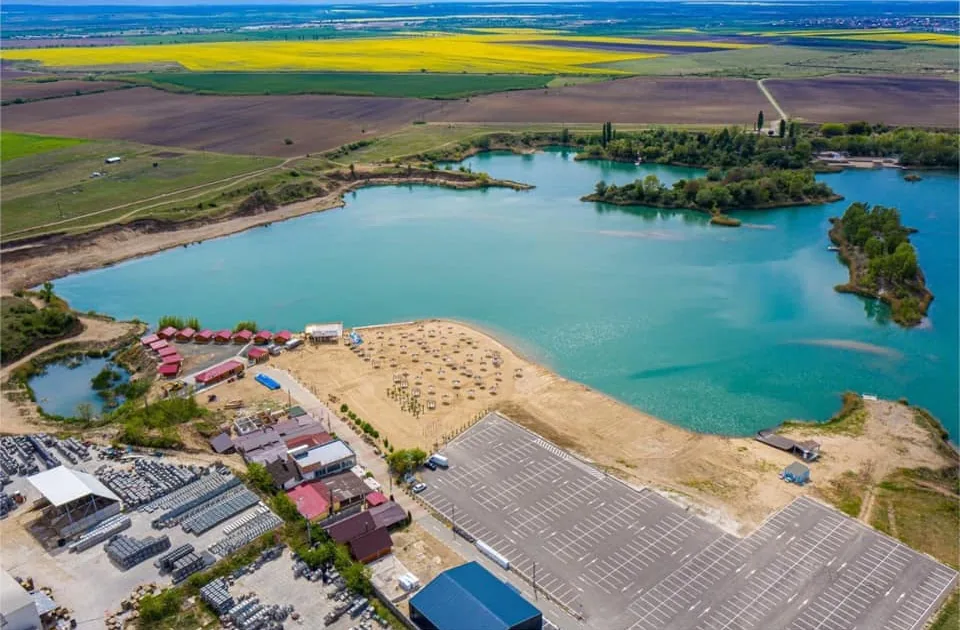
Europe’s heaviest land mammals roam through a drowned forest of ancient oaks, bordered by a field of a thousand mysterious mounds that shouldn't exist.
About Pădurea Domnească
The Royal Forest has served as a strategic buffer between empires and a sanctuary for wildlife since the time of the Moldavian Principality. Its survival into the 21st century is largely due to its inhospitable, marshy geography, which discouraged large-scale agriculture. The 1993 designation as a state reserve provided the legal teeth to stop illegal logging and start the recovery of the local ecosystem. The 'Suta de Movile' hills, which flank the forest, remain a subject of intense scientific debate; some believe they are the result of ancient tectonic movements, while others suggest they are the eroded remnants of prehistoric river terraces. Regardless of their origin, they form part of a protected landscape that feels entirely disconnected from the modern world.
What Pădurea Domnească in Moldova is
A prehistoric silence hangs over the floodplain of the Prut River, where ancient oaks stand with gnarled roots submerged in emerald wetlands. Pădurea Domnească, or the Royal Forest, is the largest and most mysterious nature reserve in Moldova, a place where time seems to have stalled in the era of the European bison. The air smells of damp moss, wild garlic, and the cool, earthy breath of the river. You walk along shaded trails where the canopy is so dense that even at noon, the light is a soft, filtered green. The sound layer is dominated by the persistent drumming of woodpeckers and the occasional, deep bellow of the resident bison herd. Beyond the trees, the landscape erupts into the bizarre, conical hills of the 'One Hundred Mounds,' a geological anomaly that looks like a field of giant green burial cairns.
“A prehistoric silence hangs over the floodplain of the Prut River, where ancient oaks stand with gnarled roots submerged in emerald wetlands.”
Pădurea Domnească, Moldova
Medieval rulers once claimed this forest
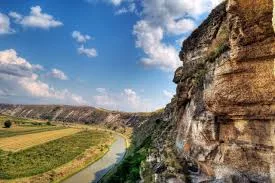
Medieval rulers once claimed this forest as their private hunting grounds, protecting it from the axes of peasants for centuries. The reserve was officially established in 1993 to preserve the unique ecosystem of the 'wet forest' along the Prut, a landscape that has vanished across much of the rest of the continent. In 2005, the reserve became the site of a historic rewilding project when several European bison were gifted by Poland, reintroducing a species that had been extinct in the region for over two hundred years. The geological features nearby, such as the Cheile Butești limestone gorge, date back millions of years to when this entire area was the floor of the Sarmatian Sea. These coral reefs, now dry and towering over the forest, serve as vertical graveyards of ancient marine life, adding a layer of deep time to the forest's royal history.
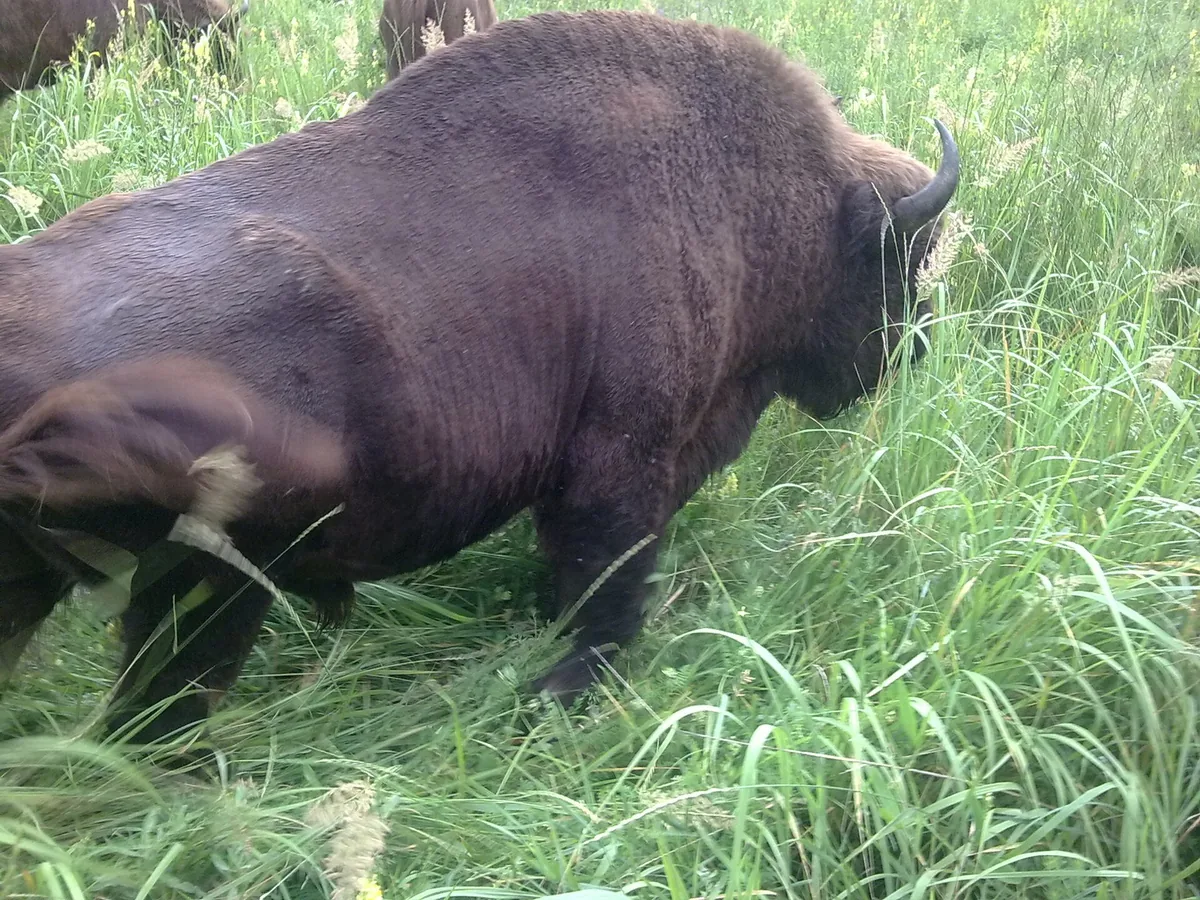
Standing at the edge of the bison enclosure , the ground vibrate slightly as a half-ton bull moves through the undergrowth. What emerges is the way the light catches the steam rising from the wetlands, creating a ghostly atmosphere among the silver poplars. The sound of the wind through the 'Suta de Movile' hills is different than in the forest; it is a high, whistling tone that sweeps over the grass. You get a humidity of the river valley clinging to your skin, a mark of the water that sustains this rare ecosystem. Right away, the 'Land of Herons,' where hundreds of nests are perched in the high branches of the oaks, a noisy and chaotic avian city. The most memorable moment is climbing the limestone ridge at Butești to look down at the river winding like a silver snake through the primeval canopy. The reserve is located in the Glodeni district, along the western border with Romania. It is roughly a three-hour drive from Chisinau, mostly on regional roads that wind through the quiet villages of northern Moldova. Access to the reserve is managed through the administrative building in the village of Cobani, where you can arrange for a guide to take you to the bison enclosure. The 'One Hundred Mounds' are easily accessible by car and are best visited just before sunset when the shadows emphasize their strange, repetitive geometry. Because of the marshy nature of the terrain, high-clearance vehicles are recommended during the spring thaw, and walking the forest trails requires a decent level of fitness and a tolerance for the local mosquito population.
The Experience
The place feels one of primeval, shadowed weight. What hits is the smell of the air, it is heavy and rich with decaying leaves and fresh water, a scent that feels like the very beginning of life. You discover a physical scale of the trees, many of which have seen five centuries of history pass beneath their branches. The light is dappled and shifting, creating a shifting mix of shadows on the forest floor. The standout is the silence of the bison; despite their massive size, they move with a ghostly quietness through the timber. The most striking detail is the contrast between the lush, vertical forest and the stark, mathematical repetition of the mounds just a mile away. It is a place of profound biological and geological mystery.
Why It Matters
Pădurea Domnească is the most ecologically diverse reserve in Moldova and a vital corridor for migratory birds and rare mammals. It represents the successful return of the bison to the Moldovan landscape and serves as a living laboratory for studying the Sarmatian Sea's geological legacy. Historically, it preserves a fragment of the wild, forested frontier that once defined the entire region.
Why Visit
The reason to come: you need to see a side of Moldova that isn't made of stone or wine. While the monasteries offer culture, the Royal Forest offers raw, unedited nature. You come here to stand ten feet away from a creature that hasn't changed since the Ice Age and to walk through a landscape so strange and ancient it feels like the setting of a folk tale. It is the only place in the country where the wild still has the upper hand.
Insider Tips
- 1
Bring the strongest insect repellent you can find; the wetlands are home to a legendary population of mosquitoes.
- 2
The best view of the 'One Hundred Mounds' is from the top of the highest hill at the southern end of the field.
- 3
Visit the bison early in the morning when they are most active; they tend to retreat into the deep shade of the forest during the heat of the afternoon.
- 4
Look for the 'Toll Hill', where local legend says medieval traders had to pay a tax to enter the royal lands.
- 5
The limestone caves at Butești are just outside the forest and contain traces of Paleolithic settlements; they are worth the extra twenty-minute drive.