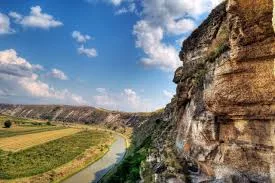
Hidden within a sheer limestone wall, these eighteen interconnected cave churches once sheltered an entire community of monks and a legendary king’s secret wedding.
About Tipova Cave Monastery
Tipova represents a unique form of 'subterranean urbanization' where three distinct historical eras are stacked vertically in the cliffside. The earliest cells were simple holes in the rock, accessible only by rope ladders, designed for the most extreme asceticism. During the 15th century, the site became a strategic lookout point, allowing monks to signal the approach of Tatar raiding parties across the river. The complex eventually grew to include eighteen rooms and three churches, all interconnected by narrow tunnels and exterior ledges. Following the 1917 revolution, the monastery served as a refuge for White Russian officers before being forcibly closed by the Soviet government in 1949. The recent revival has seen the restoration of the icons and the return of a small, working brotherhood of monks who maintain the site's spiritual gravity.
Tipova Cave Monastery in short
Gigantic limestone cliffs drop vertically into the Dniester River, hiding a labyrinthine complex of three separate monastic communities carved into the rock face over the course of a thousand years. Tipova Cave Monastery is one of the largest and most ancient cavernous complexes in Europe, a place where the architecture is subtractive rather than additive. The room is remarkably still and carries the scent of river mist, cold minerals, and the faint, dusty aroma of dry Earth. The descent a treacherous, narrow path along the cliff edge. Notice how the white stone is pockmarked with the small windows of monk cells. The sound is a powerful, primal silence, occasionally broken by the roar of nearby waterfalls or the low, rhythmic chanting of the few monks who still inhabit the upper church.
“Gigantic limestone cliffs drop vertically into the Dniester River, hiding a labyrinthine complex of three separate monastic communities carved into the rock face over the course of a thousand years.”
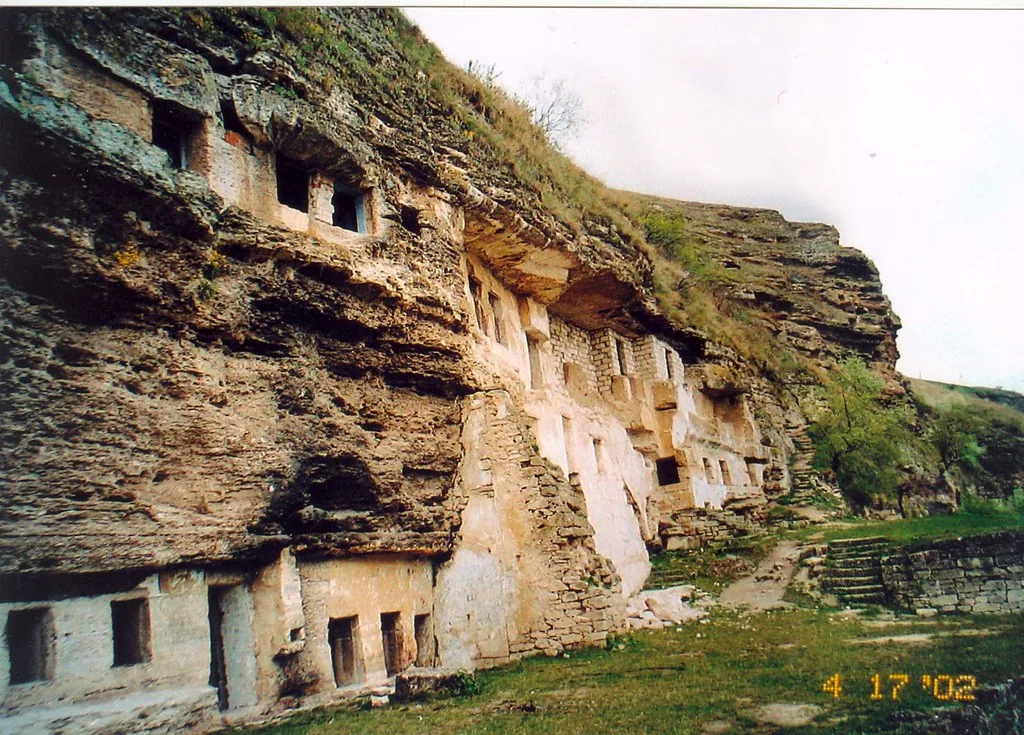
Tipova Cave Monastery, Moldova
Local legend suggests that the mythological poet Orpheus spent his final days in these caves, but the documented history begins in the 11th century with the establishment of the Feast of the Holy Cross community. These early Christians sought refuge from nomadic invaders by retreating into the inaccessible cliffs, hand-carving churches and sleeping quarters from the soft limestone. The second complex, dedicated to St. Nicholas, was expanded in the 14th century, and the third, the most impressive, was chiseled out in the 18th century as a response to the growing influence of the Ottoman Empire. According to Moldovan lore, the national hero Stephen the Great was married here to his third wife, Maria Voichita, in the dark secrecy of the cave chapel. Abandoned during the Soviet era and used as a warehouse, the site was reclaimed by the church in 1994 and has since become a site of intense spiritual pilgrimage.
Stepping into the 18th-century cave church , The immediate pressure of the mountain above you, a heavy and protective weight. What emerges is the way the light from the small, jagged windows hits the floor, illuminating millions of dust motes dancing in the cold air. Overhead, the space is an eerie, beautiful void where the dripping of limestone water sounds like the ticking of a geological clock. The rough, unyielding texture of the walls, where tool marks from centuries ago are still visible in the rock. Starting with the tiny, soot-stained icons tucked into niches, their silver surfaces dull and ancient. The most profound moment is standing on the ledge outside the cells at twilight, watching the Dniester flow like a dark, silent serpent through the valley while the shadows of the cliffs stretch out to touch the opposite shore.
Tipova is located approximately 100 kilometers north of Chisinau in the Rezina district. The journey involves a drive through increasingly rugged terrain, ending in the small village of Tipova where the road literally runs out. From the village, a steep and often slippery hiking trail leads down the face of the cliff to the various cave levels. Arriving early in the morning is essential, both to beat the heat and to allow enough time to explore the expansive forest trails and waterfalls that surround the monastery. Sturdy footwear is not a suggestion but a requirement here, as the paths are uneven and have no safety railings. The site is remote and lacks commercial facilities, so bringing water and food is a necessity for any explorer.
“Tipova is located approximately 100 kilometers north of Chisinau in the Rezina district.”
The Experience
The character of Tipova is one of wild, ancient isolation. The first thing you register is the smell of the river, fresh, silty, and cold, which mixes with the dry, chalky perfume of the caves. The mass of the physical thrill of the descent, a journey that requires focus and respect for the terrain. The light in the caves is sparse and dramatic, creating deep pools of shadow where the history of the place seems to hide. The small, handmade wooden crosses left by pilgrims in the cracks of the rock, a modern layer on an ancient tradition. The most striking detail is the sound of the nearby waterfall, which provides a constant, white-noise soundtrack to the silence of the cells. It is a place that feels completely disconnected from the digital world.
Why It Matters
Tipova Cave Monastery is the largest cave monastery in Moldova and one of the most significant monastic sites in the Orthodox world. It represents the historic resilience of Christianity in the face of centuries of conflict and the unique geological adaptation of the Moldovan people. Historically, it is a living monument to the medieval and early modern periods of the Principality of Moldavia.
Why Visit
This one matters because you want to feel the raw edges of history. Tipova isn't a sanitized museum; it is a rugged, vertical trek into the heart of a mountain. You come here to stand in the same rock-cut rooms where monks prayed a thousand years ago and to see a landscape that remains as wild and untamed as it was in the time of the crusades. It is the only place in Moldova where the geography is as sacred as the architecture.
Insider Tips
- 1
The hike to the waterfalls takes about forty minutes from the monastery; follow the sound of rushing water through the woods to find them.
- 2
Bring a headlamp or a powerful flashlight; some of the deeper tunnels and cells have no natural light and the floors are uneven.
- 3
Dress in layers; the temperature inside the caves is significantly lower than on the sunny cliff paths.
- 4
Look for the 'Horoscop' rock formation near the monastery, a series of ancient carvings that local folklore associates with pagan solar calendars.
- 5
Respect the 'Privacy' signs near the working monks' cells; they are hospitable but value the silence that the caves provide.