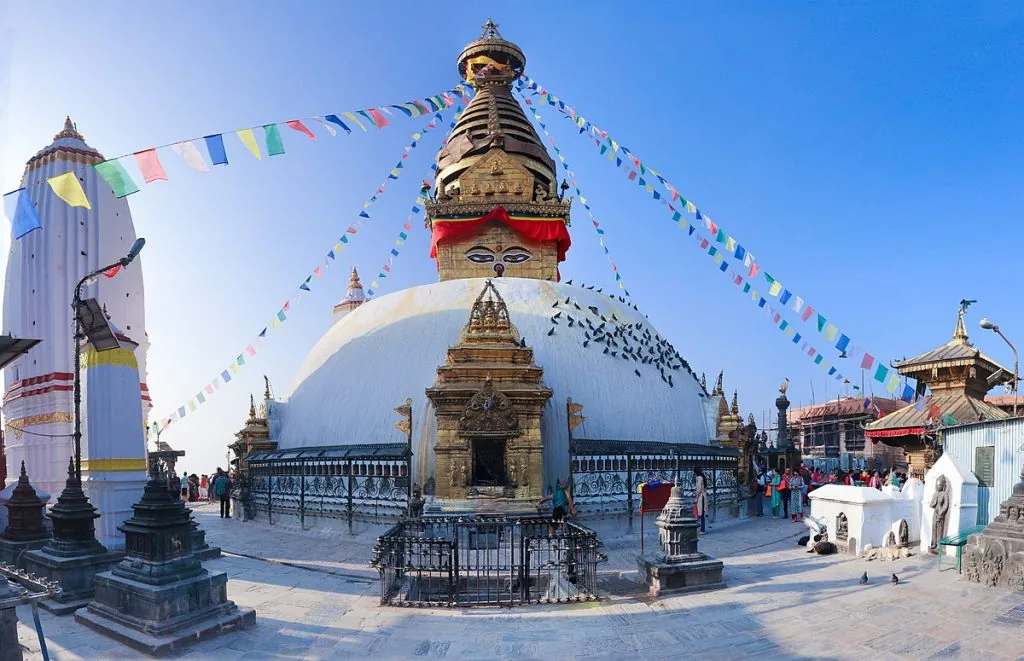
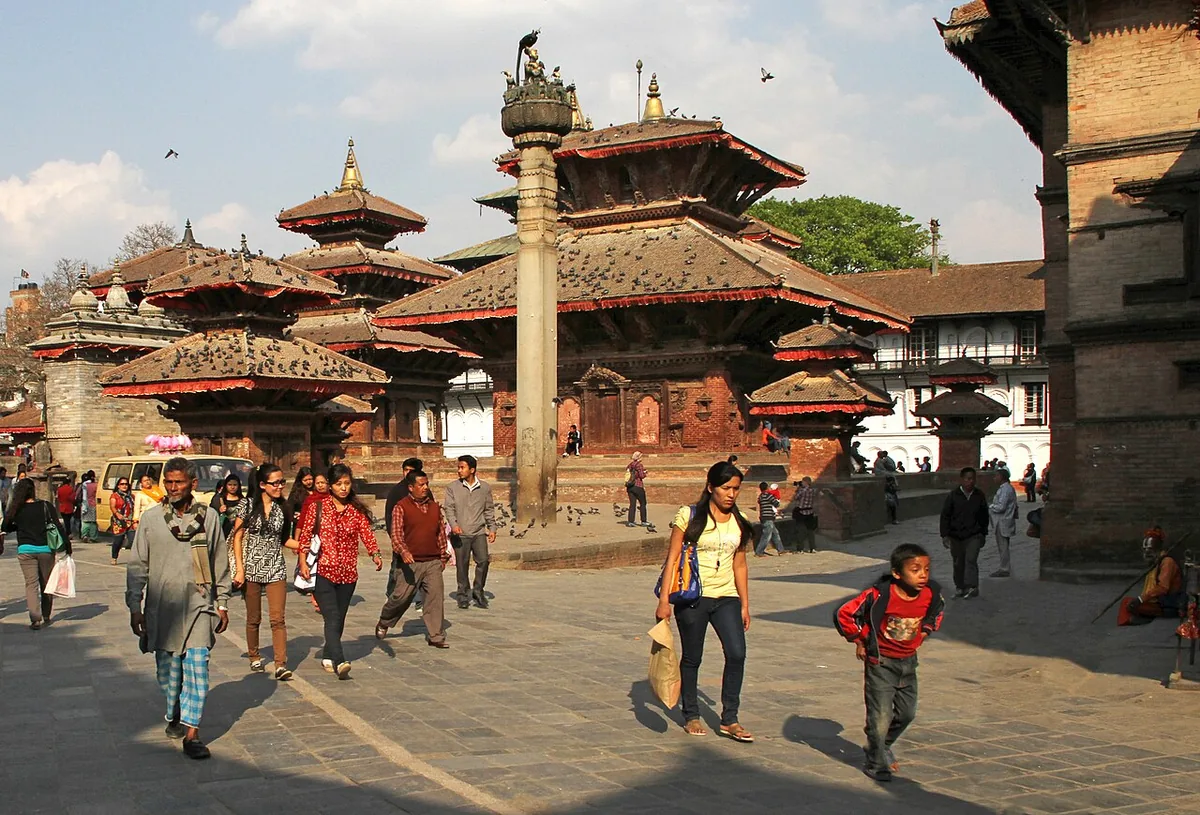
“Boudhanath is one of the largest stupas on Earth, a giant white dome whose golden tower is painted on all four sides with the all-seeing eyes of the Buddha.”
About Boudhanath
A stupa has stood at Boudhanath for many centuries, on an old trade route between Kathmandu and Tibet, and Tibetan traders and pilgrims have long made it a stopping point. Its importance grew dramatically after 1959, when Tibetan refugees fleeing across the Himalaya settled around it, founding monasteries and making the district the spiritual centre of Tibetan Buddhism in Nepal. Part of the Kathmandu Valley UNESCO World Heritage Site, the stupa suffered damage in the 2015 earthquake when its upper structure cracked. The community-funded restoration, completed quickly, was itself an act of devotion.
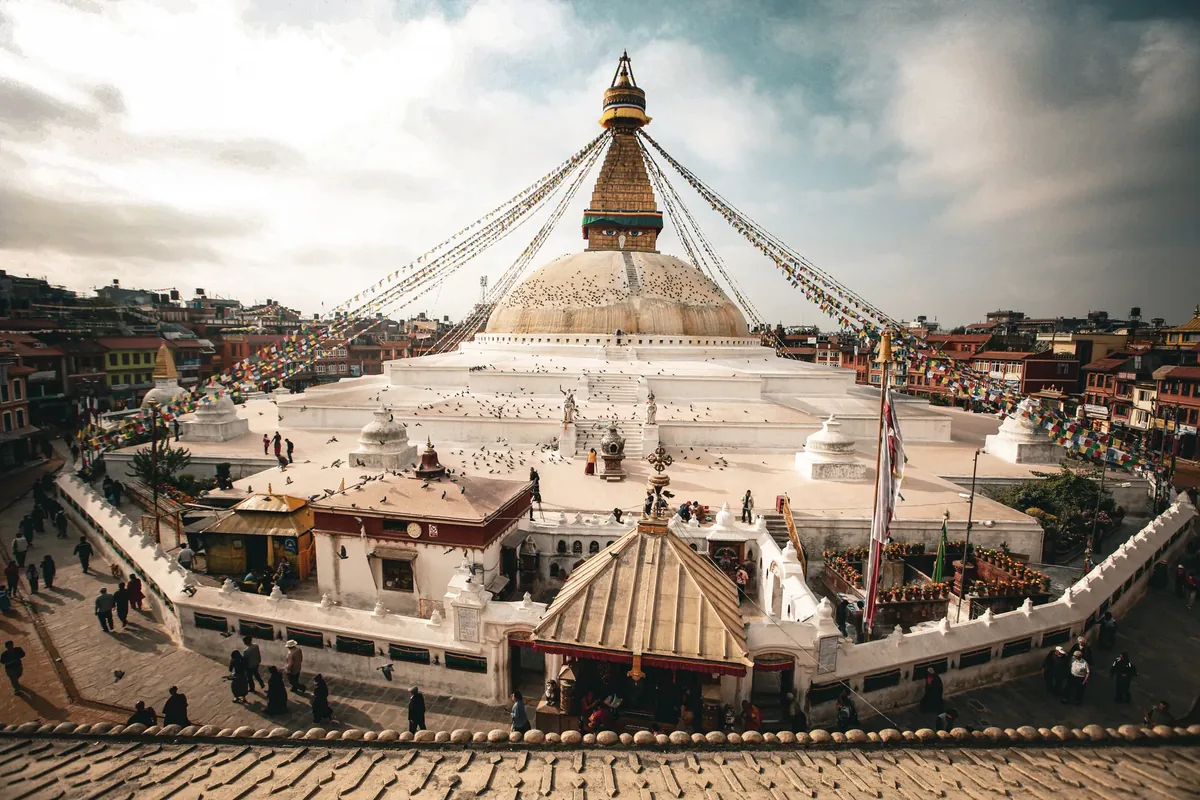
What Boudhanath Stupa in Nepal is
Boudhanath is one of the largest stupas in the world and the centre of Tibetan Buddhism in Nepal, a vast white dome topped by a golden tower whose four sides are painted with the watchful eyes of the Buddha. Rising from a circular plaza in the north-east of Kathmandu, it is ringed by monasteries, shops and rooftop cafes, and from dawn to dusk pilgrims walk clockwise around it, spinning prayer wheels and murmuring mantras.
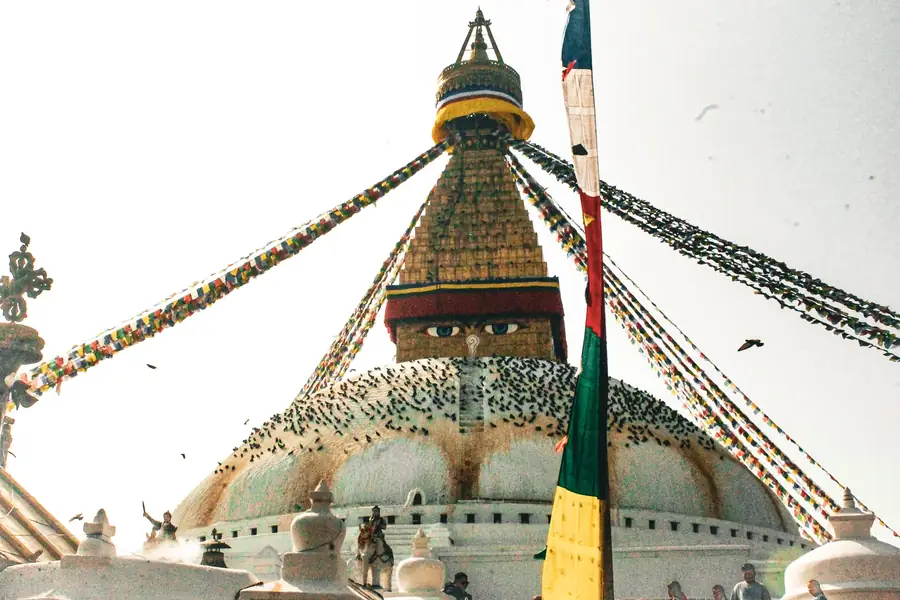
A Tibetan Heart
Boudhanath became a focus for Tibetan refugees who settled in the area after 1959, and the surrounding district is dense with gompas, monks and the maroon robes of the Tibetan Buddhist community. The kora, the circumambulation of the stupa, is a constant living ritual rather than a tourist performance.
Symbolism in Stone
The stupa is built as a three-dimensional mandala, each level rich with meaning: the dome representing the universe, the eyes seeing in all directions, and the thirteen steps of the tower symbolising the path to enlightenment.
Recovery from the Quake
The 2015 earthquake cracked the spire, which was dismantled and rebuilt largely with donations and volunteer labour from the Buddhist community, and reconsecrated within a year.
The 2015 earthquake cracked the spire, which was dismantled and rebuilt largely with donations and volunteer labour from the Buddhist community, and reconsecrated within a year.
The Experience
Joining the kora around the stupa is the essence of a visit: you move clockwise with pilgrims, the murmur of mantras and the creak of prayer wheels around you, prayer flags overhead and pigeons wheeling above the dome. The rooftop cafes ringing the plaza let you sit level with the painted eyes and watch the slow human current below. At dawn and dusk the atmosphere deepens as butter lamps are lit and monks pass between the surrounding monasteries; it is one of the most peaceful and absorbing places in busy Kathmandu.
Why It Matters
Boudhanath is among the largest stupas in the world and the most important centre of Tibetan Buddhism in Nepal, part of the Kathmandu Valley World Heritage Site. It is both a major pilgrimage destination and the living heart of the Tibetan exile community.
Why Visit
It offers a serene, deeply atmospheric counterpoint to Kathmandu's chaos and a window into living Tibetan Buddhism. Walk the kora clockwise with the pilgrims, climb to a rooftop cafe for the eye-level view, and come at dawn or dusk for butter lamps and quiet.
✦ Insider Tips
- 1
Always walk around the stupa clockwise, as pilgrims do; it is the correct, respectful direction.
- 2
Climb to a rooftop cafe on the plaza for a view level with the Buddha's painted eyes.
- 3
Visit at dawn or dusk for butter lamps, prayer flags and the most contemplative mood.
- 4
Explore the surrounding monasteries, but enter quietly and remove shoes where required.
- 5
Time a visit for Losar, the Tibetan New Year, for ceremony and colour if your dates allow.