“On the banks of the sacred Bagmati at Pashupatinath, Hindu cremations are carried out in the open on riverside pyres, a daily, public meeting with death.”
About Pashupatinath
A temple has stood at Pashupatinath for well over a thousand years, and the site is one of the most revered Shiva shrines in the Hindu world, drawing pilgrims from across Nepal and India. The current main temple's pagoda form dates from a seventeenth-century rebuilding, though the sanctity of the spot is far older. The complex forms part of the Kathmandu Valley UNESCO World Heritage Site. Its annual Maha Shivaratri festival is among the largest religious gatherings in Nepal, when sadhus travel from across the subcontinent and the riverbanks fill with pilgrims and ritual fires.
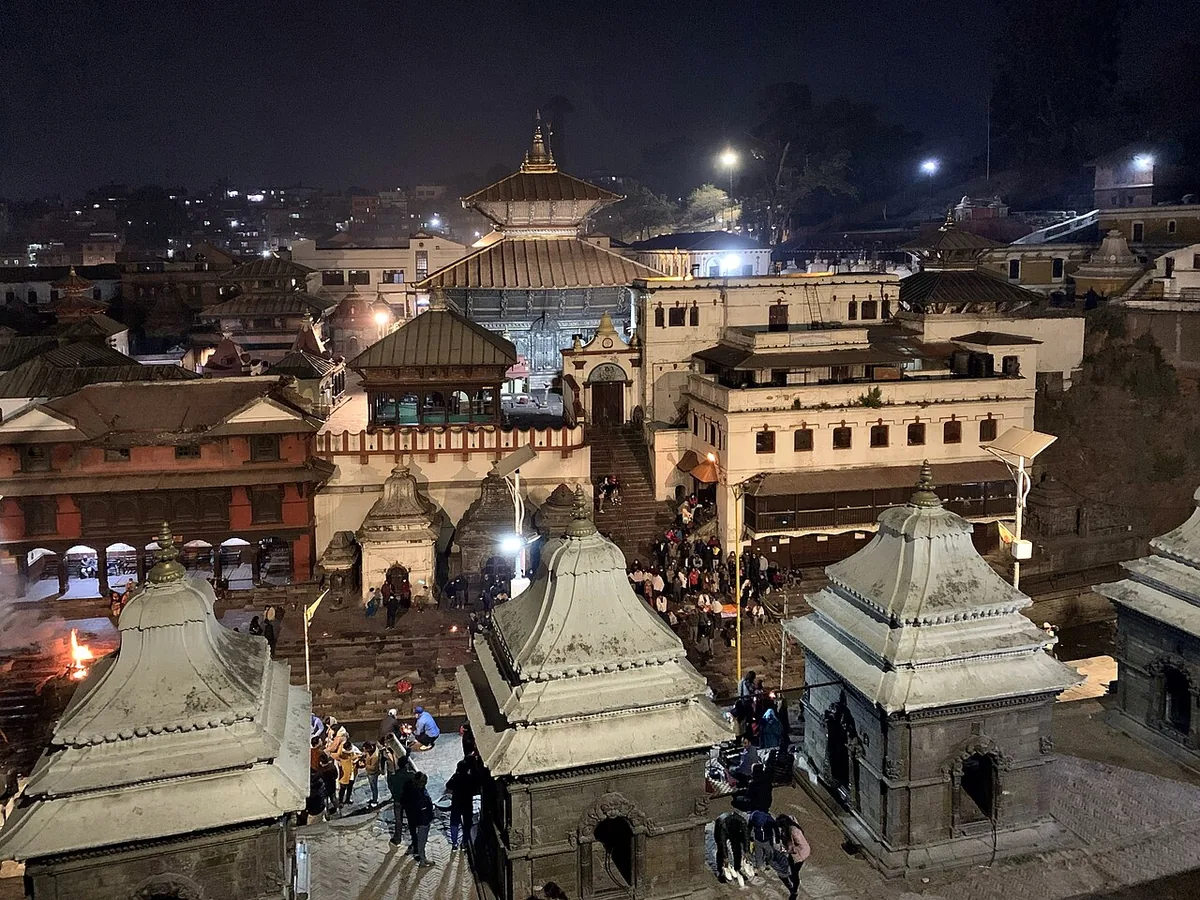
Pashupatinath is the holiest Hindu temple in Nepal, a sprawling complex on the banks of the sacred Bagmati River dedicated to Shiva in his form as Pashupati, Lord of the Animals. The golden-roofed main temple is open only to Hindus, but the wider complex of shrines, ghats and ashrams is open to all, and it is one of the most important Shiva sites on the Indian subcontinent.
Pashupatinath is the holiest Hindu temple in Nepal, a sprawling complex on the banks of the sacred Bagmati River dedicated to Shiva in his form as Pashupati, Lord of the Animals.
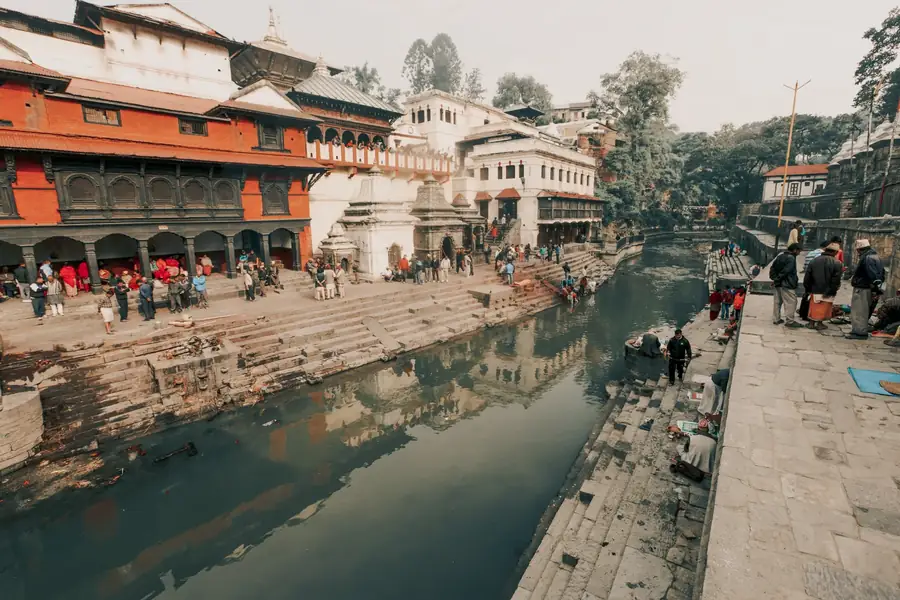
The Cremation Ghats
What marks Pashupatinath out for many visitors is the open cremation that takes place on the riverbank ghats. Bodies are burned on wooden pyres beside the Bagmati, the ashes given to the river, in a public, matter-of-fact confrontation with death that can be deeply moving and is treated with the utmost respect by those present.
Sadhus and Ascetics
The complex is also a gathering place for sadhus, the ash-smeared, dreadlocked Hindu holy men who renounce worldly life, especially around the great festival of Maha Shivaratri, when hundreds of thousands of pilgrims converge.
Walking the Complex
Across the river, terraced shrines and a forest dotted with lingams climb the hillside, giving a vantage over the temple roofs and the smoke of the ghats below.
The Experience
The visit is sensory and solemn: incense and woodsmoke, temple bells, the chanting of rituals, and the sight of families performing last rites on the ghats. Non-Hindus watch the cremations respectfully from the opposite bank, where the perspective takes in the river, the pyres and the temple roofs together. Up the wooded hillside, the quieter shrines and resting sadhus offer a different mood, and the whole place rewards slow, respectful observation rather than quick photography.
Why It Matters
Pashupatinath is the most sacred Hindu temple in Nepal and a major Shiva pilgrimage site across South Asia, part of the Kathmandu Valley World Heritage Site. Its open riverside cremations make it one of the most direct and significant places to witness Hindu ritual around death.
Why Visit
It is the spiritual heart of Hindu Nepal and an unflinching, profound encounter with how a culture treats death and the sacred. Behave with great respect at the ghats, keep cameras down around mourning families, and visit late afternoon when rituals are most active.
✦ Insider Tips
- 1
Only Hindus may enter the main temple; everyone can explore the wider riverside complex.
- 2
Be discreet and respectful at the cremation ghats, and never photograph grieving families.
- 3
Cross to the terraces on the far bank for the respectful overview of temple and ghats.
- 4
Visit in late afternoon, when rituals along the Bagmati are at their most active.
- 5
Maha Shivaratri brings vast crowds and many sadhus; go prepared for the throng if you attend.