“Patan, the Newar 'city of beauty', has been the valley's centre of metalwork for centuries, and its Durbar Square pairs a celebrated museum with a rare stone shikhara temple.”
About Patan Durbar Square
Patan is one of the oldest cities in the Kathmandu Valley and was the capital of its own Malla kingdom, renowned above all for the skill of its artisans, whose bronze and gilt-copper images were prized across the Buddhist Himalaya. The square reached its mature form during the era of rival valley city-states. The royal palace was sensitively restored into the Patan Museum, a model conservation project, and the square forms part of the Kathmandu Valley UNESCO World Heritage Site. Like its neighbours it was damaged in 2015 and has been undergoing meticulous repair.
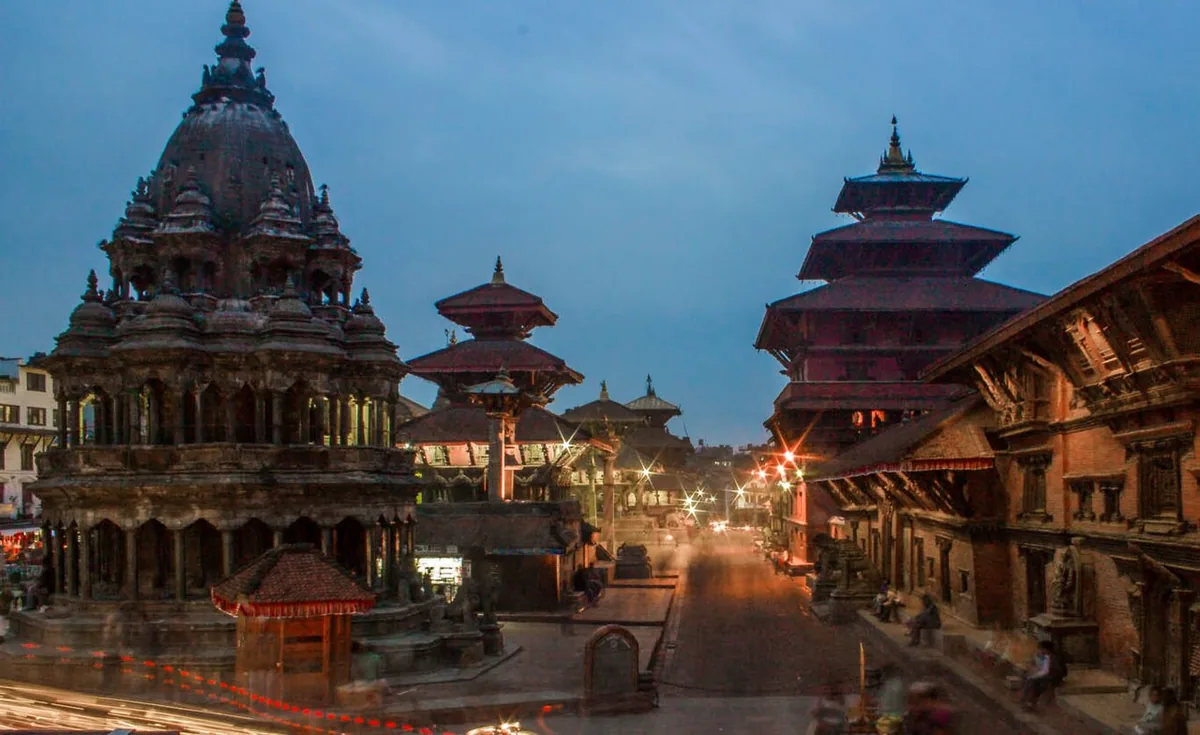
Patan, officially Lalitpur, the 'city of beauty', sits just across the river from Kathmandu and holds the third of the valley's great Durbar Squares. Long the centre of Newar arts and crafts, especially metalwork, Patan's square is considered by many the most harmonious of the three, a tight ensemble of palace courtyards and stone and brick temples facing the old royal palace.
Patan, officially Lalitpur, the 'city of beauty', sits just across the river from Kathmandu and holds the third of the valley's great Durbar Squares.
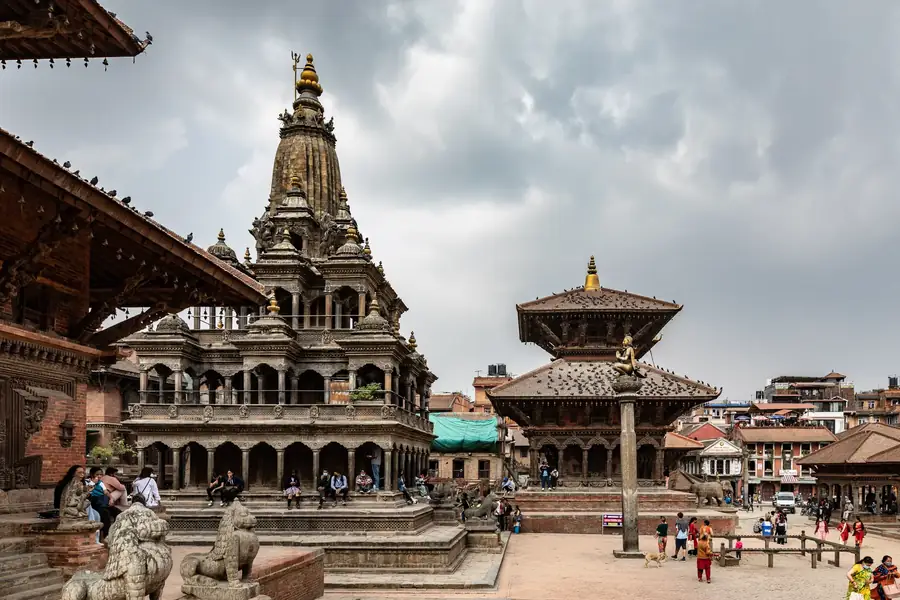
Palace and Museum
The restored royal palace houses the Patan Museum, widely regarded as the finest museum in Nepal, its galleries of bronze and gilt religious art set within beautifully conserved courtyards. Facing it across the square stands the Krishna Mandir, an unusual stone temple carved in a north Indian shikhara style rather than the valley's typical tiered pagodas.
A City of Artisans
The lanes around the square remain a hive of metalworkers, stonecarvers and thangka painters, many supplying monasteries across the Himalayan Buddhist world. The hidden Golden Temple, a richly decorated Buddhist monastery, lies a short walk away.
Restoration Story
Patan's monuments, also part of the valley World Heritage Site, suffered in the 2015 quake, and their repair has drawn on the city's deep reservoir of traditional craftsmanship.
Patan's monuments, also part of the valley World Heritage Site, suffered in the 2015 quake, and their repair has drawn on the city's deep reservoir of traditional craftsmanship.
The Experience
Patan's square invites lingering: the symmetry of palace and temples, the carved courtyards of the museum, and the stone Krishna Mandir alive with worshippers. The Patan Museum rewards a slow visit, its quiet galleries explaining the religious art the city has produced for a thousand years. Stepping into the surrounding lanes, you find workshops where the same crafts continue, the tap of metalworkers and the smell of casting, and the serene courtyard of the Golden Temple. It is the valley's artisanal soul made visible.
Why It Matters
Patan Durbar Square is one of the three royal squares of the Kathmandu Valley World Heritage Site and the historic centre of Newar metalwork and religious art, home to the acclaimed Patan Museum and the distinctive stone Krishna Mandir.
Why Visit
It combines the valley's most refined Durbar Square, its best museum and a living tradition of sacred craft within easy reach of Kathmandu. Allow time for the Patan Museum, seek out the Golden Temple, and wander the metalworkers' lanes around the square.
✦ Insider Tips
- 1
Find the Krishna Mandir, a rare stone shikhara temple among the valley's pagodas.
- 2
Walk the surrounding lanes to watch metalworkers and carvers continuing old crafts.
- 3
Seek out the nearby Golden Temple, a richly decorated Buddhist monastery courtyard.
- 4
It is a short trip from central Kathmandu, easy to combine with the city's own square.