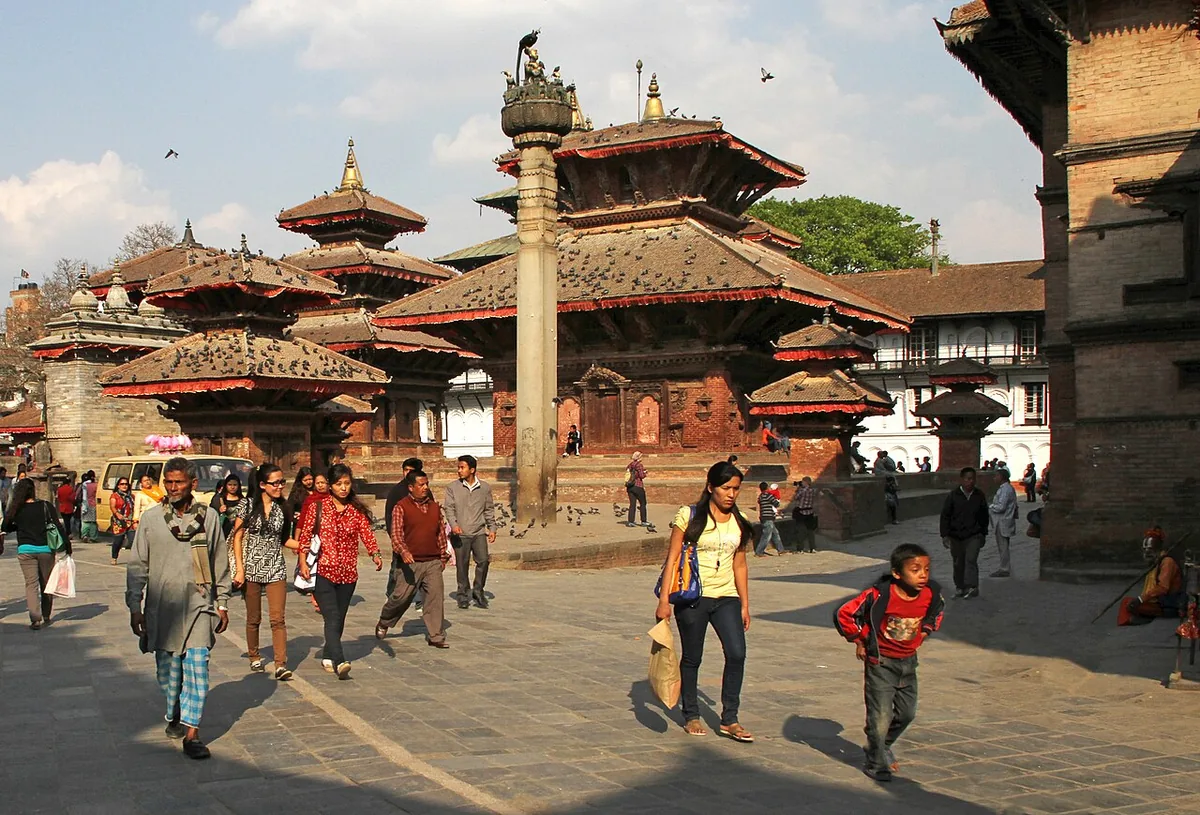
“Swayambhunath crowns a Kathmandu hilltop reached by 365 steep stone steps, guarded by troops of monkeys that earned it its nickname, the Monkey Temple.”
About Swayambhunath
Swayambhunath is among the oldest religious sites in the Kathmandu Valley, with origins traced back well over a millennium and a sanctity that local tradition links to the valley's mythical beginnings as a drained lake. It has been a major pilgrimage destination for Buddhists and Hindus for centuries. Part of the Kathmandu Valley UNESCO World Heritage Site, it sustained damage in the 2015 earthquake, particularly to surrounding structures, and has undergone restoration while remaining an active, crowded place of worship throughout.
Swayambhunath
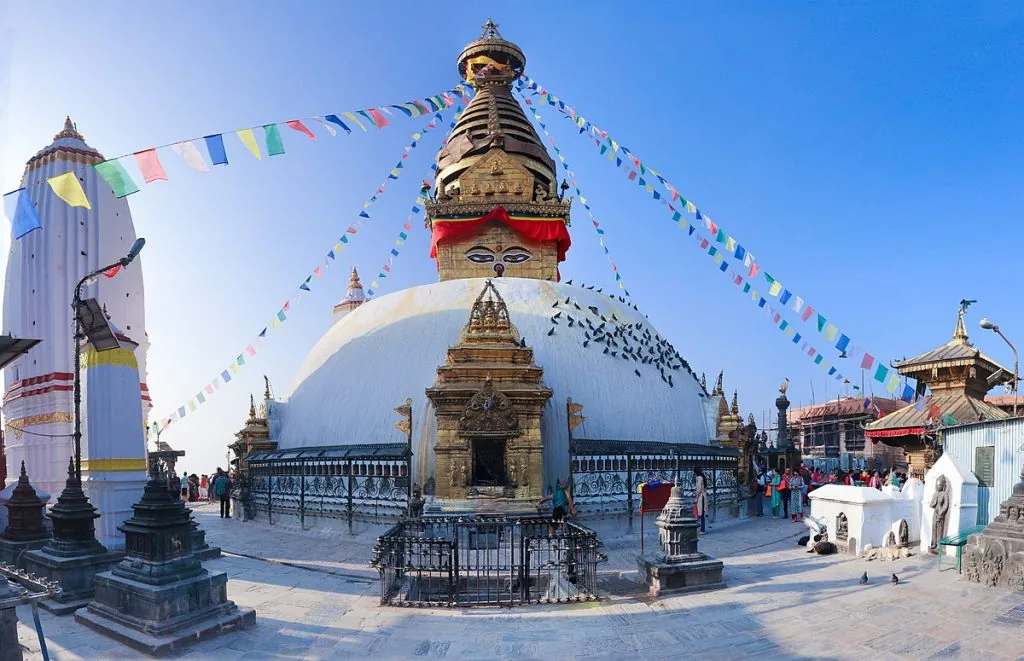
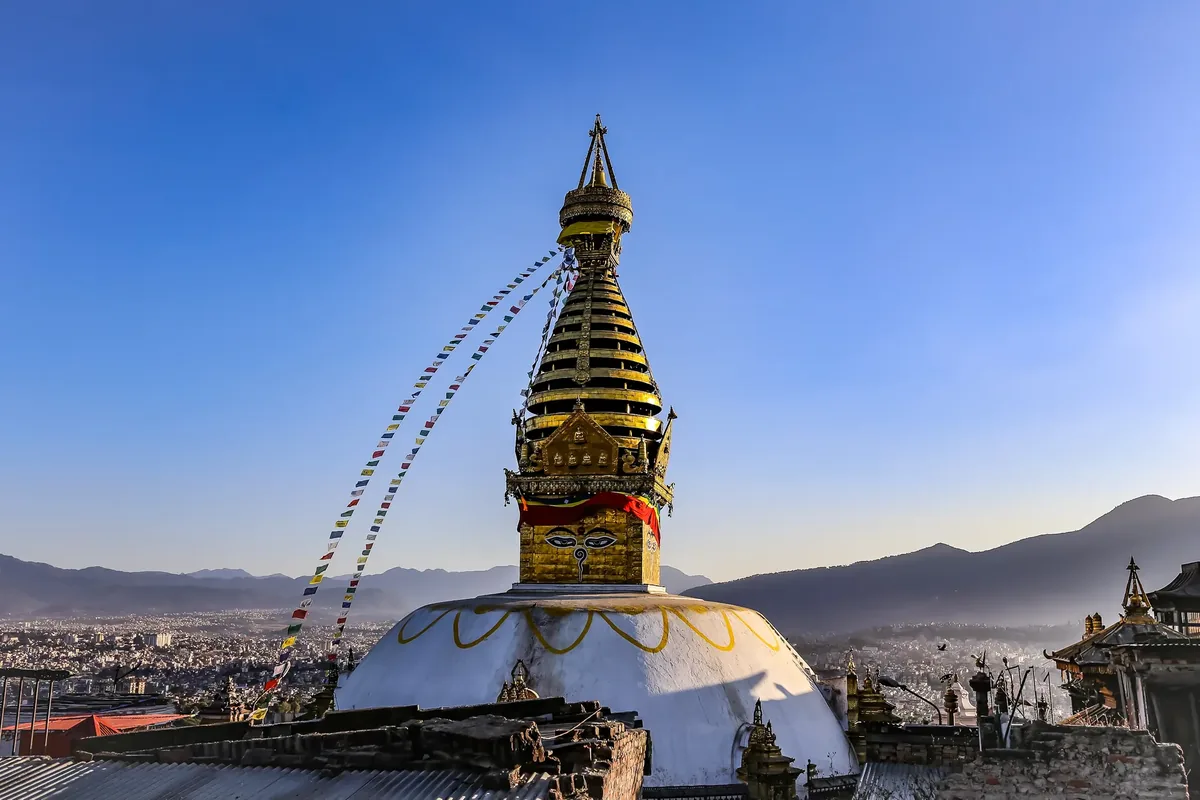
Swayambhunath is an ancient hilltop stupa overlooking Kathmandu, one of the oldest and holiest Buddhist sites in Nepal, sacred to Buddhists and Hindus alike. Like Boudhanath, its golden spire carries the painted eyes of the Buddha gazing in the four directions, but its perch on a wooded hill gives it sweeping views over the whole Kathmandu Valley. Troops of monkeys living in the surrounding trees have earned it the nickname the Monkey Temple.
Swayambhunath is an ancient hilltop stupa overlooking Kathmandu, one of the oldest and holiest Buddhist sites in Nepal, sacred to Buddhists and Hindus alike.
The Climb
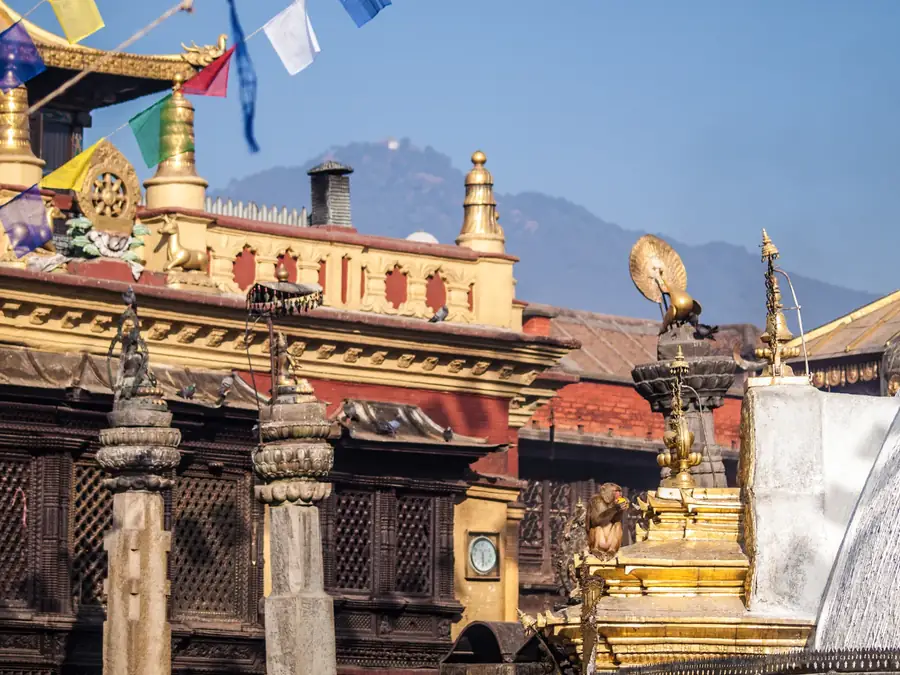
The eastern approach is a steep stairway of 365 stone steps lined with carved Buddhas and prayer wheels, the monkeys watching from the railings. The effort sharpens the arrival at the top, where the stupa, shrines, and a thicket of prayer flags and butter lamps crowd the summit.
Legends of Origin
Myth holds that the Kathmandu Valley was once a great lake, and that the hill of Swayambhunath rose from a self-existent lotus flame at its centre, hence the name, which means 'self-created'. The site's sanctity is said to predate the city itself. Buddhist and Hindu shrines stand side by side here, a vivid example of the blended religious life of the valley.
The Experience
The climb up the 365 steps is a small pilgrimage in itself, the monkeys an ever-present, occasionally cheeky audience. At the top the stupa is wrapped in prayer flags and ringed by shrines, prayer wheels and devotees, while the platform's edge opens onto a panorama of Kathmandu spread across the valley floor. The blend of Buddhist and Hindu worship, the smell of butter lamps and incense, and the long view over the city make it one of the most atmospheric short visits in Nepal, best at sunrise or late afternoon.
The climb up the 365 steps is a small pilgrimage in itself, the monkeys an ever-present, occasionally cheeky audience.
Why It Matters
Swayambhunath is one of the oldest and most sacred Buddhist sites in Nepal and a key monument of the Kathmandu Valley World Heritage Site, notable for its hilltop setting, its shared Buddhist and Hindu worship, and its commanding view over the capital.
Why Visit
It combines deep antiquity, a great valley panorama and the lively spectacle of the monkeys in one rewarding climb. Go at sunrise or late afternoon for the light and the view, watch your belongings around the monkeys, and take the stair route up for the full effect.
✦ Insider Tips
- 1
Climb the eastern stairway of 365 steps for the proper approach and the carved Buddhas.
- 2
Guard food, sunglasses and loose items; the resident monkeys are bold and quick.
- 3
Come at sunrise or late afternoon for the best light over the Kathmandu Valley.
- 4
Respect that it is an active site of both Buddhist and Hindu worship, not just a viewpoint.
- 5
Wear shoes with grip; the worn stone steps can be slick, especially after rain.