“Four centuries ago, a single bed of stolen Ottoman bulbs in this small Leiden garden sparked a floral obsession that would eventually collapse an entire national economy.”
About Hortus Botanicus Leiden
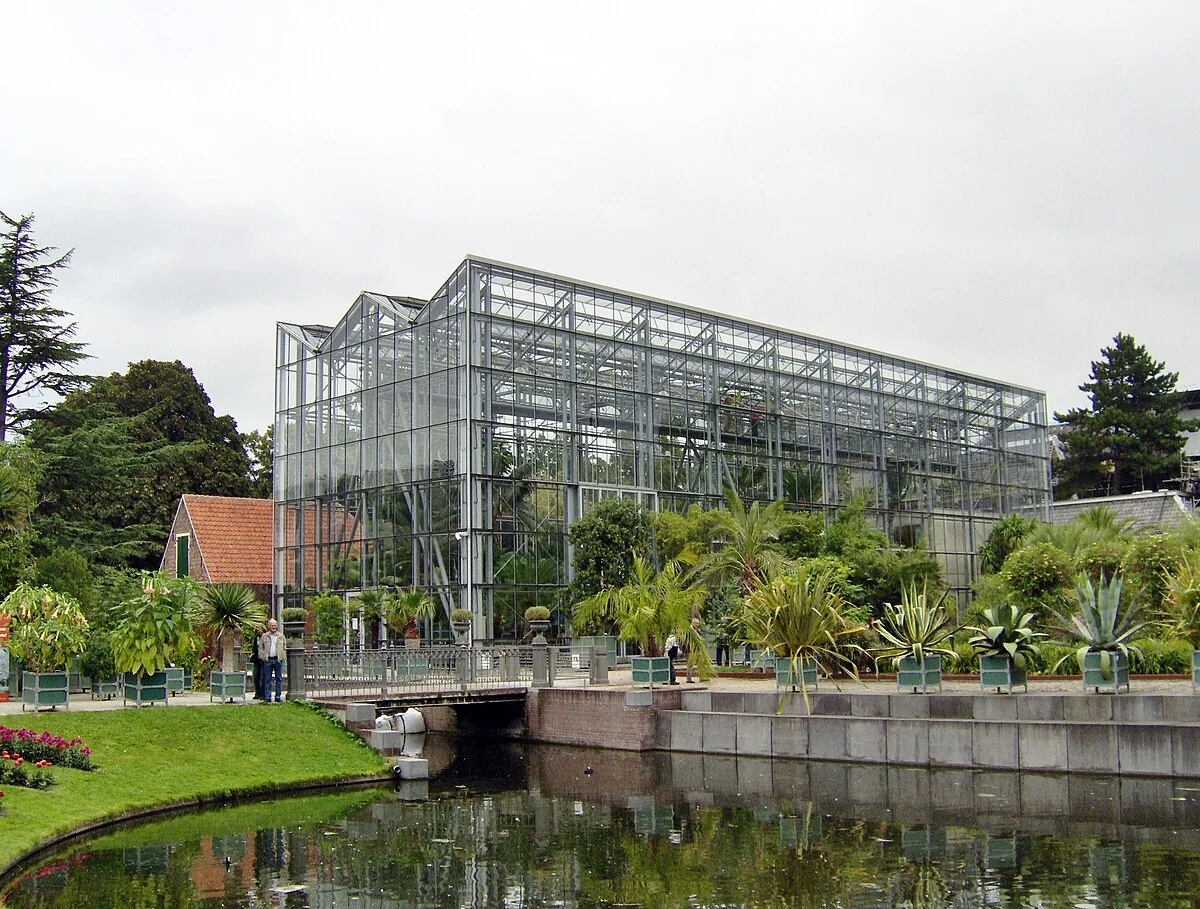
Carolus Clusius started this botanical revolution in 1590, turning a strip of university land into a global clearinghouse for exotic species. By 1740, under the direction of Herman Boerhaave, the garden had expanded its greenhouses to house a massive influx of South African and Asian plants. It was here that the first cinnamon, pepper, and coffee plants were studied before being sent to the colonies. The garden’s architecture evolved from simple wooden frames to the magnificent cast-iron and glass structures of the 1800s, reflecting the industrial progress of the era. It remains a primary research site for the conservation of endangered orchids and Asian flora.
Behind a modest gate along Leiden’s Rapenburg canal
Behind a modest gate along Leiden’s Rapenburg canal lies a green sanctuary where the very concept of the tulip was first introduced to Dutch soil. Established in 1590, this garden serves as one of the oldest botanical institutions in the world. It does not possess the sprawling, manicured vanity of a royal estate; instead, it offers the dense, intellectual intimacy of a living laboratory. Within its walls, the air shifts from the brisk maritime breeze of South Holland to the humid, heavy respiration of the tropics inside the Victoria glasshouse. Stately monuments to scientific curiosity, such as the ancient Laburnum tree planted in 1601, still reach toward the sky. The Hortus remains deeply integrated into the university, acting as a bridge between the medieval academic world and modern conservation. To walk here is to trace the footsteps of Carolus Clusius and see the botanical foundations that eventually fueled the Dutch Golden Age.
Behind a modest gate along Leiden’s Rapenburg canal lies a green sanctuary where the very concept of the tulip was first introduced to Dutch soil.
Background
Leiden University officials founded the Hortus shortly after the university itself was established, primarily to aid medical students in identifying medicinal herbs. Carolus Clusius, a pioneering botanist, took the helm in 1593 and brought with him a collection of unusual bulbs from the Ottoman Empire. These were the first tulips seen in the Netherlands, sparking a national obsession that would eventually lead to the infamous Tulip Mania. Over the following centuries, the garden’s reach expanded as Dutch East India Company ships returned with exotic flora from the Cape of Good Hope and the Indonesian archipelago. Great thinkers like Linnaeus and Boerhaave spent their formative years here, systematizing the chaos of the natural world into the Latin taxonomies we use today. The garden survived the sieges of war and the pressures of urban expansion, meticulously maintaining its original Clusius Garden, a reconstruction that reflects the exact layout of the late 16th century.
Visiting Hortus Botanicus Leiden
Standing beneath the canopy of the monumental Ginkgo biloba, The silence of the garden creates a sharp barrier against the city's bicycle traffic. The scent of damp earth and rotting wood in the fern garden provides a primitive, earthy contrast to the delicate perfumes of the rose collection. The sudden, prickling heat of the tropical greenhouses, where the giant Victoria amazonica water lilies float like massive green platters in the dark water. Frequently skipped is the subtle variations in the medicinal herb garden, focusing instead on the dramatic carnivorous plants. It becomes clear how the light filters through the 19th-century glass panes, casting long, dusty beams across the ferns. What sticks with you is discovering a quiet bench beside the Singel canal, where the old city walls meet the garden’s edge, offering a view of Leiden that has remained largely unchanged for four hundred years.
Reaching the Hortus is a straightforward
Reaching the Hortus is a straightforward affair, as it sits in the historic heart of Leiden. The walk from the central train station takes roughly fifteen minutes, leading you through some of the city's most photogenic university alleys and over stone bridges. If you prefer the water, several local canal tours offer drop-off points nearby. Driving into Leiden’s center is notoriously difficult due to the narrow streets and strict parking regulations, so using the city’s peripheral parking lots and hopping on a shuttle is highly recommended. The garden entrance is located directly behind the Academy Building, the university’s spiritual home.
Reaching the Hortus is a straightforward affair, as it sits in the historic heart of Leiden.
The Experience
You notice the humidity clings to your skin the moment you step into the Victoria Greenhouse, where the smell of nectar is almost overwhelming. The sound of water dripping from the roof onto the broad leaves of the tropical palms creates a rhythmic, jungle-like soundtrack. The gravity of history in the shade of the 'Persian Ironwood' tree, its gnarled trunk a result of centuries of growth. Most people miss the Japanese garden, a gift from the physician Philipp Franz von Siebold, which offers a starkly different aesthetic of moss and stone. The quality of light during a late spring afternoon turns the Clusius Garden into a vivid collection of primary colors.
Why It Matters
Hortus Botanicus Leiden is the cradle of Dutch botany and the site of the first scientific tulip cultivation in Europe. It represents the transition from medieval herbalism to modern plant science. Culturally, it is the physical manifestation of the Dutch desire to categorize and understand the wider world during their age of exploration.
Why Visit
Visit this garden if you want to see the DNA of the Dutch landscape before it was modernized. Unlike the commercial sprawl of Keukenhof, the Hortus offers a scholarly, tranquil intimacy where you can actually sit with the plants. It is a rare chance to see a living collection that has been curated continuously since the Renaissance.
✦ Insider Tips
- 1
The Clusius Garden is a reconstruction; look for the original 1590 layout markers to understand how small the original site was.
- 2
Visit the Oranjerie for a coffee; it was originally built to protect citrus trees from the frost in 1744.
- 3
Check the flowering schedule for the Victoria amazonica; it only blooms at night and for a very short window in late summer.
- 4
The Japanese garden houses several species brought back by Von Siebold that were the first of their kind in Europe.
- 5
Use the 'Herb Garden' to find the plants once used to treat the plague, the labels are a history lesson in themselves.