“While other museums hide their treasures behind glass, this one allows ten thousand cyclists a day to ride their bikes through its very center, beneath the feet of Rembrandt's masterpieces.”
About Rijksmuseum
The collection began with the 18th-century holdings of the Dutch stadtholders, but it grew rapidly during the 19th century as the Dutch state reclaimed its cultural identity. During World War II, the most valuable works, including 'The Night Watch,' were smuggled out of the city and hidden in a specialized bunker in the dunes of Maastricht to protect them from Nazi looting. The museum’s return to glory in the 21st century was a decade-long saga that involved reclaiming the original murals and decorations of Cuypers that had been painted over in white during the 1950s. Today, it holds over one million objects, though only about 8,000 are displayed at any given time, ensuring that each piece has the space to tell its specific story of Dutch triumph and complexity.
Rijksmuseum in short
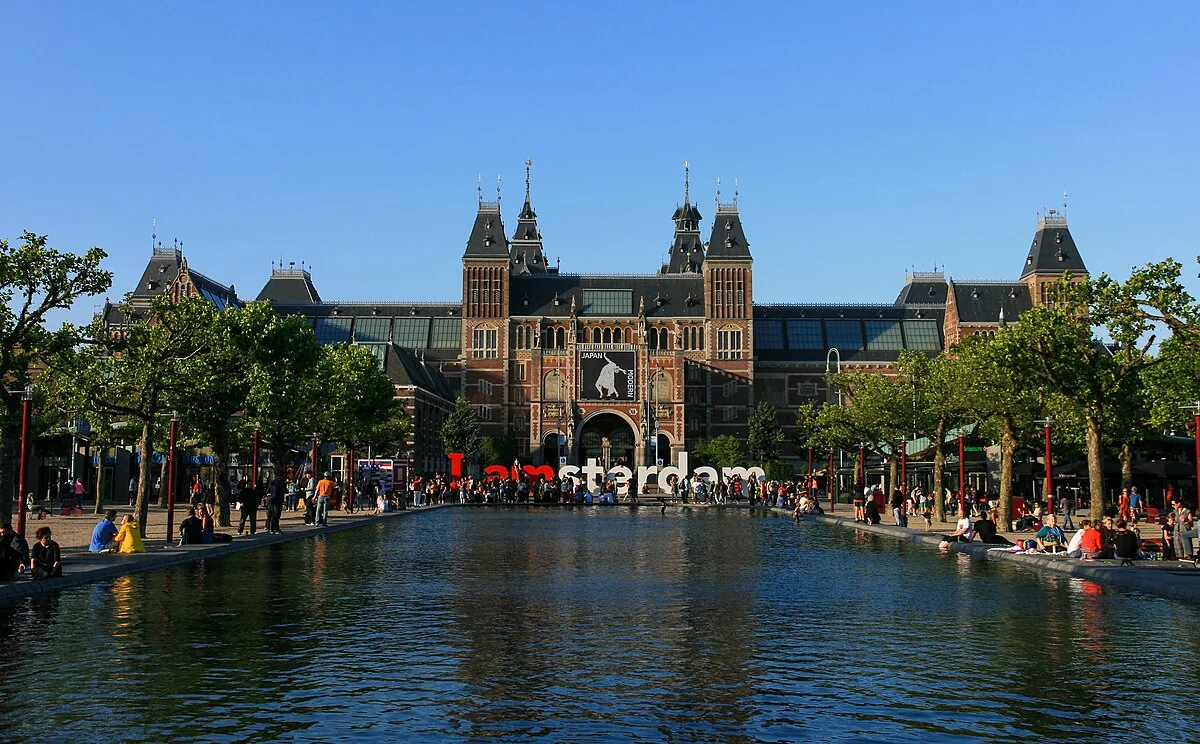
A neo-Gothic palace of red brick and soaring towers anchors the Museumplein, acting as a secular cathedral for the soul of the Dutch Golden Age. The Rijksmuseum is more than a gallery; it is a meticulously curated timeline of a nation that once owned the world’s oceans. The interior the vast Atrium is bright and temperature-controlled, smelling faintly of floor wax and the clean, mineral scent of polished limestone. You walk through the Gallery of Honour. Notice how the light is engineered to fall perfectly on the textured oils of Rembrandt and the luminous domesticity of Vermeer. Layered on top of this is a respectful, multi-lingual murmur that rises toward the vaulted ceilings, punctuated by the soft clicking of footsteps on the oak floors. The 17th century feels remarkably close, caught in the glint of a silver goblet or the defiant gaze of a painted militia.
A neo-Gothic palace of red brick and soaring towers anchors the Museumplein, acting as a secular cathedral for the soul of the Dutch Golden Age.
the current building, 1885
Architect Pierre Cuypers designed the current building in 1885, blending Gothic and Renaissance styles so successfully that he faced criticism for making it look 'too Catholic' for a Protestant nation. The museum was intended to house the national art collection that had moved from The Hague to various temporary spots in Amsterdam. Between 2003 and 2013, the building underwent a massive, controversial renovation by Spanish architects Cruz y Ortiz, who stripped away decades of cluttered additions to reveal Cuypers' original grandeur while adding a stunning, light-filled modern entrance. The project cost nearly 400 million Euros and faced years of delays, mostly because of a fierce local debate over keeping the iconic public bicycle tunnel that runs straight through the heart of the building. Today, that tunnel remains a unique artery where the art of the past and the commuters of the present intersect every day.
Standing before Rembrandt’s 'The Night Watch,'
The sheer scale of the masterpiece, which occupies its own dedicated altar at the end of the grand hall. What hits is the way the light within the painting seems to glow from the canvas itself, highlighting the intricate lace and the chaotic energy of the civic guard. In your ears of a dozen different languages fades into the background as you lose yourself in the detail of a 17th-century dollhouse or the terrifyingly delicate glasswork of the maritime section. The physical shift in eras moving from the dark, intimate rooms of the Middle Ages into the bright, confident halls of the 19th-century ship models. First, the subtle patterns in the floor tiles that echo the themes of the rooms they serve. The most rewarding moment is discovering the Cuypers Library, a multi-story book sanctuary where the smell of old paper and the silence of a monastery offer a reprieve from the crowds.
The museum is the centerpiece
The museum is the centerpiece of the Museumplein, easily reached by the number 2 or 12 trams from Amsterdam Central Station. Biking is the most local way to arrive, allowing you to utilize the famous tunnel that passes under the building’s main arch. Arriving at 9:00 AM sharp is the only way to see the Gallery of Honour without the dense thicket of smartphones and tour groups. Tickets must be booked online for a specific time slot, a system that has made the entrance process much smoother. Once inside, starting on the top floor and working your way down allows you to move through history in reverse, ending with the spectacular modern collections in the basement.
The museum is the centerpiece of the Museumplein, easily reached by the number 2 or 12 trams from Amsterdam Central Station.
The Experience
The character of the Rijksmuseum is one of grand, organized wonder. You catch the smell of the library, a dry, sweet scent of leather and age, even before you step onto its iron balconies. You discover a weight of history not as a burden, but as a vibrant, living presence in the room. The light is the museum's greatest tool, carefully filtered through the roof to mimic the northern light that the Golden Age painters used in their studios. What registers is the small, often-overlooked details like the 17th-century Delftware flower pyramids that stand like blue and white skyscrapers in the galleries. The most striking detail is the bicycle path through the building, where the sound of ringing bells provides a modern pulse to the historic stone. It is a place that feels deeply connected to the city outside.
Why It Matters
The Rijksmuseum is the definitive archive of the Dutch soul and the most important art museum in the Netherlands. it represents the peak of European artistic achievement during the 17th century and the maritime power that funded it. Humanly, it matters because it chronicles the rise of the middle class, depicting regular people with a dignity previously reserved for gods and kings.
Why Visit
The reason to visit: you need to see the light that Vermeer saw. While other galleries are collections of paintings, the Rijksmuseum is the autobiography of a nation. You come here to stand in the presence of 'The Night Watch' and to realize that the Dutch Golden Age wasn't just about wealth, but about a radical new way of seeing the world. It is the only museum on earth that lets you bike through its heart.
✦ Insider Tips
- 1
The Cuypers Library is often overlooked; find the small door on the second floor to see the most beautiful reading room in the country.
- 2
Head straight to the Gallery of Honour at opening time, then work your way back to the Middle Ages section to avoid the largest crowds.
- 3
Look for the 'Great Hall' murals that were recently restored; they contain hidden puns and satirical comments by the original 19th-century decorators.
- 4
Visit the Research Library balcony for a bird’s-eye view of scholars working among thousands of antique volumes.
- 5
The museum cafe serves excellent Dutch 'appeltaart'; it is a necessary ritual after three hours of walking the galleries.