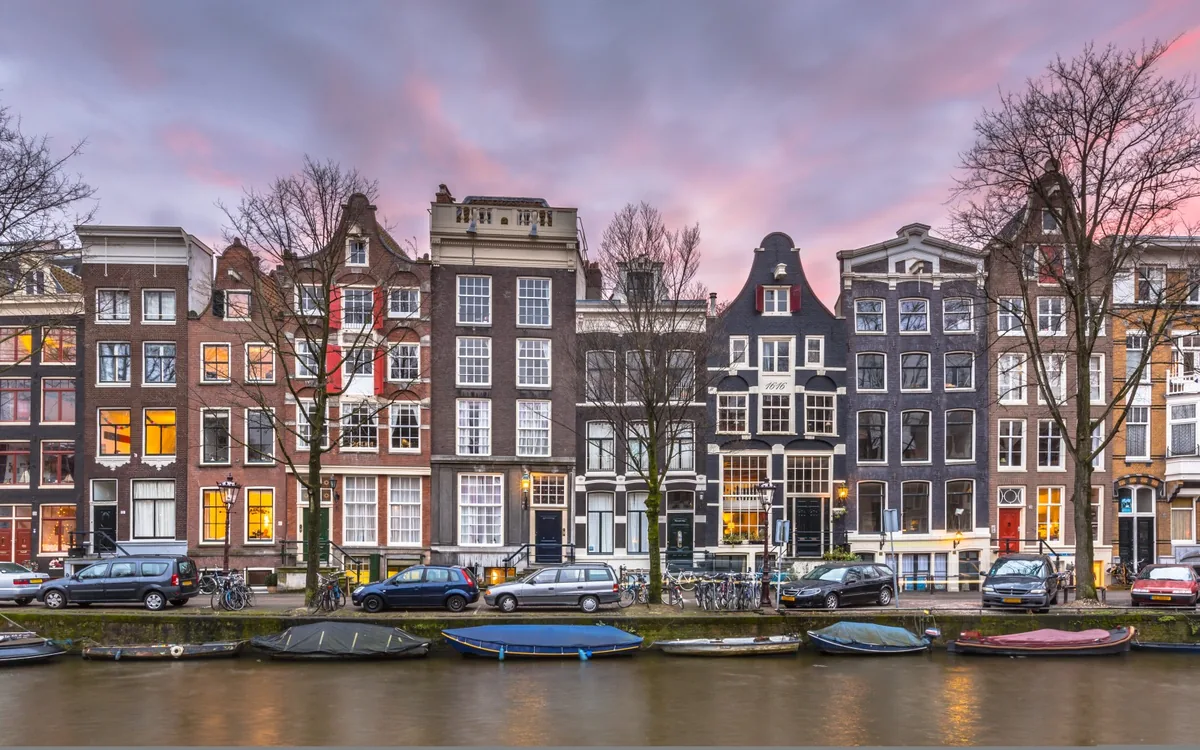
Once a slum for the city's rebels and tanners, this labyrinth of leaning houses and secret gardens has become the high-rent heart of Amsterdam’s bohemian soul.
About Jordaan District
The Jordaan was born in 1612 as part of the 'Grand Plan' for Amsterdam's expansion, but while the rich got the Herengracht, the workers got the Jordaan. It was built on the cheap, following the lines of the old polder ditches, which explains its slightly off-kilter orientation. For 300 years, it was a world unto itself, with its own dialect and a fierce loyalty to the House of Orange. In the 1960s, it became the epicenter of the Provo movement and hippie culture, which fought against 'urban renewal' plans that would have seen the canals filled in for car traffic. The victory of the preservationists in the 70s ensured that the Jordaan remained a residential neighborhood rather than a museum piece.
What Jordaan District actually is
Amsterdam’s Jordaan district is a place where the city's grand canal-belt aspirations melt into something more intimate and lived-in. Built in the 17th century as a working-class neighborhood for immigrants and laborers, the Jordaan follows a grid that ignores the concentric circles of the rest of the center. Today, it is arguably the city's most desirable enclave, a maze of narrow streets, secret 'hofjes' (courtyards), and bridges draped in flower-filled bicycle baskets. The atmosphere here is thick with a specific kind of 'gezelligheid', the untranslatable Dutch word for cozy social connection. You won't find the neon glare of the Red Light District or the high-street retail of the Kalverstraat. Instead, the Jordaan offers specialty boutiques, galleries tucked into basement levels, and traditional brown cafes where the carpet is on the table and the jenever flows freely.
The district’s name likely comes from the French
The district’s name likely comes from the French word 'jardin,' a nod to the Huguenot refugees who settled here and the flower-themed names of the streets. Originally, this was a densely packed, impoverished area where tanners, weavers, and brewers lived in cramped conditions. It was a hotbed of political radicalism and social unrest for centuries. By the mid-20th century, the Jordaan was slated for demolition, but a massive grassroots protest movement in the 1970s saved the neighborhood from becoming a modern office block. This preservation effort turned the tide, leading to the gentrification that has made it the upscale cultural hub it is today. Despite the high property prices, the Jordaan retains a defiant local spirit, particularly visible in the folk songs still sung in the pubs near the Westerkerk.
Walking through the Negen Straatjes (Nine Streets)
Walking through the Negen Straatjes (Nine Streets) that border the district, The rhythmic hum of bicycle tires on uneven cobblestones. It smells of roasted coffee, canal water, and the sugary scent of apple pie wafting from Winkel 43. What gets your attention is the texture of the 'leaning' houses, centuries-old brick structures that tilt forward or sideways due to the soft peat soil beneath. There is a feeling of sudden drop in volume stepping through a nondescript doorway into one of the many hidden hofjes, where the sounds of the city are replaced by dripping fountains and the rustle of ivy. People tend to miss the 'gevelstenen' or gable stones, intricate stone carvings above doors that indicated the profession of the original inhabitants. Pay attention to the way the light catches the ripples of the Bloemgracht, often called the most beautiful canal in the city.
The Jordaan is easily accessible
The Jordaan is easily accessible on foot from the Anne Frank House or the Westerkerk. It lies just west of the main canal belt, stretching from the Brouwersgracht in the north to the Leidsegracht in the south. Tram lines 13 and 17 stop at the Westermarkt, providing the closest public transport link. The best way to arrive is to simply get lost; start at the Noorderkerk and work your way south toward the Elandsgracht. Cycling is the local way to travel, but the streets are narrow and pedestrians are frequent, so walking is often more rewarding for those who want to peer into the many ground-floor windows, a favorite Dutch pastime.
The Experience
The way the residents treat the sidewalks as their own living rooms, placing benches and potted plants right up to the canal's edge. The hum of the Westerkerk bells, the same ones Anne Frank heard from her annex, provides a haunting, hourly reminder of the passage of time. There is a feeling of vibration of the city's history in the narrowness of the alleys like the Tweede Egelantiersdwarsstraat. Most visitors miss the 'Pianola Museum,' a tiny room filled with self-playing pianos that captures the district's eccentric mechanical history. The element that stays with you is sitting on a bridge at dusk, watching the light from the canal-side lamps dance on the dark green water while the city's frantic pace slows to a crawl.
Why It Matters
The Jordaan is the cultural soul of Amsterdam. It represents the successful transition from an industrial slum to a world-class example of historic preservation. It is the site of the city's most authentic folk traditions and serves as a living museum of 17th-century Dutch urban planning, showing how a community can maintain its identity despite intense global fame.
Why Visit
Visit the Jordaan to find the Amsterdam you’ve seen in postcards but haven’t found in the tourist centers. It is the only neighborhood that successfully balances high-end art and dining with a gritty, historical authenticity. It is the best place to practice the art of 'struinen', aimless, soulful wandering.
✦ Photo Gallery
Best Season
🌤 October is perfect; the elm trees along the canals turn gold, the summer crowds have vanished, and the brown cafes feel even more welcoming as the autumn chill sets in.
Quick Facts
Best time to visit
October is perfect; the elm trees along the canals turn gold, the summer crowds have vanished, and the brown cafes feel even more welcoming as the autumn chill sets in.
Getting there
In Amsterdam, Netherlands; reach Amsterdam first, then continue to the site.
Location
Amsterdam, Netherlands
Type
attraction
Insider Tips
- 1
Look for the doorbells on the Prinsengracht; many of the historic 'hofjes' are open to the public during the day if you know where to push.
- 2
The Noordermarkt on Saturday mornings is the city's best organic market and a prime spot for people-watching.
- 3
Skip the main canal tours and rent an electric boat at the Nassaukade to navigate the Jordaan’s narrower, quieter waterways.
- 4
Many of the best galleries are in the 'souterrains' (basements); always look down as you walk the side streets.
- 5
Order a 'kopje koffie' and a slice of apple pie at the Noordermarkt; it is a local ritual that hasn't changed in fifty years.