“Within these silk-lined walls, a single pearl earring captures more light and attention than all the royal treasures of the neighboring parliament combined.”
About Mauritshuis
The collection began with the cabinet of stadtholder William V, Prince of Orange, and was later expanded by King William I. It houses the best of the best from a period when the Dutch Republic led the world in trade, science, and art. The museum is famous for its 'concentration of masterpieces,' where every wall features a world-renowned work. The 2014 renovation by Hans van Heeswijk Architects managed the impossible feat of doubling the museum's size while keeping the historic 'sugar box' atmosphere untouched. It remains a royal entity, owned by the Dutch state and curated with a precision that honors its origins as a high-society home.
What Mauritshuis actually is
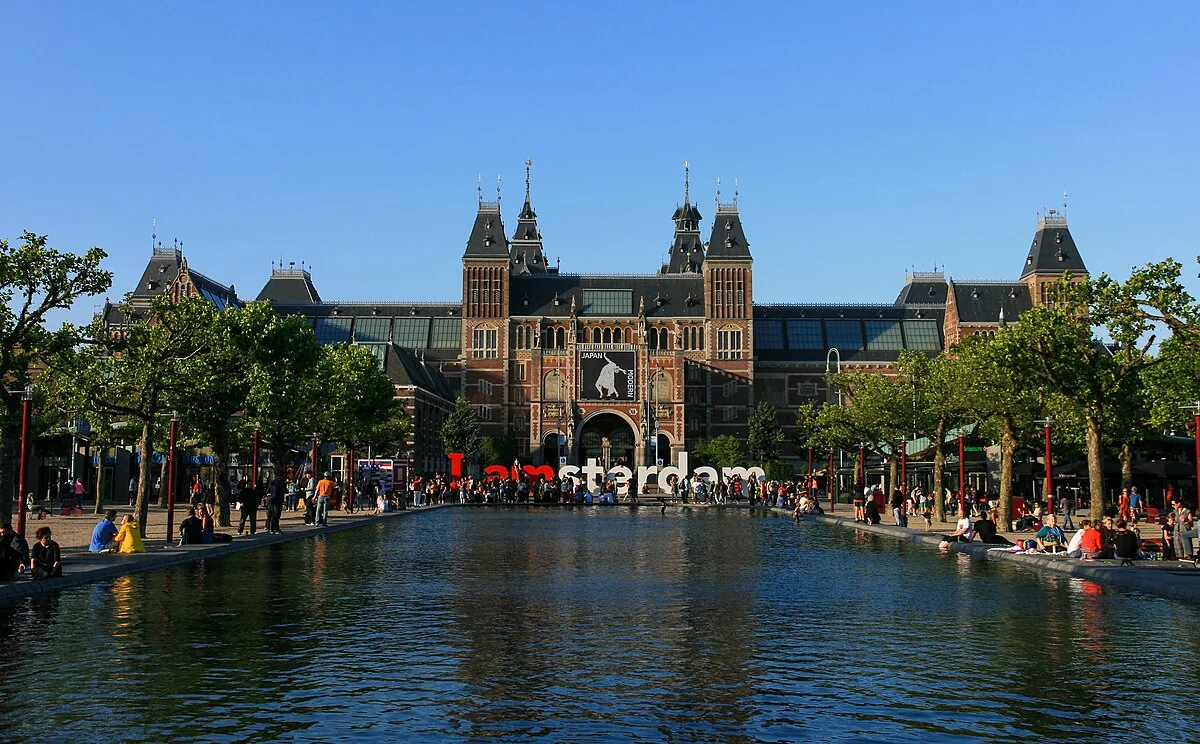
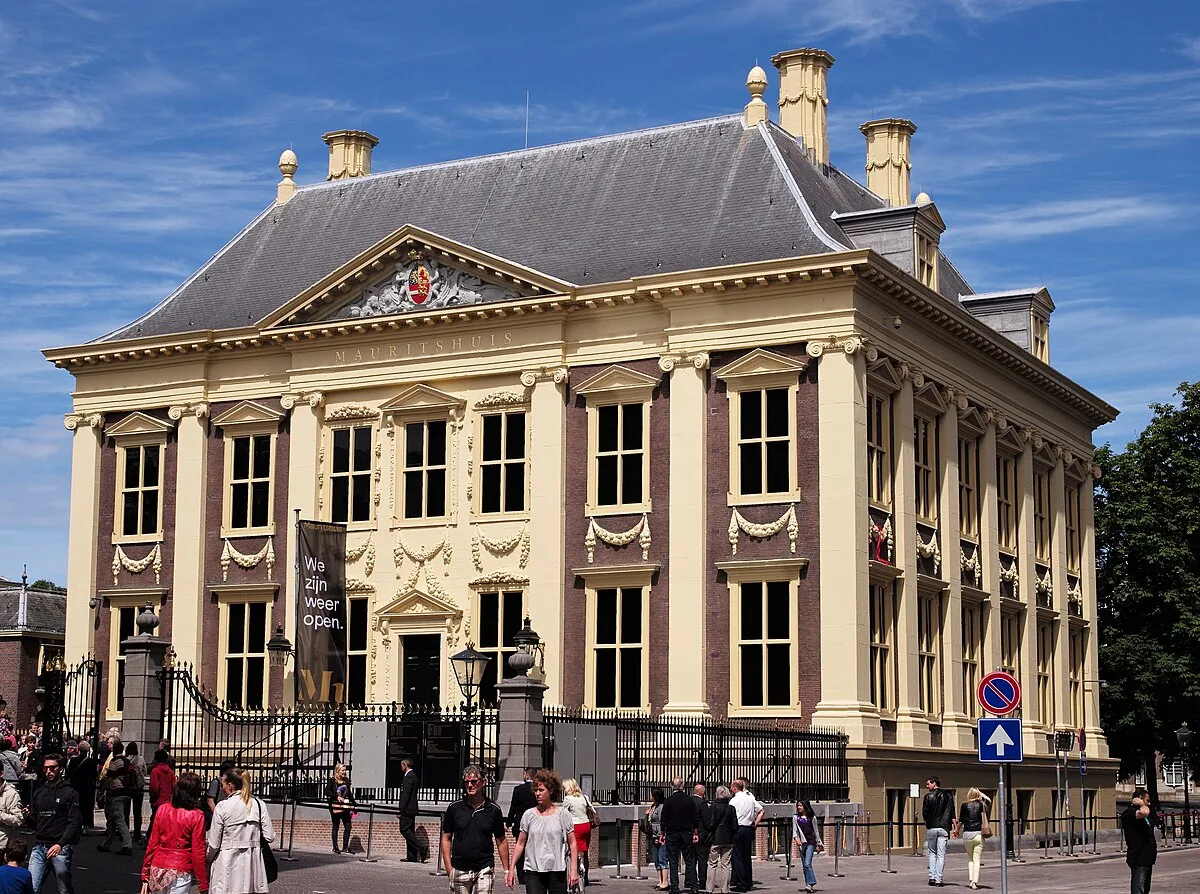
Sitting quietly on the edge of the Hofvijver pond in The Hague, the Mauritshuis is often called the 'sugar box' because of its perfect proportions and honey-colored stone. This 17th-century palace houses one of the most significant collections of Dutch Golden Age paintings in the world, including Johannes Vermeer's Girl with a Pearl Earring. Unlike the sprawling halls of the Rijksmuseum, the Mauritshuis offers a far more intimate encounter with art. The rooms are lined with silk wall coverings and lit by heavy brass chandeliers, creating a domestic atmosphere that reflects the original intent of the building as a private residence. The light reflecting off the water outside dances across the ceilings, illuminating masterpieces by Rembrandt, Fabritius, and Potter in a way that feels personal rather than institutional.
Sitting quietly on the edge of the Hofvijver pond in The Hague, the Mauritshuis is often called the 'sugar box' because of its perfect proportions and honey-colored stone.
Johan Maurits van Nassau-Siegen, the governor of Dutch
Johan Maurits van Nassau-Siegen, the governor of Dutch Brazil, commissioned architect Jacob van Campen to build this classicist mansion in the 1630s. The design was revolutionary for its time, adhering to the strict rules of Greek and Roman architecture that would come to define the Dutch Classicist style. After serving as a residence and later as a guest house for the States-General, it became a royal museum in 1822. The building itself is as much a treasure as the art it contains, having survived a devastating fire in 1704 that left only the stone walls standing. A modern underground expansion was completed in 2014, linking the historic house to a neighboring building and providing the necessary space for modern museum-goers without disturbing the integrity of the original 17th-century facade.
Walking up the grand staircase,
Walking up the grand staircase, The scent of old wood and the hushed reverence that fills the velvet-walled galleries. The light in the 'Girl with a Pearl Earring' room has a specific, pearlescent quality that seems to mimic the painting itself. First, the texture of the thick, hand-woven carpets that dampen the sound of footsteps, allowing for a quiet communion with the art. There is a feeling of history in the creak of the floorboards moving toward Rembrandt’s The Anatomy Lesson of Dr. Nicolaes Tulp. Simple to walk past is the intricate ceiling paintings and the wood-carved details of the window frames, focusing only on the famous canvases. What stands out is the way the view through the windows, showing the Parliament buildings and the swans on the pond, could almost be a Golden Age landscape painting itself.
The museum is a ten-minute walk
The museum is a ten-minute walk from The Hague Centraal station, located right next to the Binnenhof, the seat of the Dutch government. It is situated in the most historic part of the city, surrounded by government buildings and narrow cobblestone streets. Because of its popularity and small scale, booking a timed entry ticket online is essential to avoid the long queues that form under the portico. After your visit, a stroll around the Hofvijver pond provides the perfect vantage point to photograph the building’s reflection in the water.
The museum is a ten-minute walk from The Hague Centraal station, located right next to the Binnenhof, the seat of the Dutch government.
The Experience
The way the eyes of Rembrandt’s self-portraits seem to follow you with a heavy, human melancholy as you circle the room. You hear the city outside, the bells of the trams and the distant shouts from the square, fades into a soft hum within the thick masonry walls. There is a sense of elite domesticity, as if you have been invited into the home of a very wealthy, very cultured 17th-century merchant. Most visitors miss the tiny 'Goldfinch' by Fabritius, tucked away in a corner where the light hits it just right to make the painted tether look like real thread. The detail that stays with you is standing alone for a few seconds with the Vermeer, realizing the actual painting is much smaller and more luminous than any reproduction could suggest.
Why It Matters
The Mauritshuis is the definitive sanctuary for Dutch and Flemish 17th-century art. It represents the height of the Dutch Golden Age in both its architecture and its contents. For art lovers, it is a place of pilgrimage that offers a concentrated dose of genius in a setting that remains true to the era in which the paintings were created.
Why Visit
Visit the Mauritshuis if you find the massive museums of Paris or London overwhelming. It is the perfect 'slow museum' where quality triumphs over quantity. Nowhere else can you see so many icons of Western art in such a short amount of time, all within a building that is itself a pinnacle of European classicism.
✦ Insider Tips
- 1
Download the museum's app before you arrive to hear the 'soundscapes' designed for each major painting.
- 2
Visit the Brasserie for a coffee; the view of the Binnenhof through the modern glass roof of the foyer is spectacular.
- 3
Check the basement gallery for temporary exhibitions, which often feature rare drawings that are too light-sensitive for permanent display.
- 4
The best photo of the exterior is from across the Hofvijver pond on the Korte Vijverberg street side.
- 5
Look for the 'Wunderkammer' or cabinet of curiosities on the top floor to see how 17th-century collectors actually lived with their objects.