“A royal palace that traded gold leaf for red brick and mathematical gardens, proving that true power doesn't need to shout to be heard.”
About Paleis Het Loo
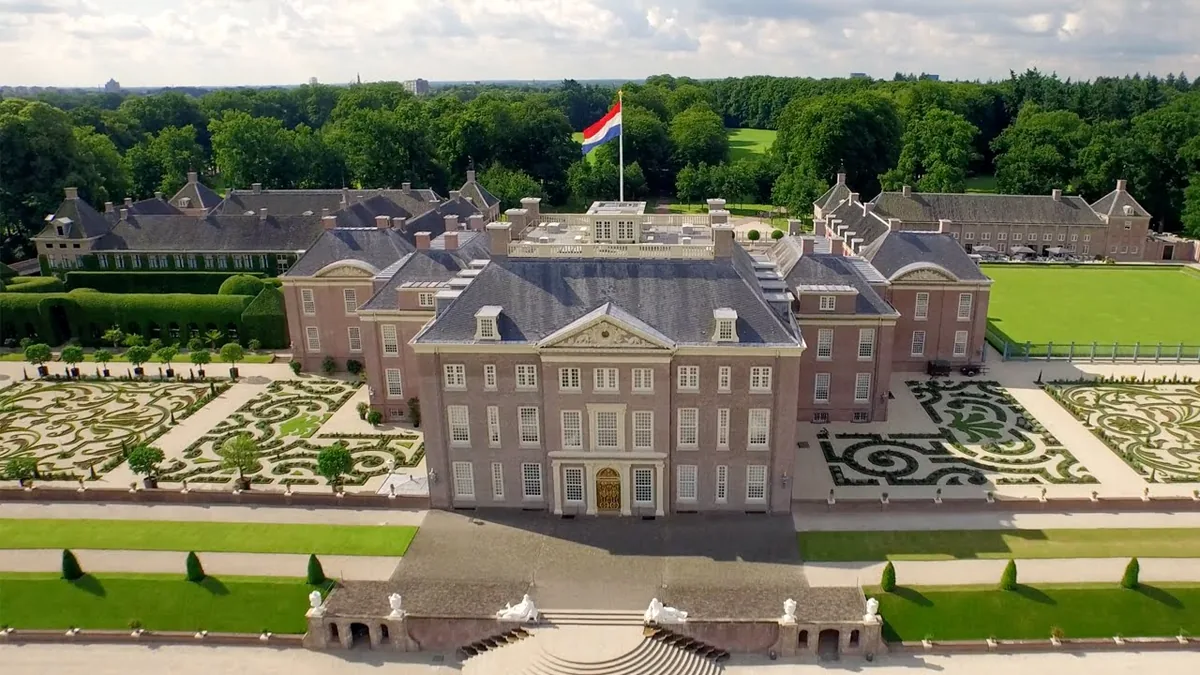
Initially, this was a medieval hunting seat but was transformed into a global power center when William III became the King of England in the Glorious Revolution. The palace design, known as 'Dutch Classicism,' influenced architecture across northern Europe and the American colonies. It survived the occupation of the French and the Germans, though its gardens were largely destroyed and replaced with romantic parkland in the 1800s. The 20th-century restoration was one of the most ambitious in Dutch history, stripping away centuries of additions to return the palace and its gardens to their original 17th-century glory.
What Paleis Het Loo actually is
Deep in the forested heart of the Veluwe region, Paleis Het Loo functions as a masterclass in Dutch Baroque restraint. Often called the 'Versailles of Holland,' the palace avoids the gilded excesses of its French cousin in favor of symmetrical brickwork and perfectly manicured boxwood hedges. This was the summer residence of the House of Orange-Nassau for over three centuries, a place where monarchs came to hunt, garden, and escape the political pressures of The Hague. After a massive multi-year renovation, the palace has emerged with a hidden underground entrance that manages to be ultra-modern without disturbing the historic 17th-century facade. The gardens are the true stars here, designed with such mathematical precision that they look like an emerald-cut diamond when viewed from the upper balconies. Every fountain, statue, and gravel path serves a geometric purpose, creating a sense of order that borders on the divine.
Deep in the forested heart of the Veluwe region, Paleis Het Loo functions as a masterclass in Dutch Baroque restraint.
modest hunting lodge, 1684
Stadtholder William III and his English wife Mary II bought the modest hunting lodge in 1684 with the intent of creating a grand palace that would reflect their rising status as the future King and Queen of England. They hired architect Jacob Roman and garden designer Claude Desgotz to create a 'low' palace that integrated seamlessly with the surrounding woodland. Unlike other royal residences that were expanded haphazardly, Het Loo was conceived as a unified whole. After the fall of the monarchy in the Napoleonic era, the palace was covered in white plaster by Louis Bonaparte, a move that was only reversed during the extensive restorations of the 1970s. It was a functional home for the royals until 1975, when Queen Wilhelmina’s death eventually paved the way for its transition into a national museum.
Walking through the grand apartments,
Walking through the grand apartments, The smell of beeswax and old silk, a scent that speaks of centuries of careful maintenance. The light in the Queen’s bedroom has a soft, filtered quality, coming through heavy drapes that overlook the private gardens. The texture of the Delftware tiles that line the kitchens, each one hand-painted with scenes of daily Dutch life. There is a feeling of crunch of the white gravel beneath your feet as you transition from the dark wood of the palace interior to the blinding precision of the Great Garden. What most skip is the roof terrace, which offers the only vantage point to appreciate the symmetry of the parterres. The thing you pick up on is the sound of the fountains, each one carefully calibrated to provide a constant, soothing background hiss that drowns out the rustle of the Veluwe forest.
Paleis Het Loo is located
Paleis Het Loo is located on the edge of Apeldoorn and is easily reached by train followed by a short bus ride or a 20-minute walk through the royal parklands. If you are driving, the palace is well-signed from the A1 and A50 highways. The new underground foyer is the starting point for all visits, providing a contemporary space for tickets and orientation before you emerge into the historic courtyard. Given the size of the gardens and the palace interior, plan to spend a full day here. The surrounding palace park, with its sprawling lakes and historic hunting grounds, offers miles of additional walking trails for those who want to see the wilder side of the estate.
Paleis Het Loo is located on the edge of Apeldoorn and is easily reached by train followed by a short bus ride or a 20-minute walk through the royal parklands.
The Experience
See the way the light reflects off the immense collection of royal carriages in the stables, their leather and brass polished to a mirror finish. Audible: the wind through the ancient oak trees in the surrounding park creates a restless energy that contrasts with the stillness of the palace rooms. There is a sense of domesticity that is rare for a palace; the rooms feel lived-in rather than just staged. Most visitors miss the 'Garden of the King,' a smaller, more intimate space hidden to the side of the main parterres. The bit that stays with you is standing at the very back of the garden, looking back at the palace and realizing that not a single tree or bush is out of alignment.
Why It Matters
Paleis Het Loo is the most important example of Dutch Baroque architecture and garden design. It is a physical manifestation of the link between the Dutch Republic and the British Monarchy. Beyond its royal history, it serves as a museum of Dutch interior design, housing a world-class collection of furniture, ceramics, and silver from the Golden Age through the 20th century.
Why Visit
Visit Het Loo for the gardens alone; they are among the finest examples of 17th-century landscape design in the world. It offers a quieter, more intellectual royal experience than the crowded palaces of London or Paris. It is a place where you can see the personal tastes of a dynasty that shaped modern Europe.
✦ Insider Tips
- 1
Start with the roof terrace to get your bearings and see the garden's geometry from above.
- 2
The stables house an incredible collection of royal cars and sleighs that many people skip, don't be one of them.
- 3
Check the fountain schedule; they only run at specific times during the day to conserve water and pressure.
- 4
Walk the 'Princes’ Garden' to see the intricate boxwood monograms that are hidden from the main paths.
- 5
Eat at the ballroom restaurant for a sense of 19th-century grandeur with a view of the gardens.