A landscape that exists only half the time, where the seafloor becomes a highway for those brave enough to walk across the mud before the tide returns.
About Wadden Sea
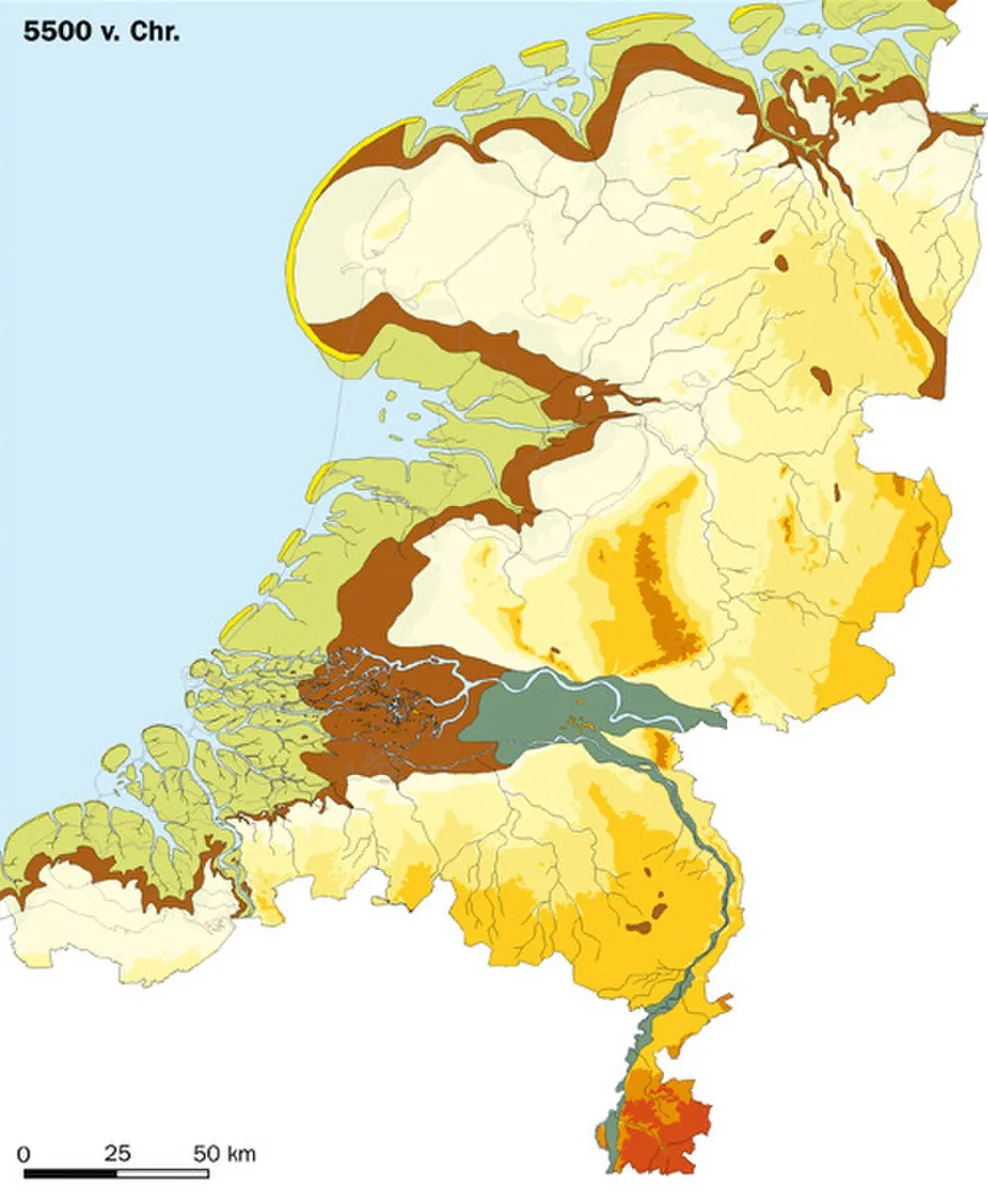
Formed during the Holocene era as glaciers melted, this tidal basin has been the frontline of the Dutch battle against the water. For centuries, the Frisian people survived on 'terpen,' high man-made mounds that predated the modern dyke system. The 1932 completion of the Afsluitdijk was a turning point, turning a turbulent sea into a calm lake and forever separating the 'Wadden' from the 'Zuiderzee.' In 2009, its global importance was finally recognized by UNESCO, marking it as a wilderness area that rivals the Great Barrier Reef in ecological necessity.
What Wadden Sea actually is
Twice a day, the ocean simply disappears, revealing a glistening expanse of silt and sand that stretches toward the horizon. This is the Wadden Sea, a UNESCO World Heritage site and the largest unbroken system of intertidal sand and mud flats in the world. Stretching along the northern coast of the Netherlands, it represents a landscape in constant flux, where the boundary between land and water remains perpetually blurred. The region consists of a chain of islands acting as a barrier against the North Sea, protecting a shallow basin teeming with life. For the uninitiated, it might look like an empty wasteland of grey sludge, but for those who look closer, it reveals a complex biological machine where millions of migratory birds find a vital refueling station. The silence here is profound, broken only by the rhythmic cry of oystercatchers or the distant roar of the surf beyond the dunes.
“Twice a day, the ocean simply disappears, revealing a glistening expanse of silt and sand that stretches toward the horizon.”
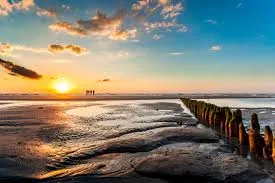
Wadden Sea, Netherlands
History
Nature remains the primary architect here, though human intervention has tried to tame these tides for a millennium. Around 7,000 years ago, rising sea levels began to form the barrier islands and tidal flats we see today. Medieval Frisian settlers famously built 'terpen' or artificial mounds to keep their homes above the encroaching floods, living a life dictated by the moon and the movements of the water. Throughout the 20th century, massive engineering projects like the Afsluitdijk cut off portions of this sea to create the IJsselmeer, forever altering the salinity and the ecosystem. Despite these pressures, the core of the Wadden Sea remains wild. It was designated a protected area through a rare tri-national agreement between the Netherlands, Germany, and Denmark, ensuring that the ancient rhythms of the tide continue without the interference of heavy industry or land reclamation.
Walking onto the mudflats during low tide, you
Walking onto the mudflats during low tide, The suction of the wet silt against your ankles and the surprisingly warm temperature of the shallow pools. A sharp, briny scent of iodine and decomposing seagrass that feels strangely invigorating. An impression of vastness of the sky, which seems to double in size when reflected in the thin film of water covering the sand. Gray seals often bob their heads above the surface in the deeper channels, watching human intruders with dark, glassy eyes. Often overlooked is the 'small five', the lugworm, cockle, shore crab, sea snail, and shrimp, which create the intricate patterns of holes and mounds across the seabed. It becomes clear how the light at sunset turns the wet mud into a sheet of polished copper, a fleeting moment before the North Sea rushes back in to reclaim its territory.
Reaching the Wadden Sea typically involves
Reaching the Wadden Sea typically involves heading to the northern provinces of Friesland or Groningen. Harlingen serve as the primary gateway for ferries to the islands of Vlieland and Terschelling, while Den Helder connects you to Texel. For the most engaging encounter, you must book a 'wadlopen' or mudflat hiking tour starting from coastal villages like Pieterburen. These treks are timed strictly with the tides, as missing the window means facing deep channels and rising currents. The region is well-connected by train to Leeuwarden, from where local buses fan out toward the dykes that shield the mainland from the sea's ancient appetite.
“Reaching the Wadden Sea typically involves heading to the northern provinces of Friesland or Groningen.”
The Experience
You notice the peculiar popping sound of thousands of tiny air bubbles escaping the mud as the water retreats. The horizon line vanishes, leaving you standing in a mirror-world where the clouds are as much beneath your feet as they are above your head. There is a feeling of muscles in your legs working against the gentle but persistent drag of the silt. Most people miss the tiny, translucent shrimp darting in the puddles, focusing instead on the distant island silhouettes. What sticks with you is the sudden, cold realization of the tide turning, a low hiss as the first fingers of the North Sea begin to fill the channels around you.
Why It Matters
The Wadden Sea is the world's most important transit hotel for migratory birds, hosting up to 12 million visitors annually. It is a biological powerhouse that produces an incredible amount of biomass, supporting the entire North Sea food chain. Culturally, it defines the rugged, resilient spirit of northern the Netherlands, a place where life is still governed by celestial cycles.
Why Visit
Forget the manicured canals of the south; come here to see the Netherlands at its most primal. It is one of the few places in Europe where you can actually walk on the bottom of the ocean. It offers a sense of prehistoric scale that makes the modern world feel very small and very far away.
Insider Tips
- 1
Never attempt to walk out onto the mudflats without a certified guide; the tide returns faster than a human can run.
- 2
Carry an extra pair of thick socks to wear inside your mud-boots to prevent the silt from grinding against your skin.
- 3
Check the wind forecast rather than just the rain; a strong North Sea wind can push the tide in earlier than the tables predict.
- 4
Visit the Ecomare center on Texel first to understand the invisible life cycles happening beneath your feet.
- 5
Keep your binoculars around your neck; the rare spoonbill is often spotted in the salt marshes during early autumn.