“A ghost-town of 140 buildings that was quite literally moved by boat to save a culture from drowning in the fresh water of a man-made lake.”
About Zuiderzeemuseum
The project was born from the wreckage of a vanishing ecosystem. After the 1916 floods, the Dutch government accelerated the Zuiderzee Works, a massive reclamation project that culminated in a 32-kilometer dam. Seeing their way of life evaporating, ethnographers began cataloging everything from dialect to embroidery patterns. The museum's outdoor section opened in 1983, a feat of architectural salvage that involved moving entire chapels, lime kilns, and schools. It stands today as the definitive record of the 'Salt Water Soul' of the Netherlands, a place where the history isn't just taught but is physically present in the creak of every floorboard.
What Zuiderzeemuseum actually is
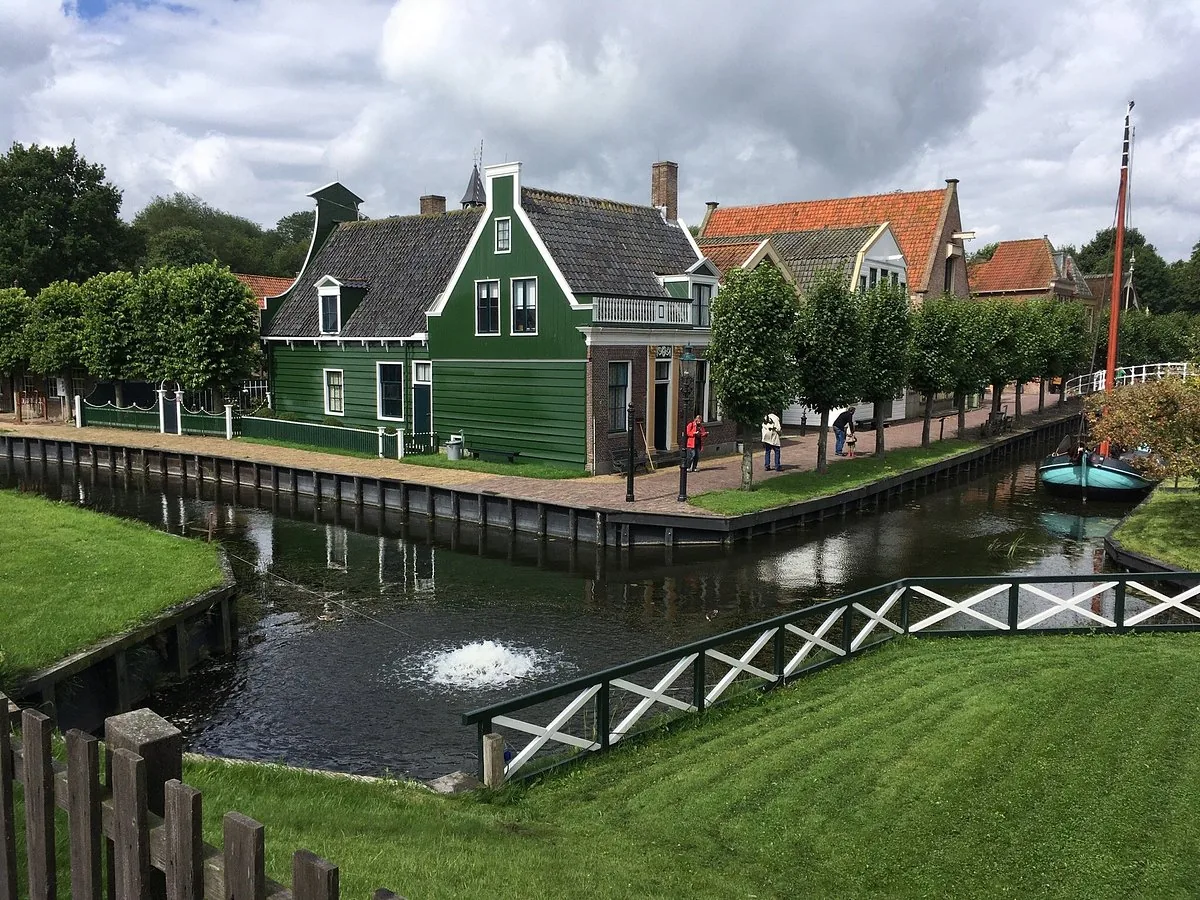
Enkhuizen holds a secret that is part time capsule and part living community. The Zuiderzeemuseum is divided into two distinct halves: a sleek, modern indoor gallery housed in a 17th-century warehouse and a sprawling outdoor village that painstakingly recreates life before the great damming of the inland sea. This is not a static collection of dusty glass cases; it is a functioning neighborhood of over 140 historic buildings salvaged from across the former Zuiderzee coastline. Here, the smell of smoked herring and coal fires hangs in the air, drifting over narrow brick alleys and small vegetable gardens. The museum captures the precise moment in 1932 when the salt-water Zuiderzee became the fresh-water IJsselmeer, effectively ending a maritime culture that had lasted for centuries.
Enkhuizen holds a secret that is part time capsule and part living community.
Afsluitdijk was completed, 1932
When the Afsluitdijk was completed in 1932, the coastal fishing villages faced an existential crisis as their salt-water livelihoods vanished overnight. The museum was founded in 1948 to preserve the vanishing traditions, tools, and architecture of these communities. Many of the houses you see in the 'Buitenmuseum' (outdoor museum) were transported wholesale by barge from places like Marken, Volendam, and Monnickendam. They were reassembled in Enkhuizen to form a cohesive, albeit artificial, town plan that mimics the layout of a traditional Zuiderzee port. The indoor 'Binnenmuseum' occupies the Peperhuis, a former Dutch East India Company warehouse, bridging the gap between the humble life of a local fisherman and the global ambitions of the Golden Age merchants who once sailed these waters.
Stepping off the ferry that brings you
Stepping off the ferry that brings you from the parking lot to the museum entrance, The sound of wooden clogs clattering on the 'klinkers', the dark, narrow bricks that pave the streets. The interior of the houses often feels cramped and dark, lit by small windows that were designed to keep the North Sea winds at bay. The texture of hand-knitted wool sweaters and the rough grain of the oak fishing boats being repaired in the shipyard. The heat radiating from the smokehouse where rows of silver fish turn a deep, oily gold over smoldering oak chips. People often miss the small pharmacy and the steam laundry, focusing instead on the larger ships, yet these domestic spaces hold the most poignant details of daily survival. First, the sharp contrast between the bright, painted facades of the Urk houses and the somber, dark tones of the buildings from the mainland coast.
The easiest way to reach
The easiest way to reach the museum is by train to Enkhuizen, a journey of about an hour from Amsterdam Centraal. The station is located directly adjacent to the ferry terminal, where a vintage boat waits to transport you across the harbor to the outdoor village. Driving is possible, but parking is located away from the historic center, and the boat ride is considered an essential part of the narrative experience. Enkhuizen itself is a walkable, historic harbor town that warrants exploration after the museum closes, particularly its towering Drommedaris gate which has watched over the water since 1540.
The easiest way to reach the museum is by train to Enkhuizen, a journey of about an hour from Amsterdam Centraal.
The Experience
You notice the heavy, metallic scent of the sail-making workshop, where tar and canvas mingle in the rafters. You hear the wind through the rigging of the botters, traditional flat-bottomed boats, creates a constant, low-frequency hum that grounds you in the harbor's reality. Something strange sense of intimacy as you walk through the tiny 'Marker' houses, seeing the beds built directly into the walls. Most visitors miss the quiet herb garden behind the apothecary, where the plants used for medieval medicine still grow. The piece that stays with you is tasting the warm, freshly smoked herring while looking out over the water that used to be a sea.
Why It Matters
The Zuiderzeemuseum is the largest cultural archive of the Netherlands' maritime heritage. It serves as a physical witness to the most significant geographical change in modern European history. It celebrates the ingenuity of a people who lived in harmony with a dangerous sea, preserving the skills of rope-making, coopering, and ship-building that are rapidly being lost to automation.
Why Visit
Visit for the rare chance to see the 'real' Netherlands without the kitsch of more commercial folk-parks. It provides a deep, textured look at how people actually lived, worked, and survived in a landscape that was literally disappearing beneath their feet. It is the best place to understand the Dutch relationship with water through the lens of human labor.
✦ Insider Tips
- 1
Take the museum ferry from the train station; the approach by water is the only way to correctly frame the historic skyline.
- 2
Visit the rope-walk early in the day; children can often help twist the hemp into actual cordage you can take home.
- 3
Look for the 'Schepenhal' inside, where a massive collection of historic wooden boats is kept in climate-controlled suspension.
- 4
The 'Marker' houses are famous for their interior colors; pay attention to the specific shades of blue used to ward off flies.
- 5
Allow at least four hours; the site is much larger than it looks on a map, and rushing kills the atmosphere.