One night under these stars reveals why this mountain isn't just a peak to be climbed, but a sacred ancestor who keeps the sky and earth apart.
About Aoraki / Mount Cook
Aoraki formed through the collision of the Pacific and Indo-Australian plates, a process that continues to push the mountain upward even as erosion wears it down. In 1991, a massive landslide removed ten meters from its summit, an echo of the mountain's volatile nature. Following the 1998 Ngāi Tahu Claims Settlement, the peak was officially renamed Aoraki / Mount Cook to honor its indigenous heritage. The Hermitage Hotel, the third iteration of a site that has seen both fire and flood, remains the social heart of the alpine community, housing a museum dedicated to the pioneers of high-altitude exploration.
Aoraki / Mount Cook
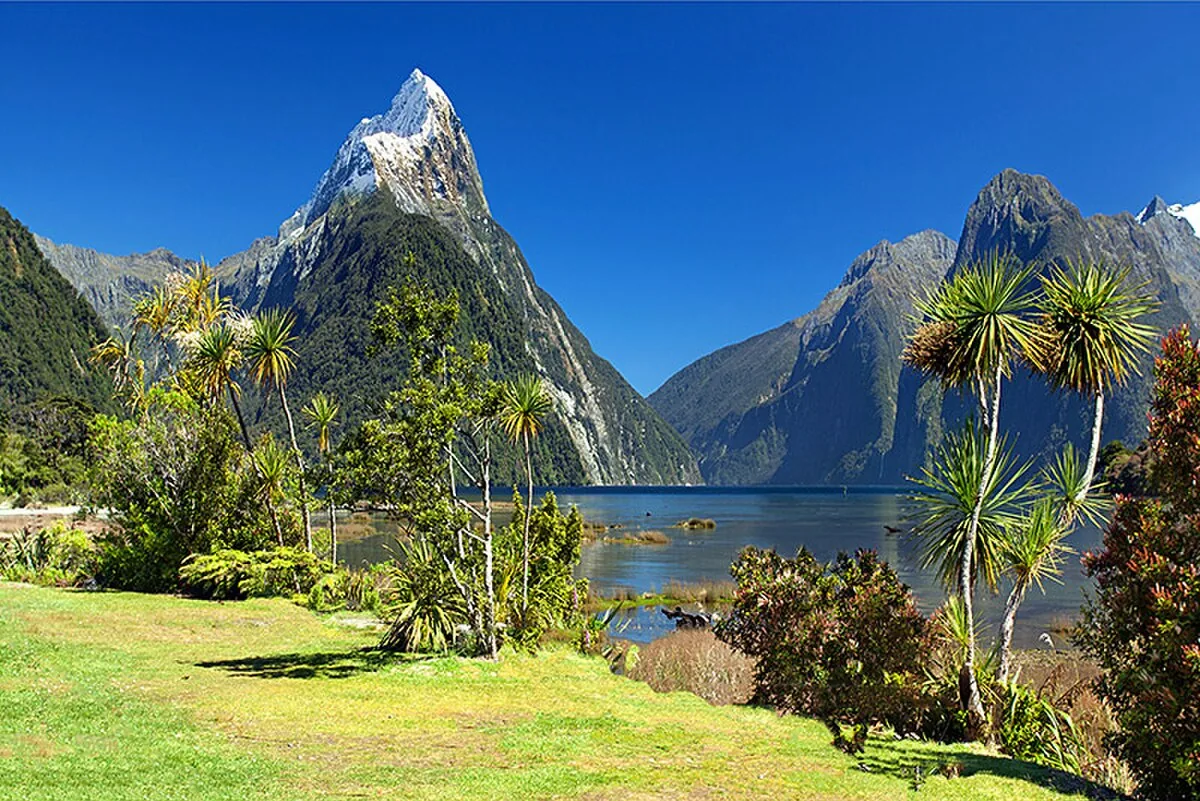
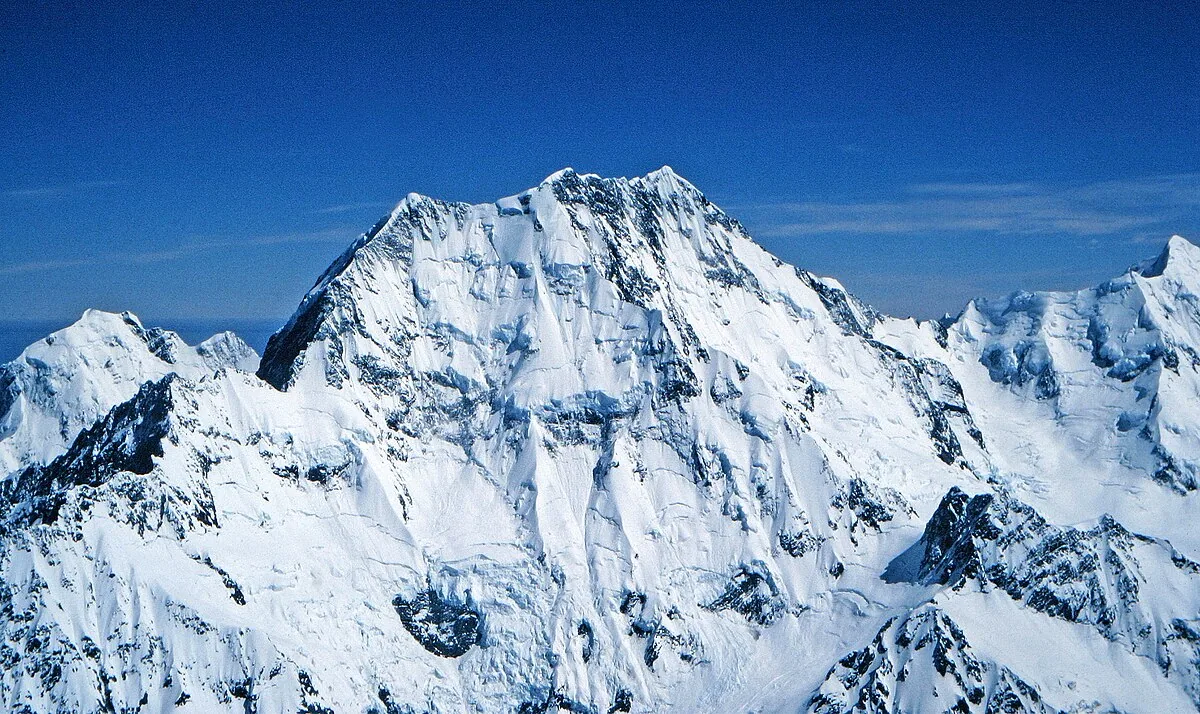
Sky and stone collide at the center of the South Island, where the Southern Alps reach their jagged, icy climax. Aoraki, or Mount Cook, is a range of vertical extremes, where the silence is so heavy it feels physical. The mountain does not merely sit in the landscape; it dominates it, a pyramid of greywacke and permanent ice that dictates the weather and the mood of the entire Mackenzie Basin. Here, the turquoise waters of Lake Pukaki provide a neon-blue foreground to the monochromatic majesty of the peaks. This is a place for the humble, where the sheer scale of the glaciers and the height of the summits remind every visitor of their fleeting place in geological time.
For the Ngāi Tahu iwi, Aoraki
For the Ngāi Tahu iwi, Aoraki is the most sacred of ancestors, the eldest son of Rakinui the Sky Father who was turned to stone when his canoe capsized while exploring the world. To Europeans, it became Mount Cook, named after the captain who never actually saw it. The first successful ascent in 1894 by Tom Fyfe, George Graham, and Jack Clarke proved that the mountain was a formidable adversary. Over the decades, it has was the training ground for Sir Edmund Hillary before his Everest conquest. The village at its base has grown from a humble collection of huts into a center for alpine excellence, yet the mountain remains indifferent to human ambition, occasionally shedding its skin in massive rockfalls and glacial retreats.
Visiting Aoraki / Mount Cook
Walking the Hooker Valley Track, The vibration of the swinging bridges under your boots, a rhythmic tether to the earth as the wind whistles down the valley. The surroundings are impossibly sharp, smelling of cold stone and nothingness. The thing you pick up on is the sound of 'ice-quakes,' the distant, thunderous crack of glaciers shifting or avalanches tumbling miles away. At the edge of the terminal lake, icebergs the size of cars bob in the grey, silty water, their surfaces sculpted into strange, sapphire-blue curves. If you stay the night, the experience shifts to the sky. As part of an International Dark Sky Reserve, the stars here are so bright they cast shadows, with the Milky Way appearing as a dense, luminous cloud that seems close enough to touch.
The journey to Aoraki is one of New
The journey to Aoraki is one of New Zealand's great drives, following State Highway 80 along the edge of Lake Pukaki. The road seems to point directly at the mountain, which grows larger with every turn until it fills the entire windshield. Most travelers arrive from Christchurch or Queenstown, both roughly three to four hours away. There is no through-road; the highway ends at the village, creating a sense of being at the true end of the world. Frequent bus services connect the village to the major hubs, but having your own vehicle allows for stops at the many scenic lookouts where the lake's blue water defies belief.
The Experience
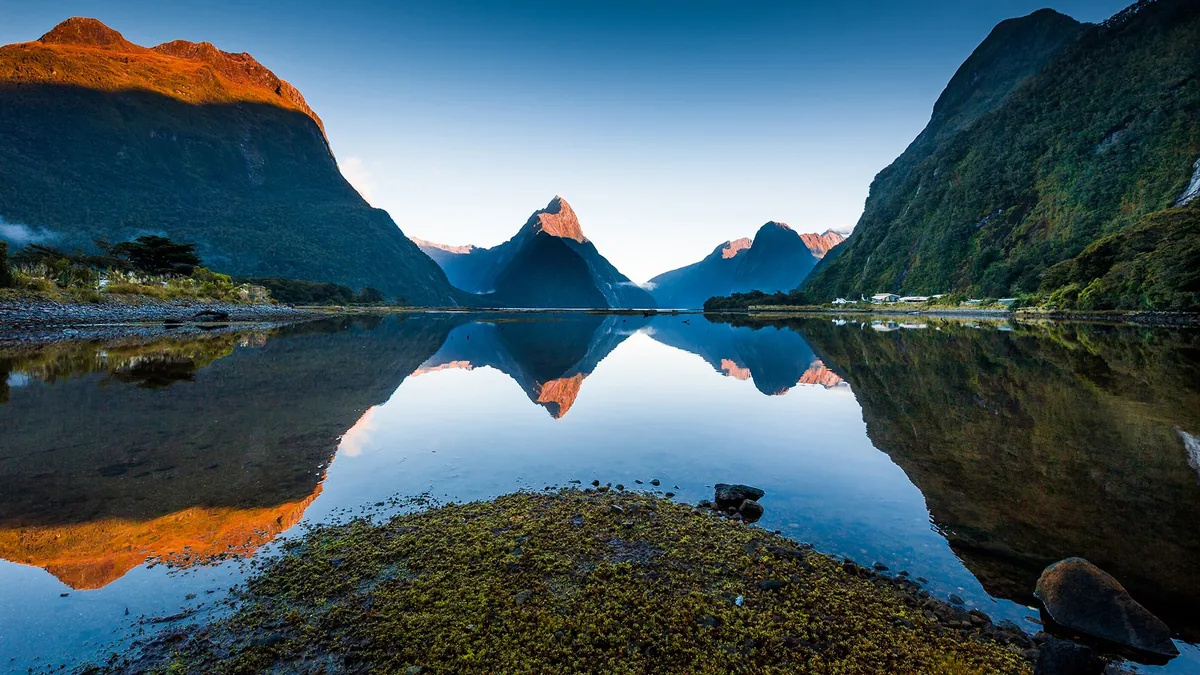
The light turns the peak into a glowing ember at sunset, a phenomenon known as alpenglow that makes the cold stone look warm for a few fleeting minutes. The silence of the valley is punctuated by the 'clack' of trekking poles and the occasional cry of a kea, the world's only alpine parrot. A sense of grit of the moraine underfoot, the debris left behind by retreating ice. Inside the village, the smell of woodsmoke and expensive technical gear creates a distinct 'base camp' atmosphere. The most profound moment comes when you realize the tiny black dots moving on the distant snowfields are actually human climbers, giving you a terrifying sense of the mountain's true scale.
Why It Matters
Aoraki is the crown jewel of the Te Wahipounamu UNESCO World Heritage area. It is the ultimate symbol of New Zealand's rugged wilderness and a vital site for glaciology and climate science. For the Māori people, it is the spiritual anchor of the South Island, a physical manifestation of their genealogy and their connection to the celestial realm.
Why Visit
Visit Aoraki because it is the only place in the country where the high alpine world is truly accessible to the average walker. You can stand at the base of a 3,724-meter peak and touch a glacier without needing an ice axe or a helicopter. It is a visual and spiritual recalibration that makes every other mountain seem small in comparison.
✦ Photo Gallery
Best Season
🌤 February and March offer the most stable weather for hiking, while June and July provide the most dramatic snow-covered scenery and the clearest nights for stargazing.
Quick Facts
Best time to visit
February and March offer the most stable weather for hiking, while June and July provide the most dramatic snow-covered scenery and the clearest nights for stargazing.
Getting there
In Mount Cook, New Zealand; reach Mount Cook first, then continue to the site.
What's nearby
Church of the Good Shepherd is also close by.
Location
Mount Cook, New Zealand
Type
attraction
Coordinates
-43.5950°, 170.1419°
Insider Tips
- 1
Book a stargazing tour to see the Southern Cross through a telescope; the clarity here is vastly superior to anywhere else on the mainland.
- 2
The Hooker Valley Track is best started at dawn to beat the busloads of day-trippers and see the sun hit the peaks first.
- 3
Watch for the kea parrots near the car parks; they are incredibly intelligent but will gleefully destroy the rubber seals on your rental car if left alone.
- 4
Visit the Sir Edmund Hillary Alpine Centre to see the humble beginnings of the man who conquered Everest.
- 5
Pack layers even in mid-summer; the weather can flip from t-shirt heat to a biting alpine gale in less than fifteen minutes.