“Giant soldiers with translucent skin and preserved squids the size of buses turn this waterfront building into a surreal, high-definition dream of the South Pacific.”
About Museum of New Zealand Te Papa Tongarewa
Te Papa was the result of the 1992 Museum of New Zealand Te Papa Tongarewa Act, which mandated a space that honored the partnership between Māori and the Crown. The project cost over 300 million dollars and involved a massive engineering feat to base-isolate the structure against earthquakes. Since its opening by Sir Peter Blake, it has become one of the most visited cultural sites in Australasia. It successfully replaced the 1936 Dominion Museum, which was felt to be too traditional and colonial for a modern, diverse New Zealand.
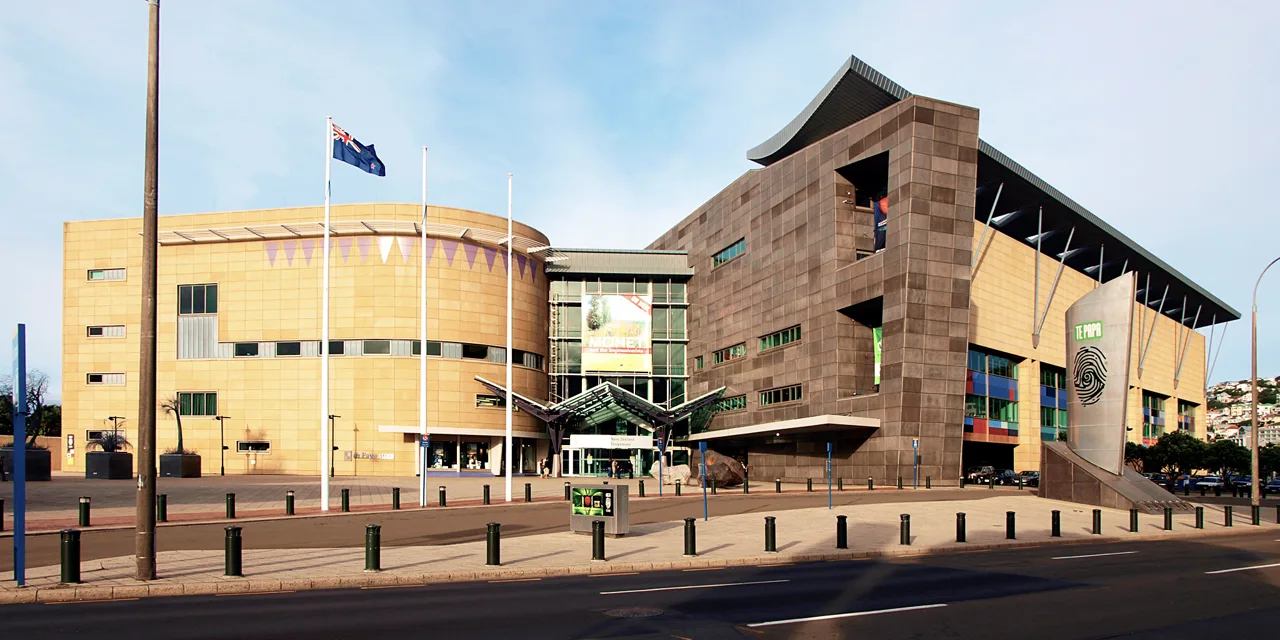
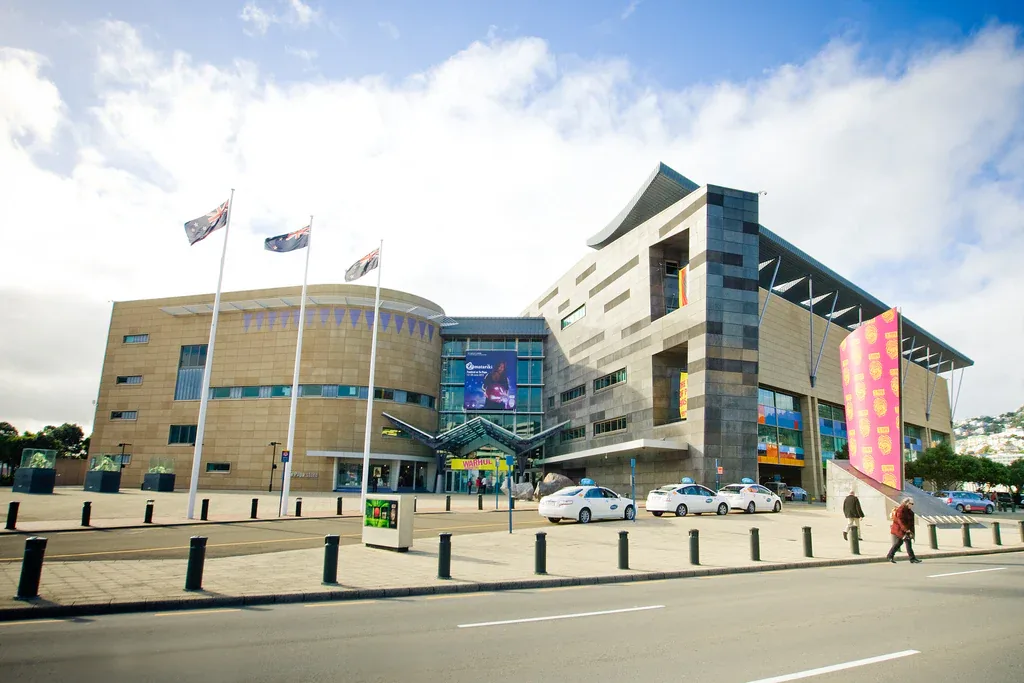
Dominating the Wellington waterfront, Te Papa Tongarewa
Dominating the Wellington waterfront, Te Papa Tongarewa is less a museum and more a colossal container for the Pacific’s many voices. The name translates to 'container of treasures,' but the experience inside is anything but dusty or quiet. The architecture itself is a metaphor, built on massive shock absorbers to survive the capital’s frequent tremors. Inside, the spaces are vast and bold, blending high-tech interactivity with ancient taonga (treasures). Here a colossal squid preserved in a tank shares space with a marae that welcomes all people, reflecting a nation that is equally obsessed with its natural wonders and its complex human history.
Dominating the Wellington waterfront, Te Papa Tongarewa is less a museum and more a colossal container for the Pacific’s many voices.
Why it matters
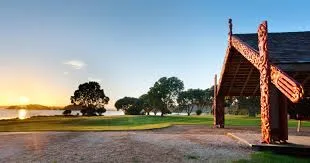
Opening its doors in 1998, Te Papa represented a radical shift in how New Zealand viewed its own heritage. It merged the old National Museum and National Art Gallery into a unified, bicultural institution. The building sits on reclaimed land, a fact that influenced its sturdy, somewhat jagged design. Curators moved away from the traditional 'white cube' gallery style, choosing instead to create immersive environments that tell stories rather than just display objects. The heart of the building is the Te Marae on the fourth floor, a contemporary Māori meeting house that is a functional spiritual space. This ensures the museum is not just a cemetery for artifacts but a living part of the community where rituals and debates still take place.
Visiting Museum of New Zealand Te Papa Tongarewa
Walking through the front doors, the smell of roasted coffee from the foyer blends with the sterile, cool air of the high-security galleries. An impression of floor beneath you hum slightly with the building's massive climate control systems. The Gallipoli exhibition, created with the cinematic wizards at Weta Workshop, features hyper-realistic sculptures that are two-and-a-half times human size, showing every bead of sweat and stray hair on the faces of soldiers. It is a visceral, emotional punch that leaves many visitors in tears. First, the shift in energy entering the 'Mana Whenua' section, where the lighting dims and the intricate woodwork of ancient canoes creates a forest of shadows. On the upper levels, the art galleries provide a window into the Pacific soul, from traditional weaving to confrontational modern installations.
Wellington is a walkable city, and Te Papa
Wellington is a walkable city, and Te Papa is the inevitable destination of any stroll along the harbour. Most people arrive on foot from the CBD or via the iconic cable car that drops passengers at the top of the hill, followed by a downhill walk through the Botanic Gardens. The museum is a focal point of the city's bus network, and several major lines stop directly outside. For those coming from the South Island, the Interislander ferry terminal is only a five-minute drive away, making the museum a perfect first or last stop for travelers crossing the Cook Strait.
Wellington is a walkable city, and Te Papa is the inevitable destination of any stroll along the harbour.
The Experience
You notice a curious silence in the earthquake house simulation, just before the floor begins to lurch and the sound of rattling dishes fills the room. The museum is a sensory overload; one moment you are staring into the deep blue light of the squid tank, and the next you are surrounded by the vibrant, clashing colors of Pacific island textiles. An impression of scale of the building when standing in the central atrium, where the soaring ceilings make the crowds feel like tiny inhabitants of a much larger world. The 'Bush City' outdoor exhibit offers a reprieve, where you can smell native damp ferns and hear the trickle of a man-made waterfall.
Why It Matters
Te Papa is the gold standard for biculturalism in the museum world. It doesn't just show Māori art; it operates under Māori protocol. It acts as a national forum for identity, science, and the arts, proving that a museum can be a popular, populist success without losing its intellectual or spiritual integrity.
Why Visit
Visit Te Papa if you want to see how a country can look its past in the eye with both pride and unflinching honesty. It is free to enter, but its real value is in the way it makes you feel connected to the Pacific. You will learn more about the soul of New Zealand in three hours here than in three weeks of driving.
✦ Insider Tips
- 1
Head straight to the Gallipoli exhibit the moment the doors open at 10 AM to avoid the massive afternoon queues.
- 2
The 'Quake Braker' tour takes you beneath the building to see the massive lead and rubber bearings that hold the museum up during an earthquake.
- 3
Don't miss the 'Bush City' outdoor area on level 2; it’s a living forest and a great place for kids to dig for 'fossils' in a limestone cave.
- 4
The fourth-floor balcony offers one of the best free views of the Wellington harbour and the Te Aro skyline.
- 5
Check the Te Marae schedule; if there isn't a private ceremony, you can walk inside the contemporary meeting house to see the incredible modern carvings.