“Wooden boardwalks and stone walls from 1862 still serve as the front door to a town that refused to change long after the gold ran out.”
About Buckingham Street
Jack Tewa, a Māori shearer, found the first gold in the Arrow River, but it was William Fox who claimed the glory. Within weeks, 1,500 miners were living in the valley. Buckingham Street’s buildings, like the Arrowtown Post Office and the stone banks, were built to reassure miners that their wealth was safe. The street has survived fire and flood, and today it is protected as a historic precinct where any new construction must adhere to rigorous 19th-century aesthetic standards. This commitment has made it one of the most photographed streets in the country.
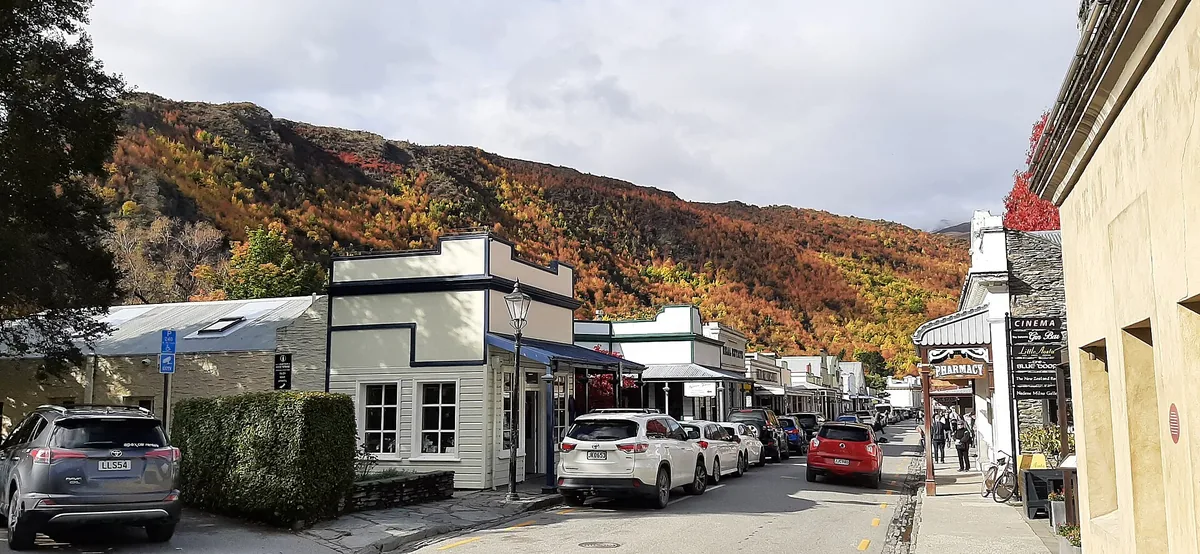
What Buckingham Street actually is
In the old gold-mining town of Arrowtown, Buckingham Street is a cinematic stretch of history that feels entirely untouched by the twenty-first century. This is not a reconstructed theme park, but a living main street where miners once traded gold dust for flour and hardware. The street is lined with tiny, white-painted cottages and sturdy stone storefronts, all framed by the towering, leafy canopy of ancient European trees. During the autumn months, the hills surrounding the street explode into a fiery palette of oranges and yellows, creating a backdrop so vivid it looks painted. It is a place of human scale, where the wooden boardwalks still ring with the sound of footsteps and A trace of woodsmoke and roasting coffee.
In the old gold-mining town of Arrowtown, Buckingham Street is a cinematic stretch of history that feels entirely untouched by the twenty-first century.
the Arrow River, 1862
Gold was discovered in the Arrow River in 1862, sparking a frantic rush that saw thousands of miners descend on this valley. Buckingham Street became the commercial hub of the settlement almost overnight. The early buildings were canvas and bark, but as the gold proved plentiful, they were replaced by the permanent timber and stone structures that remain today. The street also tells a story of social divide; while the European merchants built their shops on the main drag, the Chinese miners were relegated to a separate settlement at the edge of the river. The preservation of the street is largely thanks to the town’s decline after the gold ran out, which inadvertently saved it from the modernization that ruined many other colonial towns. In the 1950s, the local community realized the value of their heritage, leading to strict protection of the street's historic character.
Walking down the boardwalks, The texture
Walking down the boardwalks, The texture of the old wood under your feet, a gentle unevenness that forces you to slow your pace. What grabs you is the small, paned windows of the shops, which now house high-end galleries, wool shops, and bakeries. The light filters through the leaves of the giant elms and planes, creating a dappled, golden glow on the street. The chatter of visitors and the occasional bell of a bicycle, but the overall atmosphere is one of hushed reverence for the past. Just a few steps from the main shops, the Chinese Settlement offers a somber contrast, with its tiny stone huts and narrow doors reflecting the hard lives of the miners. The river is always audible in the background, a cold, rushing presence that was the source of the town’s original fortune.
Arrowtown is a twenty-minute drive
Arrowtown is a twenty-minute drive from Queenstown, a journey that takes you past the dramatic scenery of the Coronet Peak foothills. A regular bus service, the 'Orbus,' connects the two towns every half hour, making it an easy day trip. Parking near Buckingham Street can be difficult during the peak season, so many locals suggest parking by the river and taking the short, scenic walk up the bank. The street is best explored on foot, allowing you to peek into the many alleyways and courtyards that hide away from the main thoroughfare.
Arrowtown is a twenty-minute drive from Queenstown, a journey that takes you past the dramatic scenery of the Coronet Peak foothills.
The Experience
The way the light turns the entire street into a golden corridor in late April, as the leaves of the European trees begin to fall. The smell of fresh pies from the local bakery often mixes with the crisp, mountain air. Something like a sense of intimacy here; the buildings are low and the street is narrow, creating a 'village' feel that is lost in the larger alpine resorts. Walking the length of the street takes only ten minutes, but if you look closely at the lintels and the old iron door handles, you can spend hours. The most evocative moment is at twilight, when the old-fashioned streetlamps flicker on and the shadows of the hills close in.
Why It Matters
Buckingham Street is the best-preserved example of a gold-rush era main street in New Zealand. It serves as a vital cultural link to the tough, enterprising spirit of the pioneers and the often-overlooked history of the Chinese immigrant community. It is a textbook example of how heritage tourism can revitalize a rural town without destroying its soul.
Why Visit
Visit Buckingham Street for the atmosphere of a bygone era without the artifice. It is the perfect antidote to the high-adrenaline, neon-soaked energy of Queenstown. It is the only place where you can go from high-end fashion shopping to gold panning in the river in under five minutes, all while surrounded by 160-year-old architecture.
✦ Insider Tips
- 1
The 'Lakes District Museum' halfway down the street is widely considered one of the best small-town museums in the country.
- 2
Don't miss the Chinese Settlement at the end of the street; the tiny huts provide a moving perspective on the gold rush history.
- 3
Grab a 'Saffron' ice cream and find the hidden courtyard behind the old post office for a quiet moment away from the crowds.
- 4
The walking tracks along the Arrow River are just a two-minute walk from the shops and offer great views of the town's stone bridges.
- 5
If you are there in autumn, arrive before 9 AM to get the best light on the colorful leaves without the crowds in your photos.